
Okapi
Okapia johnstoni
— Where the name comes from
Okapia comes from o’api, the animal’s name in the Lese language of the Congo. Johnstoni honours Harry Johnston, the British administrator who in 1901 got the first remains to science. Until then Europe knew it only by rumour, and called it “the African unicorn”: a creature whose existence was doubted.
— Facts
- Group
- Mammals · Mammalia
- Order
- Even-toed ungulates
- Habitat
- Dense lowland rainforest
- Range
- The Ituri forests, in the north-east of the Democratic Republic of the Congo
- Size
- 190–250 cm of body, 200–350 kg
- Diet
- Herbivore — leaves, shoots, fungi, clay
- Lifespan
- 20–30 years
— Characteristics
- 01
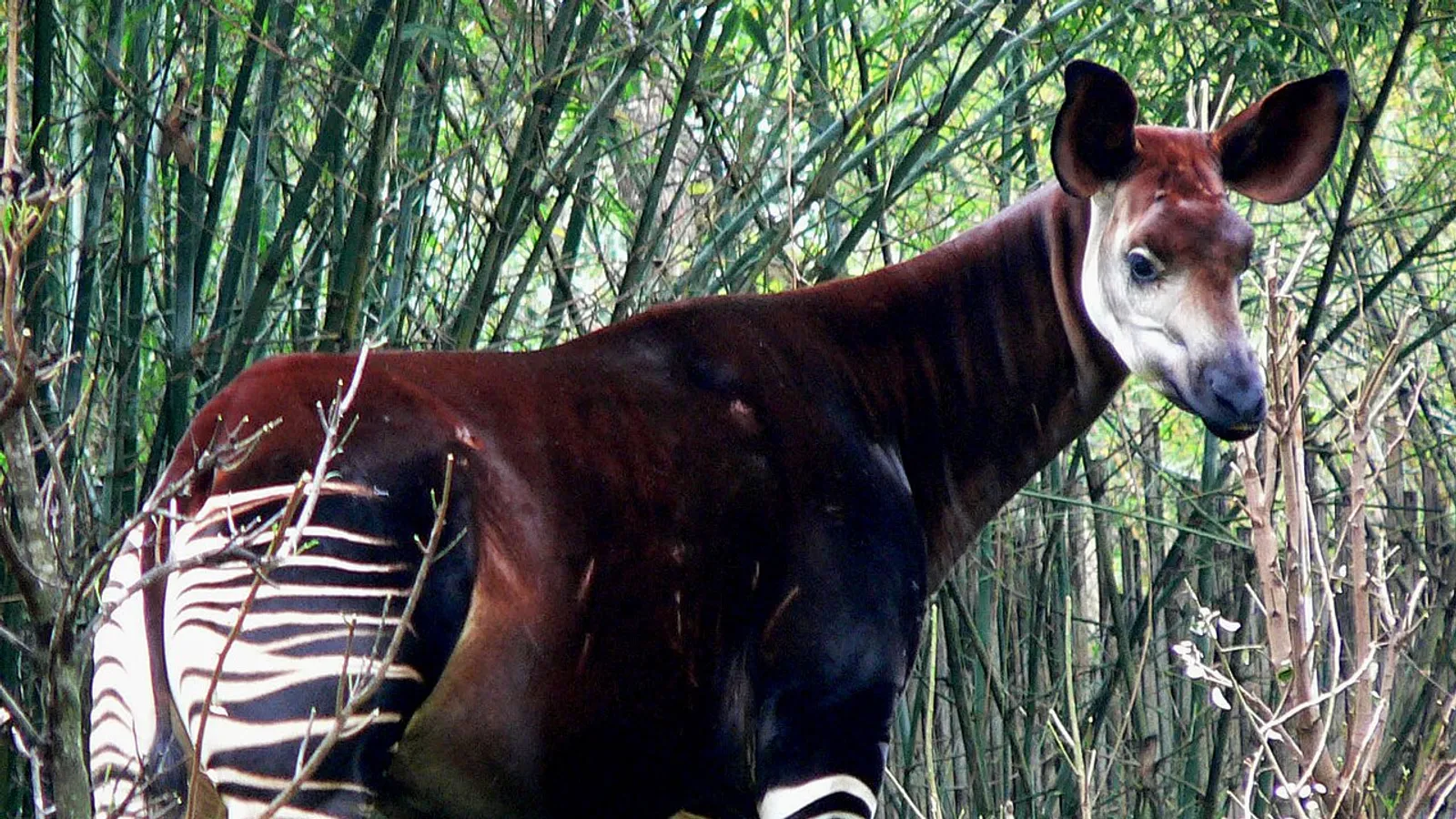
It is the giraffe’s only living relative, though it looks like a cross between horse, zebra and deer.
- 02
The black prehensile tongue is long enough to lick its own eyes and ears.
- 03
The stripes on the hindquarters help the young follow their mother in the gloom of the forest.
— What sets it apart
The okapi was one of the last great zoological discoveries on the planet: described only in 1901, when almost all the rest of the megafauna had been known for centuries. It lives in a forest so dense and remote that it eluded even Europeans well into the 20th century. An animal the size of a horse, related to the giraffe, waited for the age of the motor car to enter the books.
