
Zebra shark
Stegostoma tigrinum
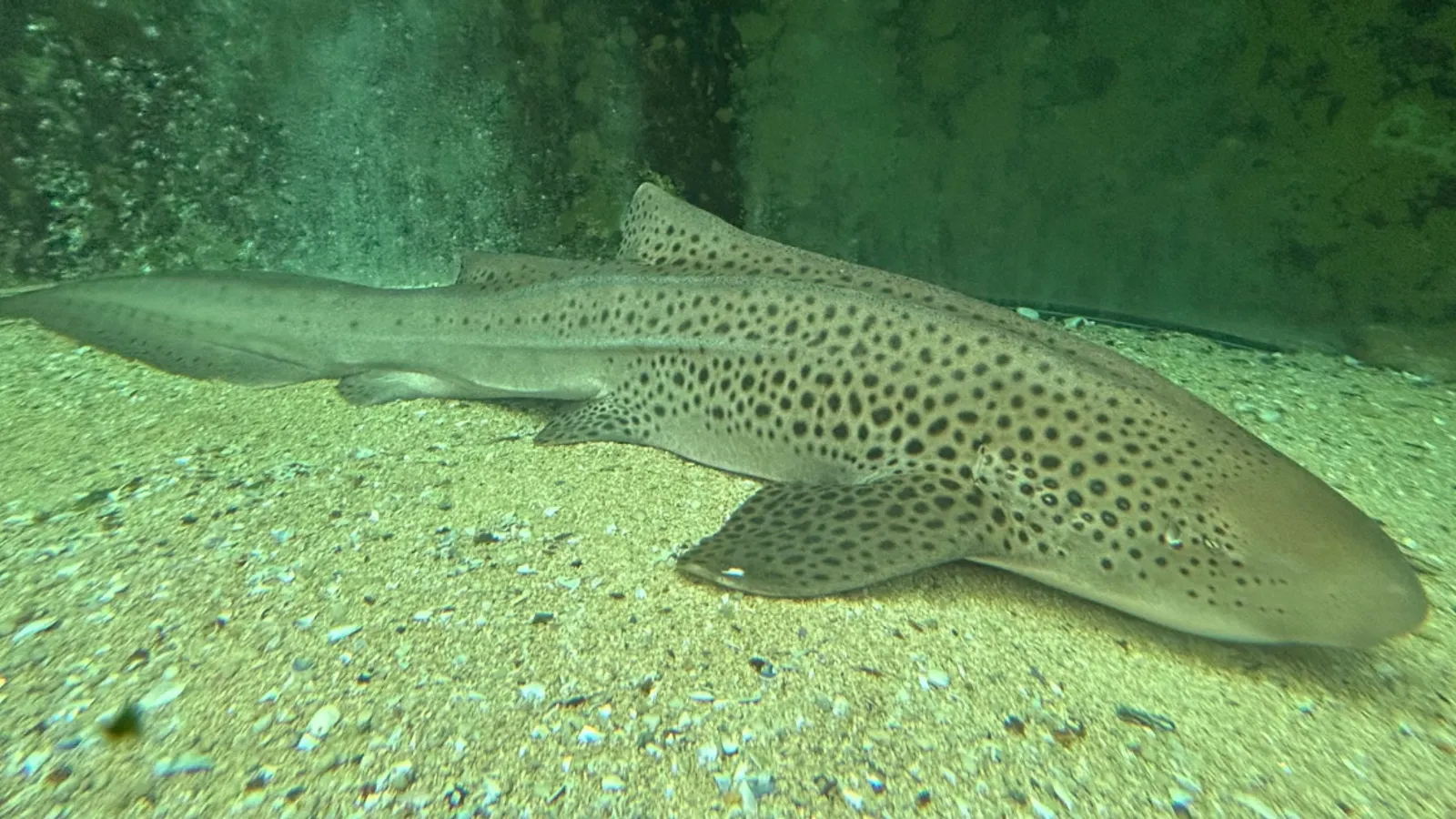
— Where the name comes from
Stegostoma is “covered mouth”, from stégos, the roof, and stóma. The binomial holds a contradiction that says something, though: it is called tigrinum for its stripes, and zebra in Italian for the same, yet only the young have stripes — the adults are pale with dark spots. The name describes a young animal almost nobody sees.
— Facts
- Group
- Fish · Actinopterygii · Chondrichthyes
- Order
- Carpet sharks
- Habitat
- Sandy bottoms around coral reefs
- Range
- The tropical Indo-Pacific, from the Red Sea to Australia
- Size
- 2–2.5 m, up to 3.5 m; 20–30 kg
- Diet
- Molluscs, crustaceans, small fish
- Lifespan
- 30 years
— Characteristics
- 01
By day it rests on the sand facing into the current.
- 02
The tail is nearly as long as the whole of the rest of the body.
- 03
It works into crevices in the coral to pull out molluscs.
— What sets it apart
In an Australian aquarium a female of this species, kept for years with no male after having bred normally, went on laying fertile eggs: genetic analysis showed the young carried only their mother’s DNA. It is one of the few documented cases of a vertebrate switching from sexual reproduction to parthenogenesis and, potentially, back again. Meanwhile the species is disappearing in the wild, and at Raja Ampat captive-bred young are being released to rebuild the population.
