
Sand tiger shark
Carcharias taurus
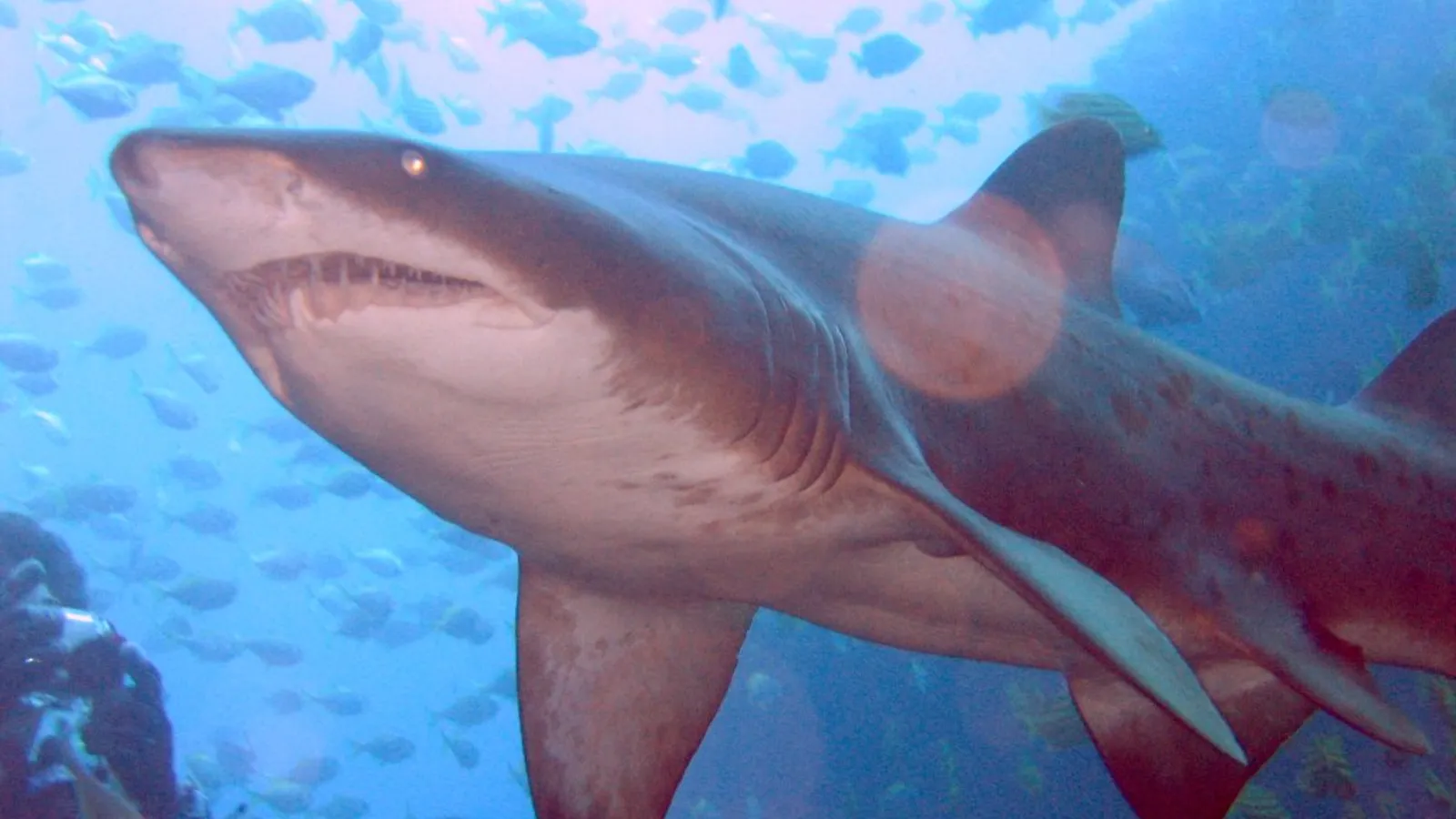
— Where the name comes from
Carcharias comes from the Greek kárcharos, “jagged, sharp”, the same root that sits inside Carcharodon, the white shark: it means the teeth. Taurus is the bull, for the bulk and the blunt snout. The name has caused centuries of confusion, because in English this species is the sand tiger and “bull shark” is an entirely different animal.
— Facts
- Group
- Fish · Actinopterygii · Chondrichthyes
- Order
- Mackerel sharks
- Habitat
- Coastal sandy bottoms, wrecks, caves, down to 200 metres
- Range
- Temperate and subtropical seas worldwide, absent from the eastern Pacific
- Size
- 2–3.2 m, 90–160 kg
- Diet
- Fish, rays, squid, small sharks
- Lifespan
- 35 years
— Characteristics
- 01
Its teeth show even with the mouth closed: it looks menacing and is not.
- 02
It is the only shark that comes to the surface to gulp air.
- 03
It hunts at night and hangs motionless in caves by day.
— What sets it apart
It swallows air at the surface and holds it in the stomach to trim its buoyancy the way a diver does with a jacket: it is the only shark known to do so, and it lets the animal hang motionless in mid-water without moving a fin. Inside the uterus, though, its young do something less endearing: the first embryo to develop teeth eats its siblings, and after nine months two are born, one from each uterus, already a metre long.
