
Common thresher
Alopias vulpinus
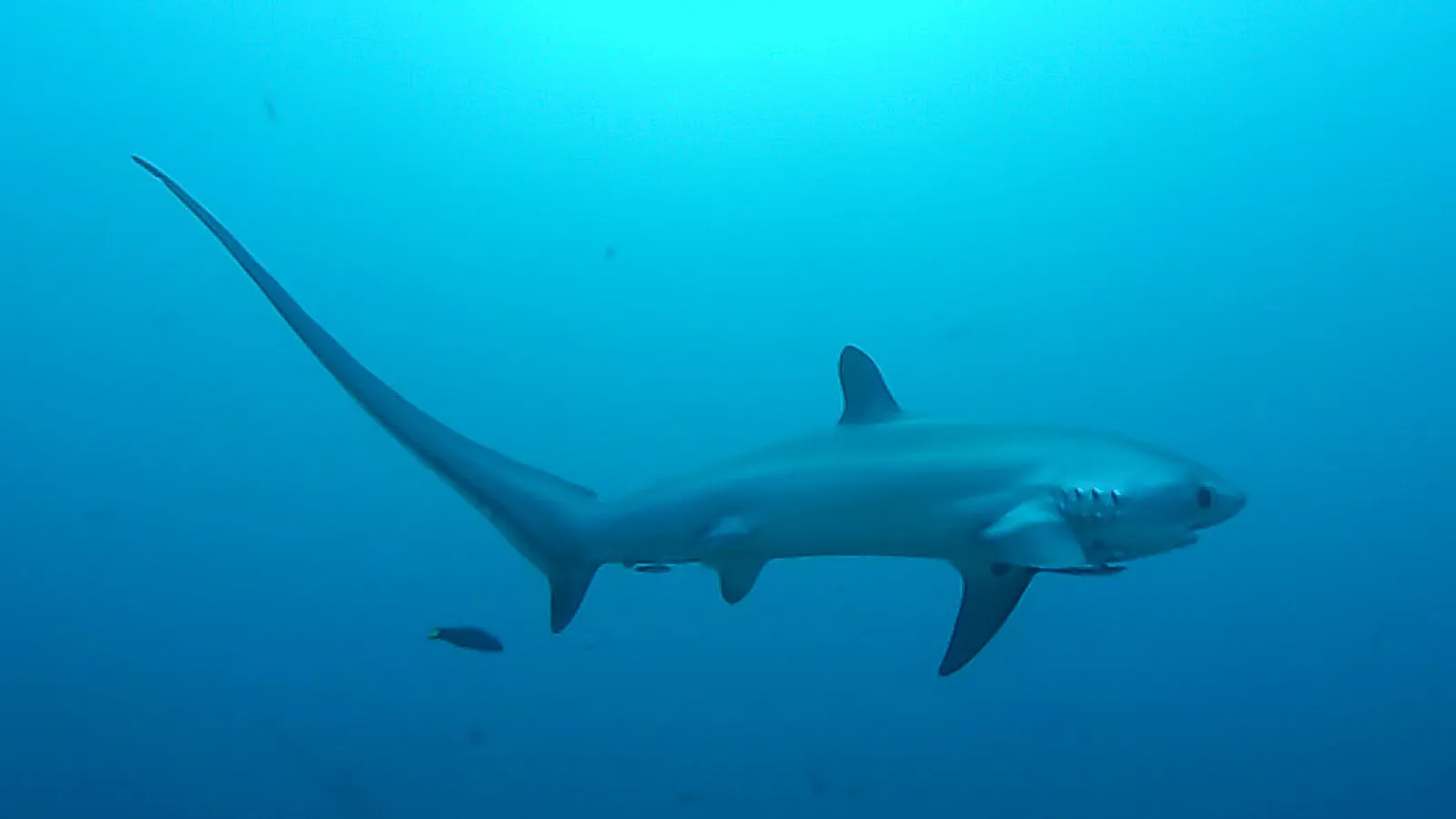
— Where the name comes from
The name says “fox” twice: Alopias from the Greek alṓpēx and vulpinus from the Latin vulpes. Both refer to the tail, as long as the whole of the rest of the body, which the ancients thought fox-like — and to the reputation for cunning Mediterranean fishermen gave it, believing it could work itself free of hooks.
— Facts
- Group
- Fish · Actinopterygii · Chondrichthyes
- Order
- Mackerel sharks
- Habitat
- Open sea and coastal water, from the surface to 500 metres
- Range
- Temperate and tropical seas worldwide
- Size
- 3–5 m including the tail, 200–350 kg
- Diet
- Shoaling fish, mackerel, squid
- Lifespan
- 20 years
— Characteristics
- 01
Half its length is tail.
- 02
It leaps clear of the water, sometimes several times in a row.
- 03
It keeps its muscles warmer than the surrounding water, as tunas do.
— What sets it apart
It uses its tail as a whip. Filming schools off the Philippines in 2013 showed it entering a shoal of sardines, braking sharply by dipping its snout and cracking the upper lobe of the tail forward over its own head: the blow reaches eighty kilometres an hour, generates shock waves that stun several fish at once, and the shark turns back to collect them. It is one of very few fish known to stun prey with a weapon rather than chase them one at a time.
