
Spotted wobbegong
Orectolobus maculatus
— Where the name comes from
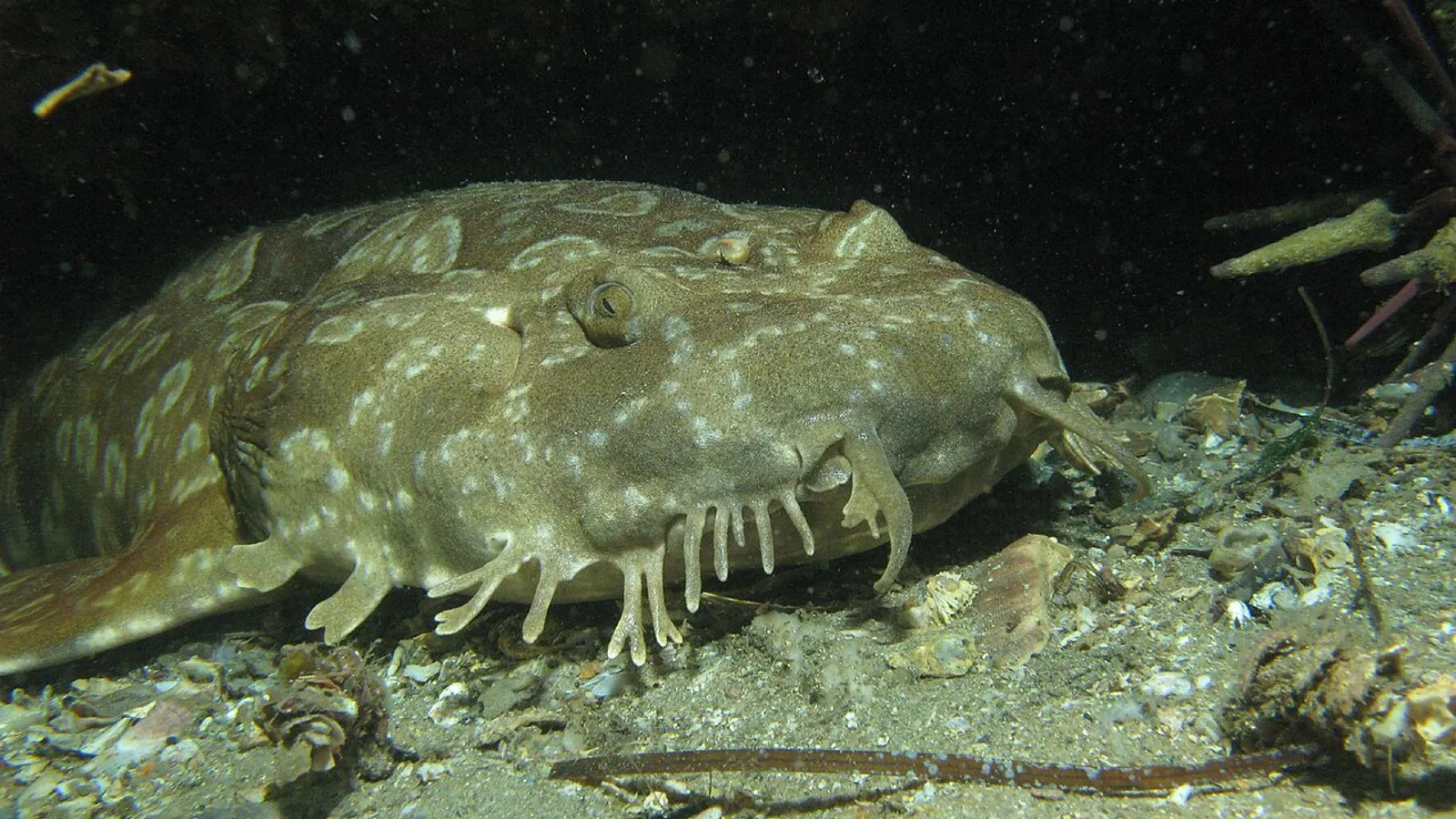
Orectolobus is “stretched lobe”, from orektós and lobós, for the branched fleshy fringes hanging all round its mouth and snout; maculatus gives the spots. Australians call it the wobbegong, a word of Aboriginal origin meaning roughly “shaggy beard”: it is the best of the three names.
— Facts
- Group
- Fish · Actinopterygii · Chondrichthyes
- Order
- Carpet sharks
- Habitat
- Rocky and coral bottoms inshore, down to 100 metres
- Range
- Eastern and southern Australia
- Size
- 1.5–2 m, up to 3.2 m; 25–70 kg
- Diet
- Fish, octopus, crustaceans, other sharks
- Lifespan
- 25 years
— Characteristics
- 01
The pattern of its back reproduces exactly the bottom it lies on.
- 02
The fringes round its mouth look like weed and draw prey in.
- 03
It hunts by lying still and lunging only at the last instant.
— What sets it apart
It lies on the bottom all day and its livery is so effective that divers put a hand on it thinking it is rock: nearly every recorded bite in Australia happened that way, and the animal — which has long recurved teeth and jaws built not to let go — stays attached. It is not aggressive; it simply does not know it has been discovered until it is touched, and at that point it reacts as it would to a fish.
