
Nurse shark
Ginglymostoma cirratum
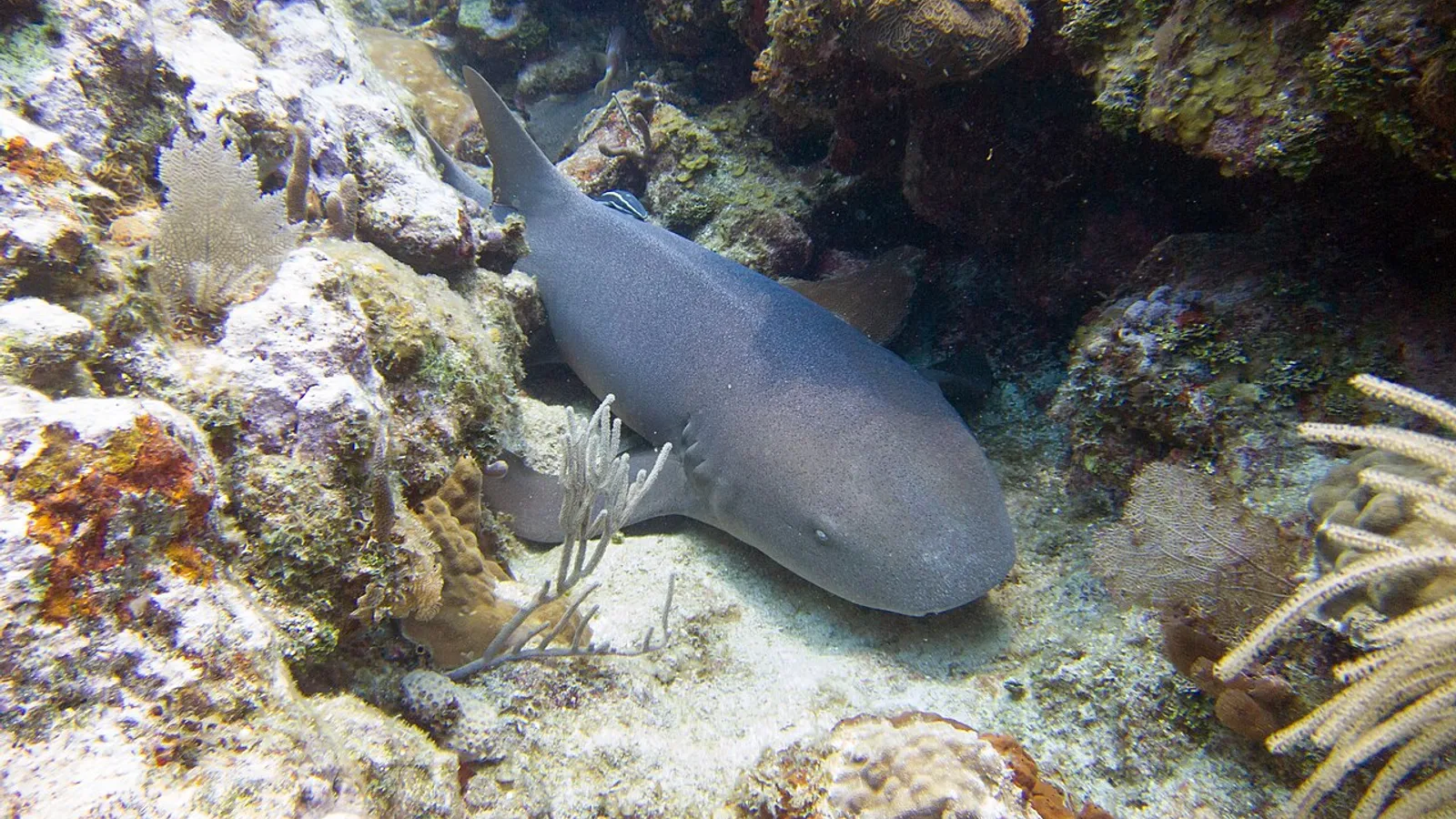
— Where the name comes from
Ginglymostoma is “hinge mouth”, from gínglymos, the hinge joint, and stóma: the jaws articulate like a hinge. Cirratum refers to the two fleshy barbels hanging from the nostrils, with which it feels the bottom. The common name, in many languages, comes from the noise it makes when it sucks: a slurp like a nursing infant.
— Facts
- Group
- Fish · Actinopterygii · Chondrichthyes
- Order
- Carpet sharks
- Habitat
- Coral reefs, seagrass beds, mangroves, shallow bottoms
- Range
- The tropical Atlantic and the eastern Pacific
- Size
- 2.5–3 m, up to 4.3 m; 90–150 kg
- Diet
- Octopus, lobsters, crabs, urchins, bottom fish
- Lifespan
- 25 years
— Characteristics
- 01
By day it lies motionless, heaped with others under ledges.
- 02
It can breathe while stationary by pumping water with its mouth.
- 03
It is slow and docile, and divers touch it more than any other shark.
— What sets it apart
It does not bite its prey: it inhales it. Expanding the mouth cavity suddenly generates one of the most powerful suction forces ever measured in a fish, able to pull an octopus out of a crevice or a shell out of the sand. The corollary is that when it does bite in defence it does not let go: nearly every documented incident involves somebody who had grabbed it by the tail, and in several cases the animal had to be carried ashore still attached.
