
Bluntnose sixgill shark
Hexanchus griseus
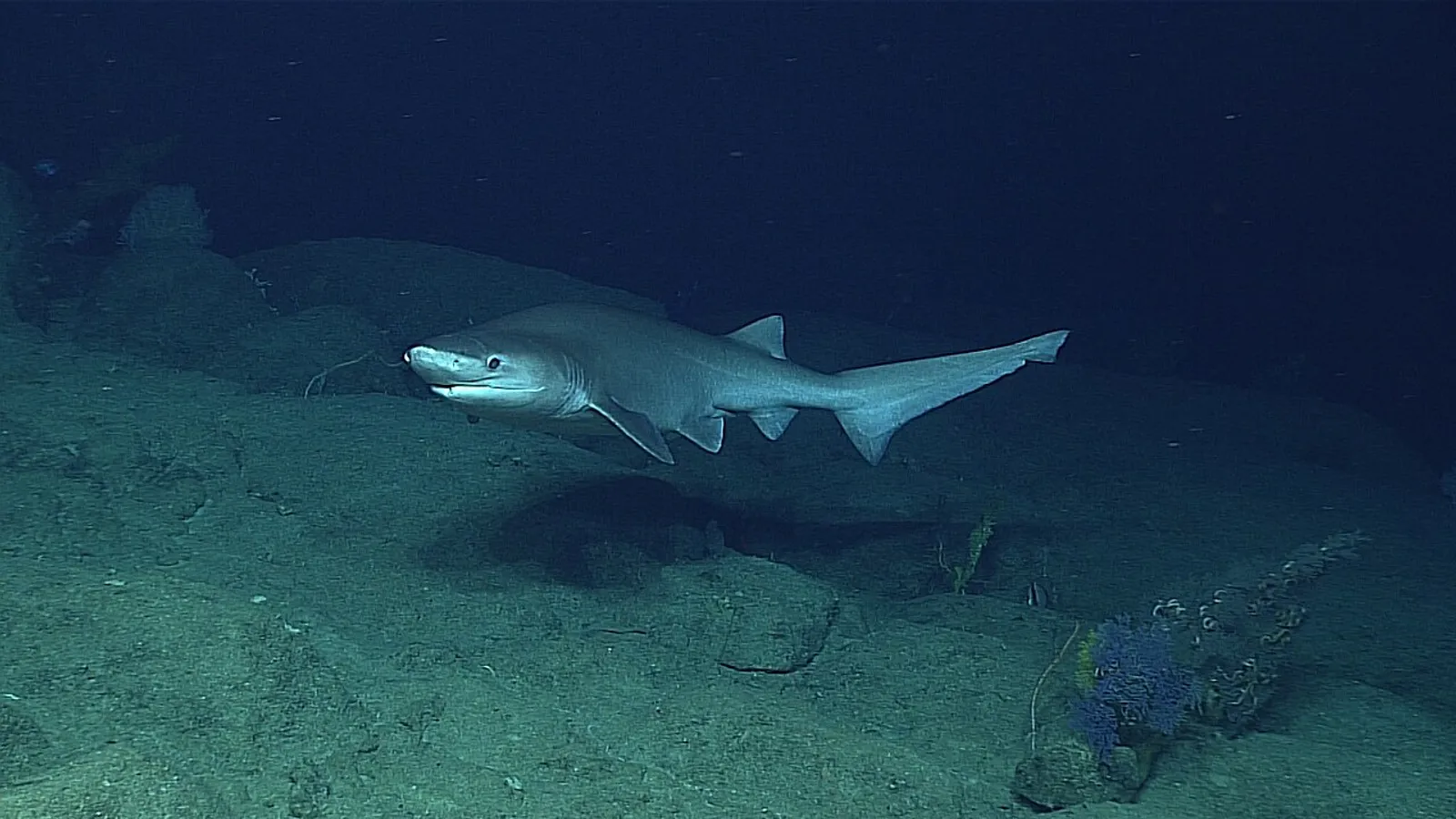
— Where the name comes from
Hexanchus means “six gills”, from héx and ánchō, and it names the one thing you need to identify it: nearly every shark has five gill slits on each side, this one has six. It is an archaic character, shared with fossil sharks of three hundred million years ago. Griseus is simply “grey”.
— Facts
- Group
- Fish · Actinopterygii · Chondrichthyes
- Order
- Cow and frilled sharks
- Habitat
- Slopes and submarine canyons between 200 and 2,500 metres
- Range
- Temperate and tropical seas worldwide
- Size
- 3–4.8 m, up to 5.5 m; 400–600 kg
- Diet
- Fish, rays, other sharks, seals, carrion
- Lifespan
- 80 years
— Characteristics
- 01
It has six gill slits instead of five.
- 02
The lower jaw carries a row of comb-shaped teeth, like a saw.
- 03
At night it comes up to within a few metres of the surface.
— What sets it apart
It is one of the few large sharks that can regularly be met alive at depth, and research submersibles often film it passing unhurriedly across their viewports. In some bays of British Columbia and off Sardinia it comes so close inshore that divers see it: a four-metre animal belonging to a group that has crossed three mass extinctions and still swims with the same shape.
