
Common angelshark
Squatina squatina
— Where the name comes from
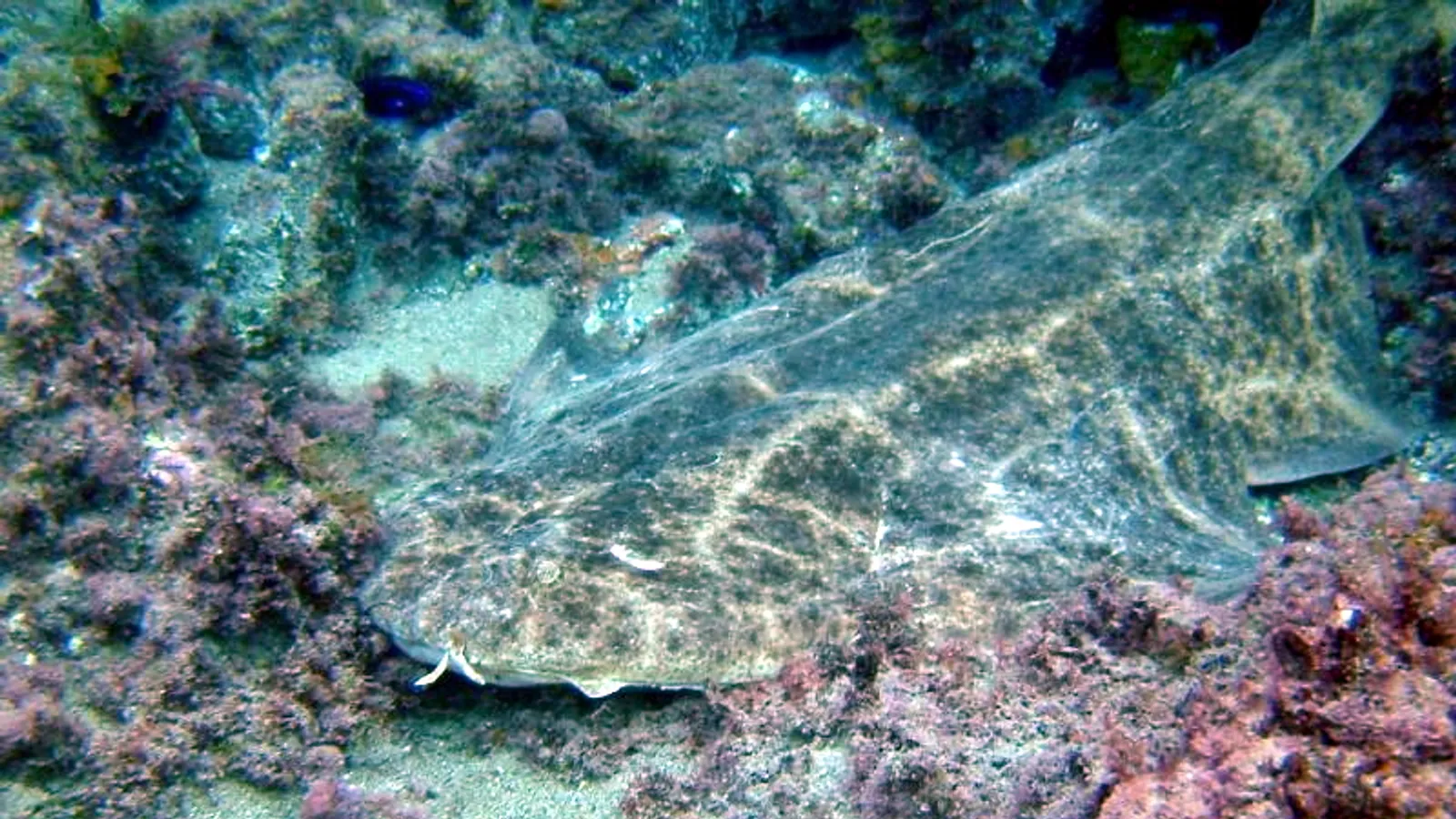
Squatina was the Latin name of this fish, and it stands unchanged in the binomial. The common name, “angel”, comes from the very broad outspread pectoral fins that suggest a pair of open wings; in many Mediterranean languages it is also the monkfish or the squadro. It is a shark that decided to behave like a ray.
— Facts
- Group
- Fish · Actinopterygii · Chondrichthyes
- Order
- Angel sharks
- Habitat
- Coastal sandy and muddy bottoms down to 150 metres
- Range
- The eastern Atlantic and the Mediterranean, now fragmented
- Size
- 1.2–1.8 m, up to 2.4 m; 30–80 kg
- Diet
- Flatfish, rays, molluscs, crustaceans
- Lifespan
- 35 years
— Characteristics
- 01
It buries itself in the sand leaving only its eyes showing.
- 02
It strikes upwards in a tenth of a second.
- 03
Its body is flattened but the gills are at the sides, not underneath as in rays.
— What sets it apart
Until the 1950s it was one of the commonest fish in the Mediterranean and reached markets across half of Europe; today it has gone from almost all its range, erased by the trawling that ploughs precisely the sandy bottoms it lives on. The remaining populations are confined to a few areas — chiefly around the Canary Islands — and it counts among the most threatened cartilaginous fish on the planet. It vanished from seas where it was ordinary, within two human generations.
