
Mediterranean fanworm
Sabella spallanzanii
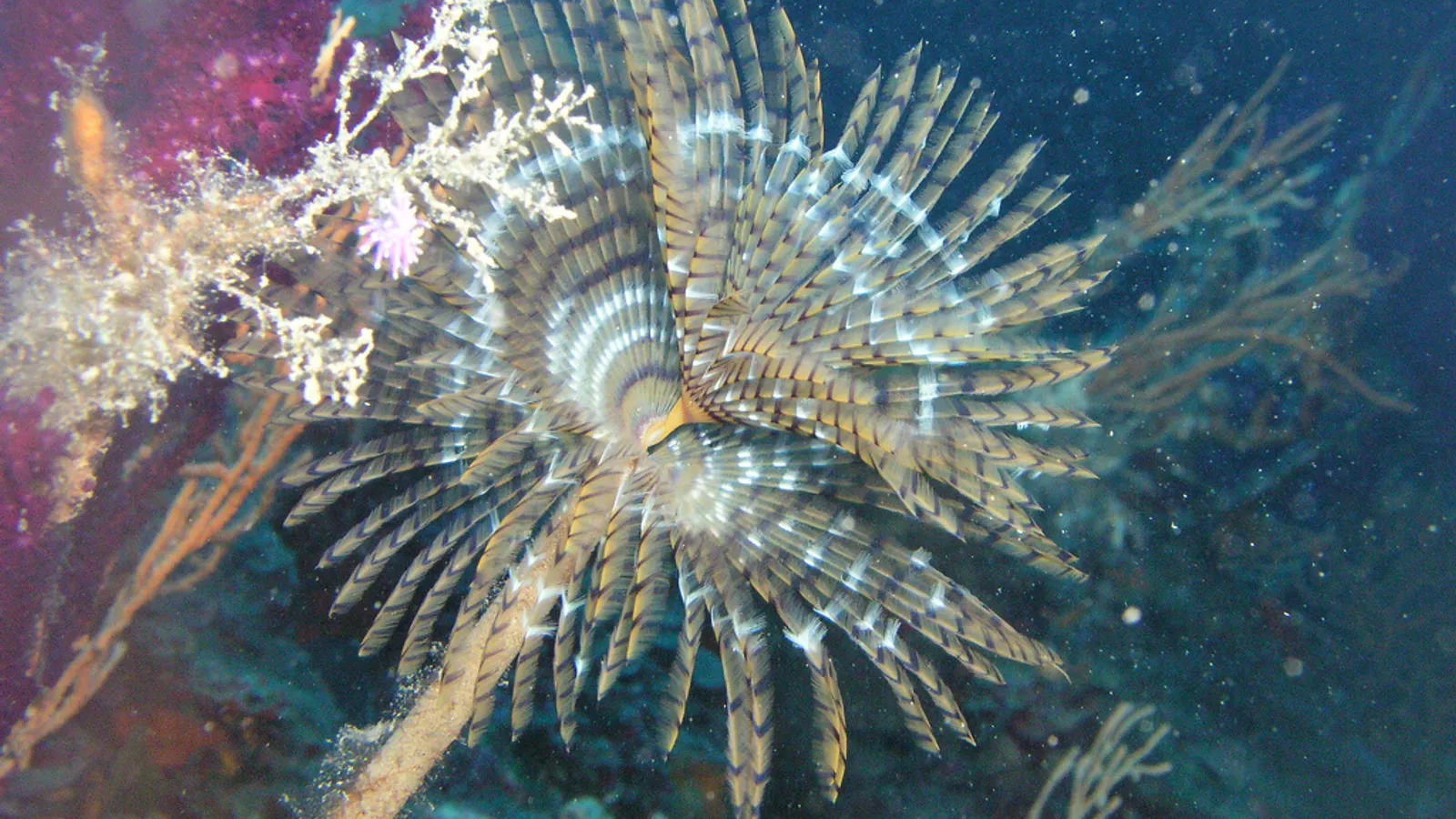
— Where the name comes from
Sabella comes from the Latin sabulum, fine sand, because the tube the animal lives in is built of grains kneaded with mucus. The epithet remembers Lazzaro Spallanzani, the naturalist from Reggio who in the eighteenth century proved by experiment that life does not arise spontaneously. The common name looks instead at the branchial crown, wound in a double spiral like a figure drawn with compasses.
— Facts
- Group
- Annelids · Annelida
- Order
- Fan worms
- Habitat
- Muddy bottoms and harbours, down to 30 metres
- Range
- Mediterranean and eastern Atlantic; invasive in Australia
- Size
- Tube up to 40 cm; crown 10 cm
- Diet
- Plankton and particles filtered by the crown
- Lifespan
- 5–7 years
— Characteristics
- 01
The spiral crown snaps back into the tube if anything passes close.
- 02
It has eyes on its gills: it sees a predator’s shadow before feeling it.
- 03
It filters several litres of water an hour.
— What sets it apart
It has eyes on its gills. On the crown it uses to breathe and to feed sit dozens of small photoreceptors that form no image but register the sudden fall in light made by an approaching shadow, triggering retraction into the tube within hundredths of a second. It is the only way of seeing available to an animal with no head in the sense we mean, and anyone who has tried moving a hand towards a fan worm underwater knows the result: it is gone before it can be touched.
