
Three-spined stickleback
Gasterosteus aculeatus
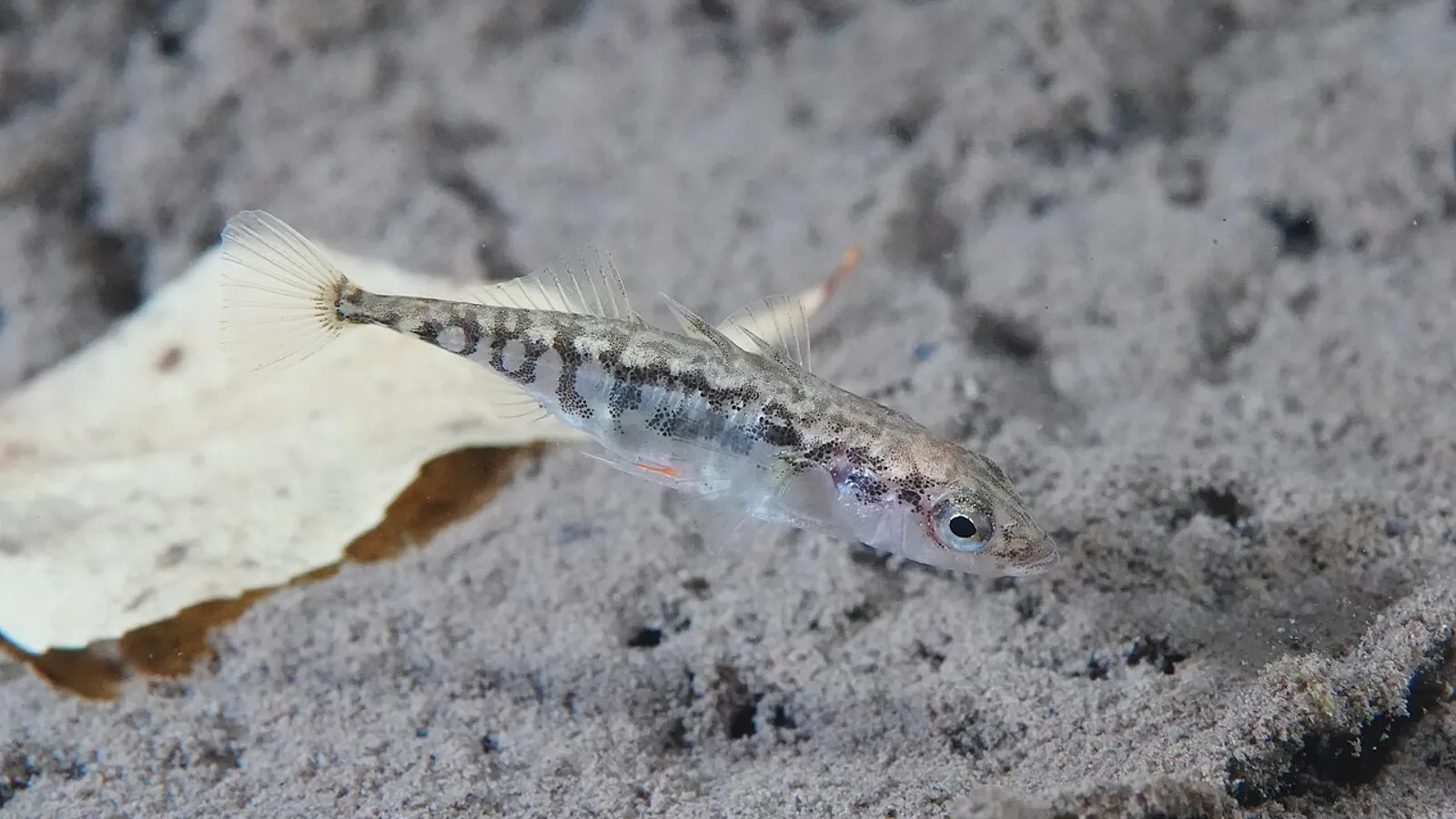
— Where the name comes from
Gasterosteus is “bony belly”, from gastḗr and ostéon: instead of scales it carries a row of bony plates along the flanks. Aculeatus means “armed with spines”, for the three erectile spines in front of the dorsal fin. The Italian name looks at the same spines. It is five centimetres long and one of the most important fish in biology.
— Facts
- Group
- Fish · Actinopterygii · Chondrichthyes
- Order
- Perch-likes
- Habitat
- Ditches, ponds, estuaries, shallow coasts; fresh and brackish water
- Range
- The northern hemisphere: Europe, Asia and North America
- Size
- 4–8 cm, 2–5 g
- Diet
- Insect larvae, crustaceans, fish eggs
- Lifespan
- 3 years
— Characteristics
- 01
The male builds a nest of plant fragments glued with a kidney secretion.
- 02
In the breeding season his throat and belly turn red.
- 03
Freshwater populations have lost nearly all their bony plates.
— What sets it apart
On this small fish Niko Tinbergen built modern ethology, and won a Nobel Prize. He showed that the male attacks any red object passing near the nest — even a badly painted block of wood, and even the postman’s red van seen through the laboratory window — and that the female responds to a zigzag dance reduced to its barest elements. Fifty years later the same fish gave another lesson: populations that entered lakes after the glaciations lost their armour within a few dozen generations, always by switching off the same gene, in places far apart and without ever having met.
