
European seabass
Dicentrarchus labrax
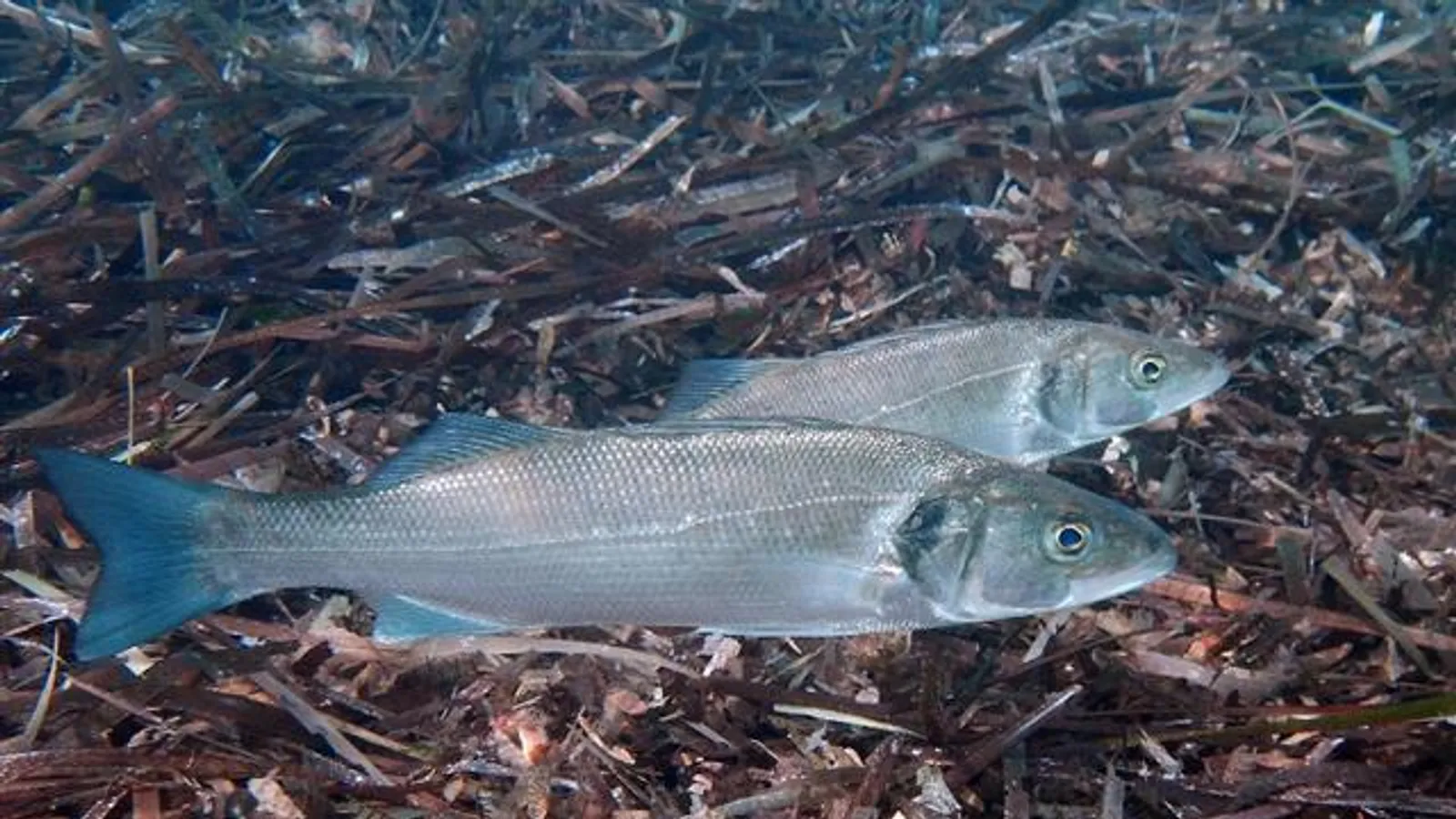
— Where the name comes from
Labrax was the Greek name of the fish, from lábros, “greedy”; Dicentrarchus contains kéntron, the spine, for the two spines on the gill cover. The Italian spigola comes from spica, the ear of corn, for the points of the dorsal spines; in the north it is branzino, from the Venetian branzin, “with prominent gills”. Three names for the same animal, all descriptive.
— Facts
- Group
- Fish · Actinopterygii · Chondrichthyes
- Order
- Perch-likes
- Habitat
- Coasts, lagoons, estuaries, river mouths; it also enters fresh water
- Range
- The eastern Atlantic from Norway to Morocco, the Mediterranean, the Black Sea
- Size
- 40–70 cm, up to 100 cm; 1–5 kg, record 12 kg
- Diet
- Fish, crustaceans, molluscs
- Lifespan
- 15 years, some over 25
— Characteristics
- 01
It hunts inshore, often in the surf and in turbid water after storms.
- 02
It tolerates fresh and brackish water and enters lagoons to feed.
- 03
With the gilthead bream it is one of the two most farmed fish in the Mediterranean.
— What sets it apart
The Romans already farmed it, and debated its flavour the way wine is debated today. Latin sources distinguish “river” bass, caught in the Tiber between the two bridges where the Cloaca Maxima discharged and considered the finest of all, from sea-caught ones judged inferior: Pliny and Macrobius discuss it seriously. That Rome’s most prized fish was the one raised at the mouth of the sewer is among the most eloquent details ancient literature has left us about imperial cooking.
