
Gilt-head bream
Sparus aurata
— Where the name comes from
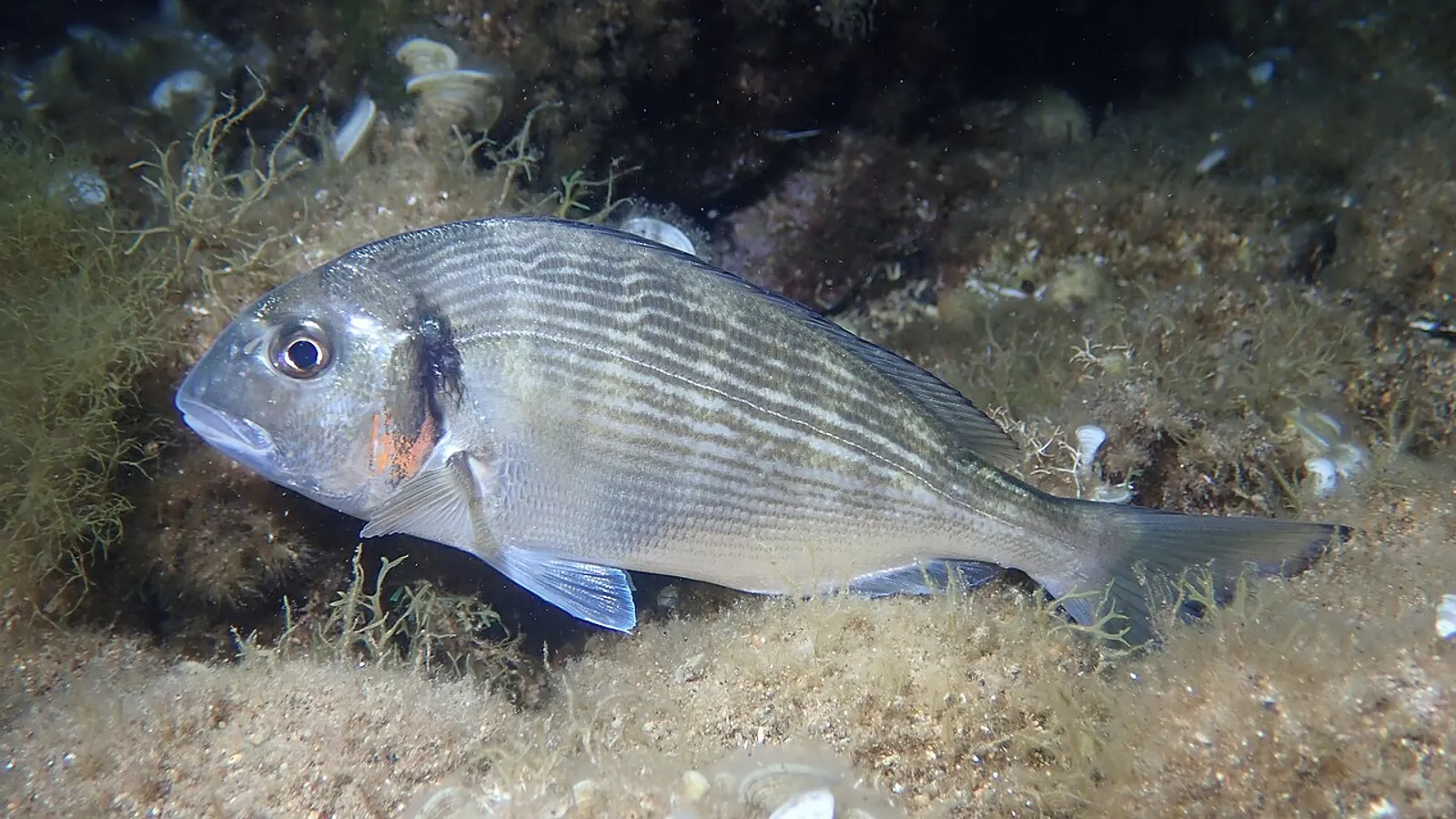
Sparus was the Latin name of these fish; aurata means “gilded” and refers to the gold band between the eyes, which is the quickest way to recognise it. The Italian name comes from the same adjective. In the Roman world it was the luxury fish par excellence, sacred to Venus and raised in the fish ponds of the rich.
— Facts
- Group
- Fish · Actinopterygii · Chondrichthyes
- Order
- Perch-likes
- Habitat
- Sandy bottoms and seagrass beds, coastal lagoons
- Range
- The Mediterranean and the eastern Atlantic from the Channel to Senegal
- Size
- 35–50 cm, up to 70 cm; 1–3 kg
- Diet
- Molluscs, crustaceans, urchins, algae
- Lifespan
- 20 years
— Characteristics
- 01
It has molar teeth able to crush mussels and clams.
- 02
It is born male and becomes female at two or three years old.
- 03
In lagoons it finds the warmth and food it needs to grow fast.
— What sets it apart
Sergius Orata, a Roman businessman of the first century BC, built on Lake Lucrinus the first oyster and fish farming installations in European history, and according to several ancient sources took his nickname from this very species, which he preferred to all others. Mediterranean aquaculture begins there, with a fish pond and a man named after a fish; two thousand years later the gilthead is, with the sea bass, the most farmed marine fish in the Mediterranean.
