
Verreaux's sifaka
Propithecus verreauxi
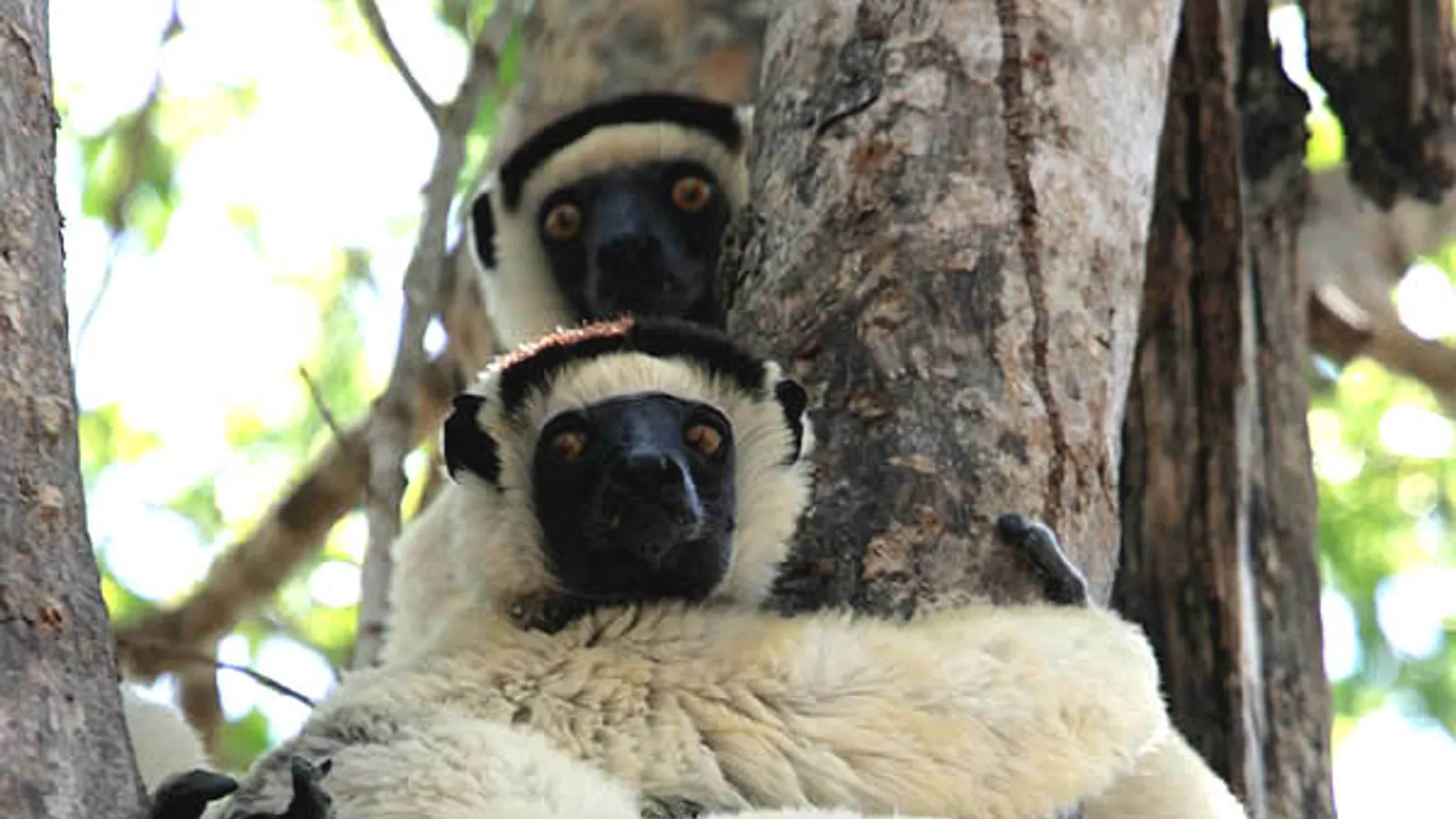
— Where the name comes from
Sifaka is onomatopoeic: it reproduces the animal’s alarm call, an explosive “shi-fak” that carries far through the dry forest. Malagasy has it right, while the scientific name Propithecus, “before the ape”, reflects only the taxonomic embarrassment of the first describers. The epithet recalls Jules Verreaux, a French naturalist and dealer in specimens.
— Facts
- Group
- Mammals · Mammalia
- Order
- Primates
- Habitat
- Dry deciduous forest and the spiny thickets of the south
- Range
- Western and southern Madagascar
- Size
- 42–45 cm long plus 50–60 of tail, 3–3.5 kg
- Diet
- Herbivore — leaves, flowers, fruit, bark
- Lifespan
- 18–20 years
— Characteristics
- 01
It moves between trunks only by vertical leaps, clinging with its hind legs.
- 02
On the ground it does not walk on all fours: it goes in sideways bounds, arms raised for balance.
- 03
Its hind legs are so specialised for leaping that they leave it clumsy on any flat surface.
— What sets it apart
That sideways dance which has made the sifaka famous is no affectation: it is what is left to an animal built entirely for vertical leaping when it has to cross a clearing. In the spiny forest of southern Madagascar, where the trees are covered in thorns, it lands with millimetre precision on trunks that would wound any other primate, gripping them with the callused soles of its feet. It is a body designed for a single movement, which on level ground becomes a kind of compulsory dance.
