
Black howler
Alouatta caraya
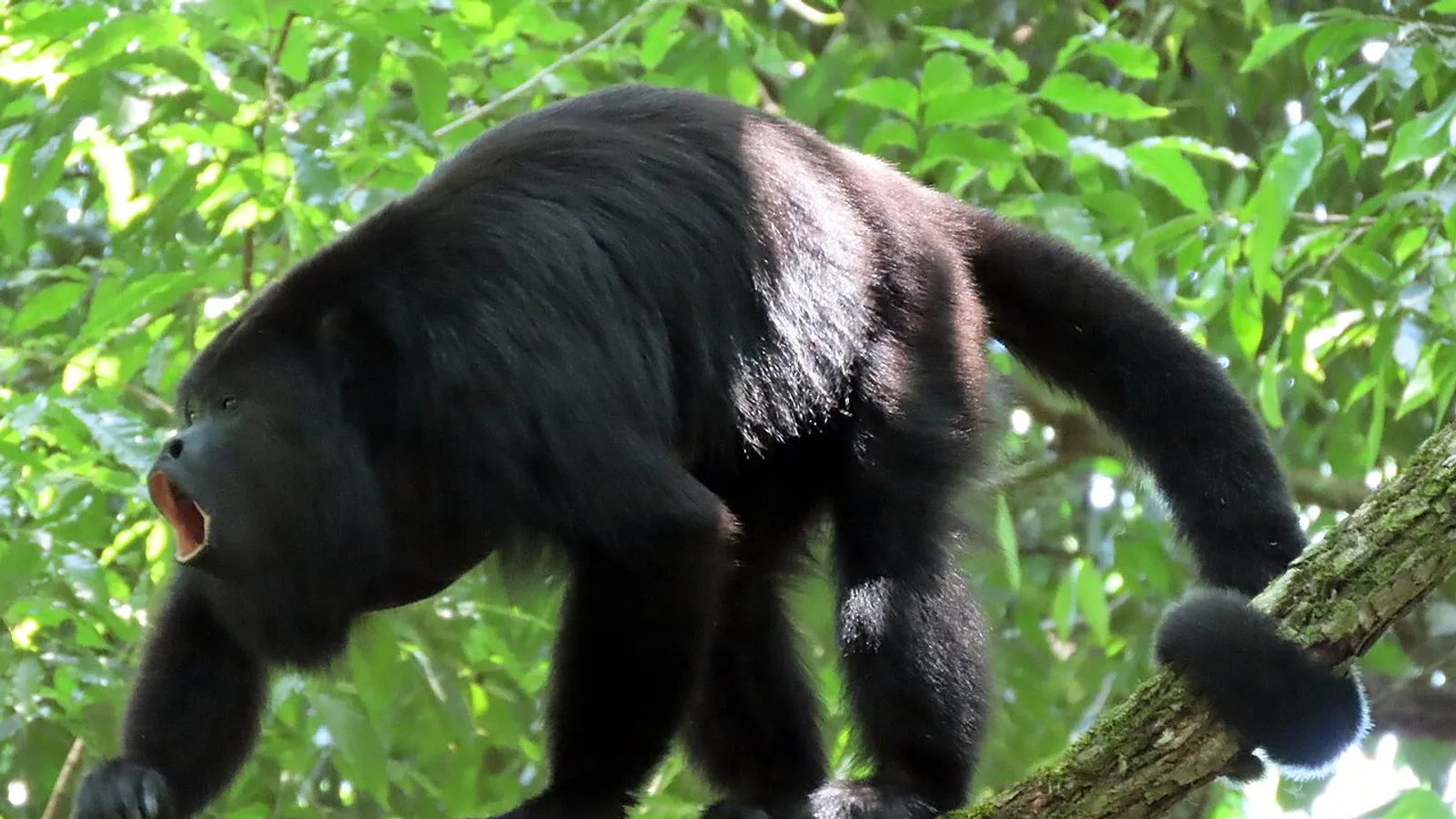
— Where the name comes from
Alouatta comes from a Carib language of the Antilles, reaching French as alouate; caraya is Guaraní. The common name, in every language, says what the people of the forest say: it is the animal that howls. In Brazilian Portuguese it is the bugio, in Spanish the mono aullador, in English the howler monkey. Nobody has felt the need to name anything else about it.
— Facts
- Group
- Mammals · Mammalia
- Order
- Primates
- Habitat
- Gallery forest, humid woodland, wooded savannah
- Range
- Central South America: southern Brazil, Bolivia, Paraguay, northern Argentina
- Size
- 50–65 cm long plus 60–70 of tail, 4–8 kg
- Diet
- Leaf eater — leaves, fruit, flowers
- Lifespan
- 15–20 years
— Characteristics
- 01
The males are black and the females golden blond: few primates show so sharp a difference.
- 02
The chorus carries five kilometres: it is the loudest land animal for its size.
- 03
The prehensile tail has a bare patch with dermal ridges, like a fingertip.
— What sets it apart
The hyoid bone, which in our throat is a small arch supporting the tongue, has in this monkey become a hollow resonating chamber the size of a walnut. The larger it is, the deeper the call — and the smaller the animal’s testicles. It is a trade-off measured across the whole genus: the species that howl loudest invest less in sperm competition, those with modest voices the reverse. Every male is the outcome of an evolutionary choice between two ways of winning the same contest.
