
Short-beaked echidna
Tachyglossus aculeatus
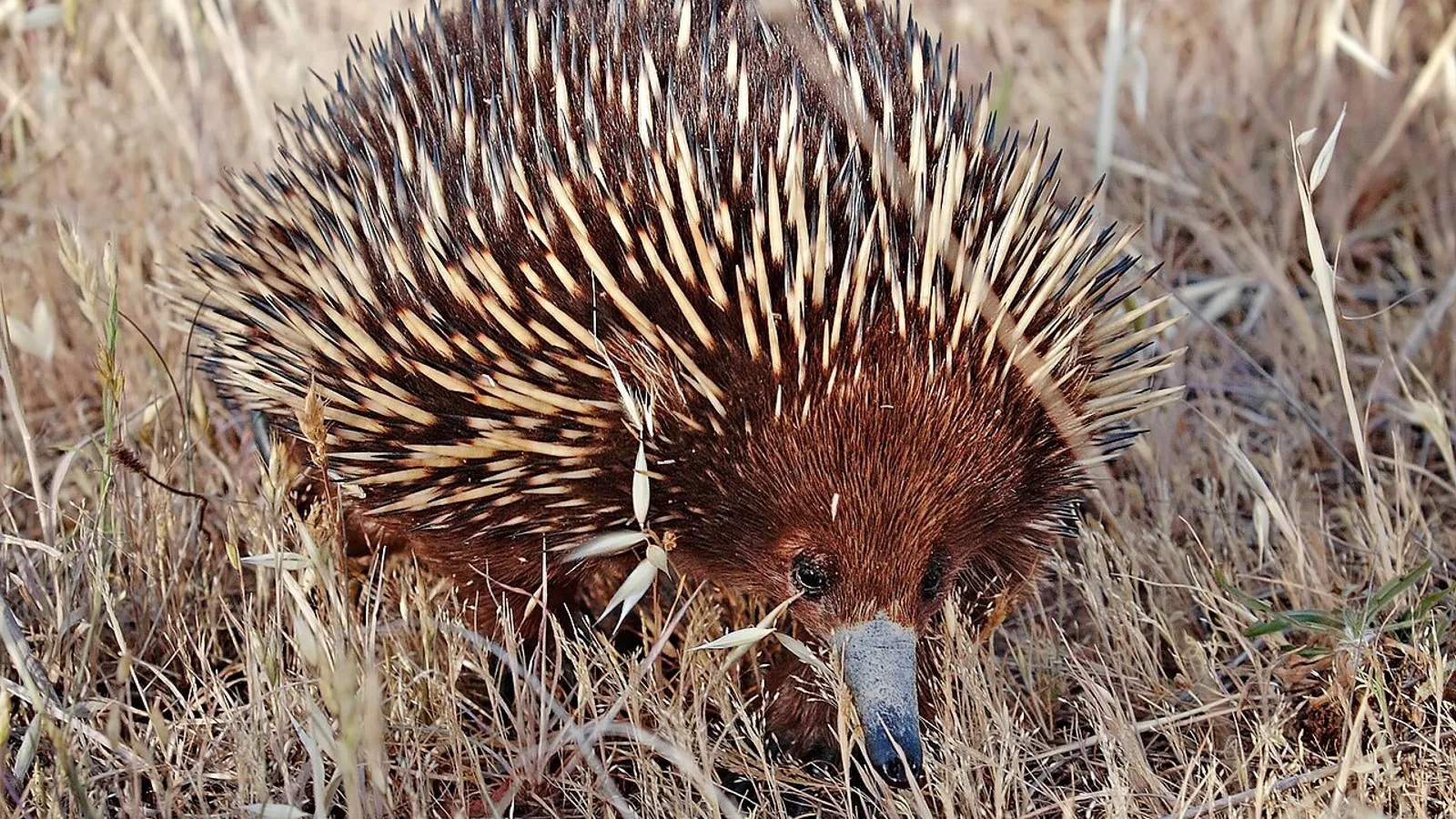
— Where the name comes from
Echidna is the monster of Greek myth, half woman and half serpent, mother of Cerberus and the Chimera: the name was chosen because the animal seemed half mammal and half reptile, an impossible hybrid to place. Tachyglossus is by contrast descriptive — tachýs, “fast”, and glôssa, “tongue” — and aculeatus, Latin, means “furnished with spines”. A mythological monster with a quick tongue and quills.
— Facts
- Group
- Mammals · Mammalia
- Order
- Monotremes
- Habitat
- Forests, scrub, deserts, grassland: almost every Australian environment
- Range
- Australia, Tasmania and New Guinea
- Size
- 30–45 cm long, 2–7 kg
- Diet
- Ant eater — ants and termites, taken with a sticky tongue
- Lifespan
- 15–40 years, among the longest-lived mammals of its size
— Characteristics
- 01
It lays an egg, which it incubates in a belly pouch: one of only five mammals in the world to do so.
- 02
It has no nipples: milk seeps from patches of skin that the young licks.
- 03
The beak senses the electric fields produced by insect muscles underground.
— What sets it apart
It has the lowest body temperature of any mammal, around 32 °C, and regulates it so little that on hot days it must simply stop moving. In exchange it enters torpor and hibernation with a flexibility no other mammal has, surviving fires and droughts buried underground. The combination of eggs, milk without nipples, electroreception and a cooled metabolism does not describe a primitive animal: it describes a branch that parted from ours over a hundred and sixty million years ago and has never stopped working.
