
Death's-head hawkmoth
Acherontia atropos
— Where the name comes from
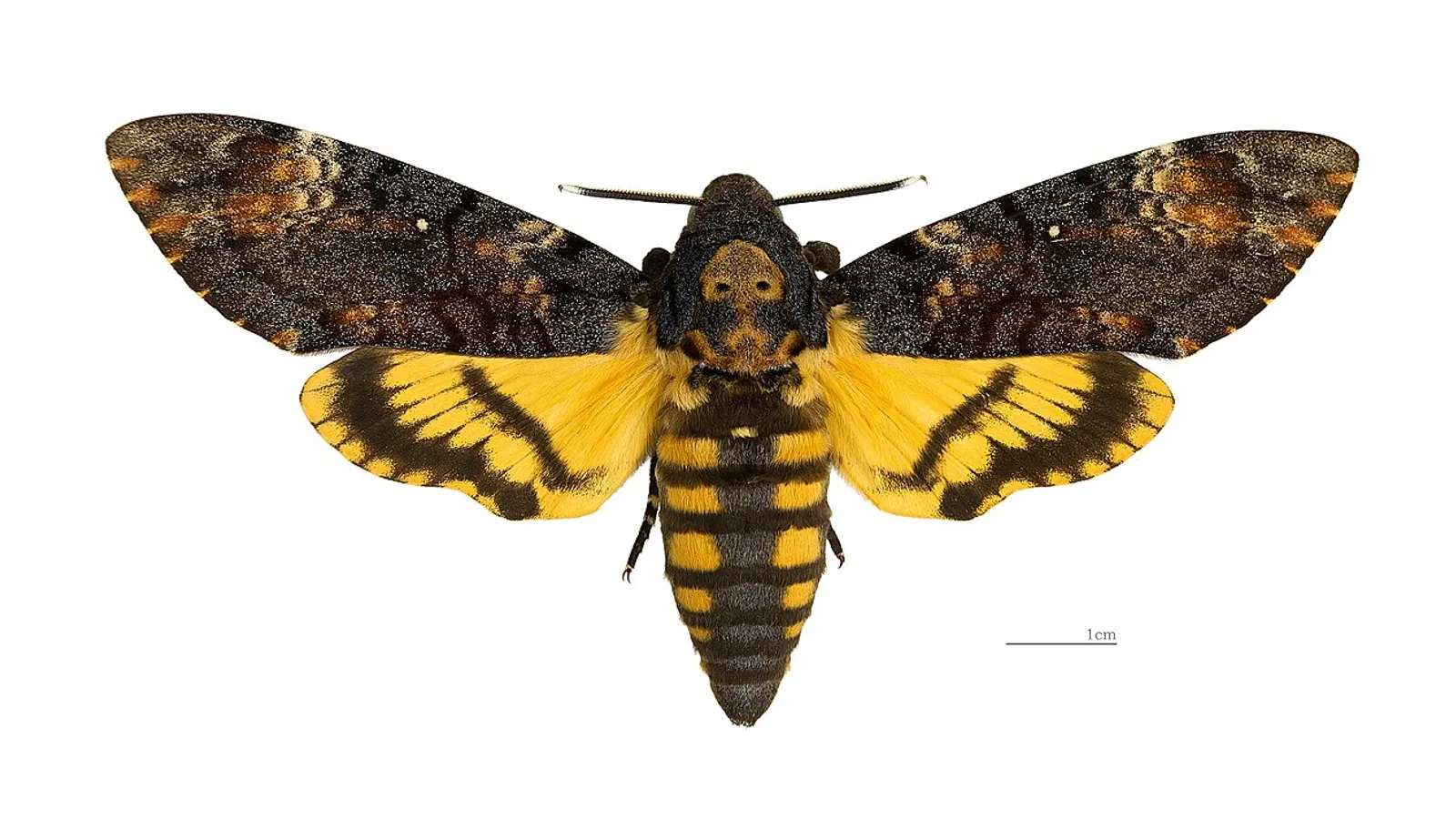
Acherontia comes from the Acheron, the infernal river of the dead; atropos is the Fate who cut the thread of life. The name drips with death, because of the skull marking on the thorax. It is the moth made famous by macabre imagery: an insect branded, by accident, with the symbol of mortality.
— Facts
- Group
- Insects · Insecta
- Order
- Butterflies and moths
- Habitat
- Fields, vegetable plots, farmland, gardens
- Range
- Europe, Africa, the Middle East
- Size
- 9–13 cm wingspan
- Diet
- Honey and sap as an adult; the caterpillar eats potato, privet, oleander
- Lifespan
- A few weeks as an adult
— Characteristics
- 01
It carries a pale marking on the thorax that recalls a human skull.
- 02
It is one of the few moths able to make a sound: a sharp squeak if disturbed.
- 03
It enters beehives and steals honey by mimicking the smell of the bees.
— What sets it apart
The death’s-head hawkmoth is a honey thief in bee’s clothing: it walks into hives and feeds undisturbed because it gives off chemicals that mimic the scent of the workers, fooling the colony. And if discovered, it squeaks: by drawing air through a special organ it produces a sharp cry, all but unique among moths, which seems to confuse the bees. With the skull on its back, the ability to “scream” and the habit of appearing indoors, it has always been read as an omen of death — a role the cinema has only confirmed.
