
Buff-tailed bumblebee
Bombus terrestris
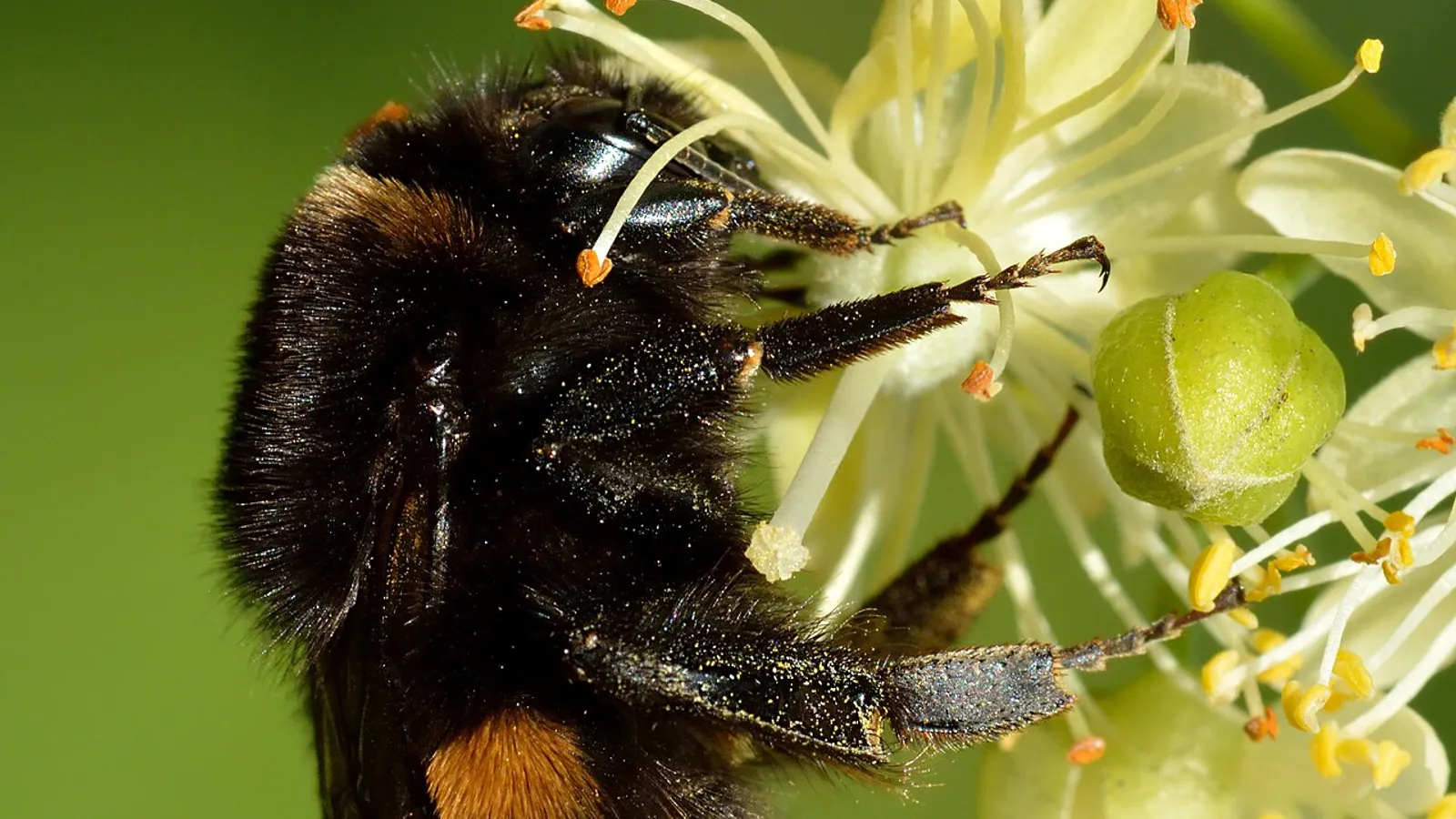
— Where the name comes from
Bombus is from the Greek bómbos, “buzzing, booming”, from the deep sound of its flight; terrestris is Latin, “of the earth”, because it nests in the ground, often in old rodent burrows. The Italian bombo keeps the same onomatopoeia. It is one of the most important pollinators of temperate climates.
— Facts
- Group
- Insects · Insecta
- Order
- Bees, wasps and ants
- Habitat
- Meadows, gardens, farmland, woodland edges
- Range
- Europe, North Africa, western Asia; introduced elsewhere
- Size
- 2–2.5 cm for the queen
- Diet
- Nectar and pollen
- Lifespan
- Workers a few weeks; the queen a year
— Characteristics
- 01
It flies in cold and grey weather, when honeybees stay in the hive: it shivers its muscles to warm up.
- 02
It practises buzz pollination: it shakes the flower at a frequency that releases the pollen.
- 03
It lives in small annual colonies; only the queen overwinters and founds a new one.
— What sets it apart
The bumblebee shakes flowers to make them “sing”: some flowers, the tomato among them, hold their pollen inside closed anthers that open only when vibrated at a particular frequency. The bumblebee grips them and vibrates its flight muscles, giving out a high buzz — buzz pollination — that shoots the pollen out. Honeybees cannot do it. That is why the buff-tailed bumblebee is reared and released into tomato glasshouses all over the world: a pollinator hired for its voice.
