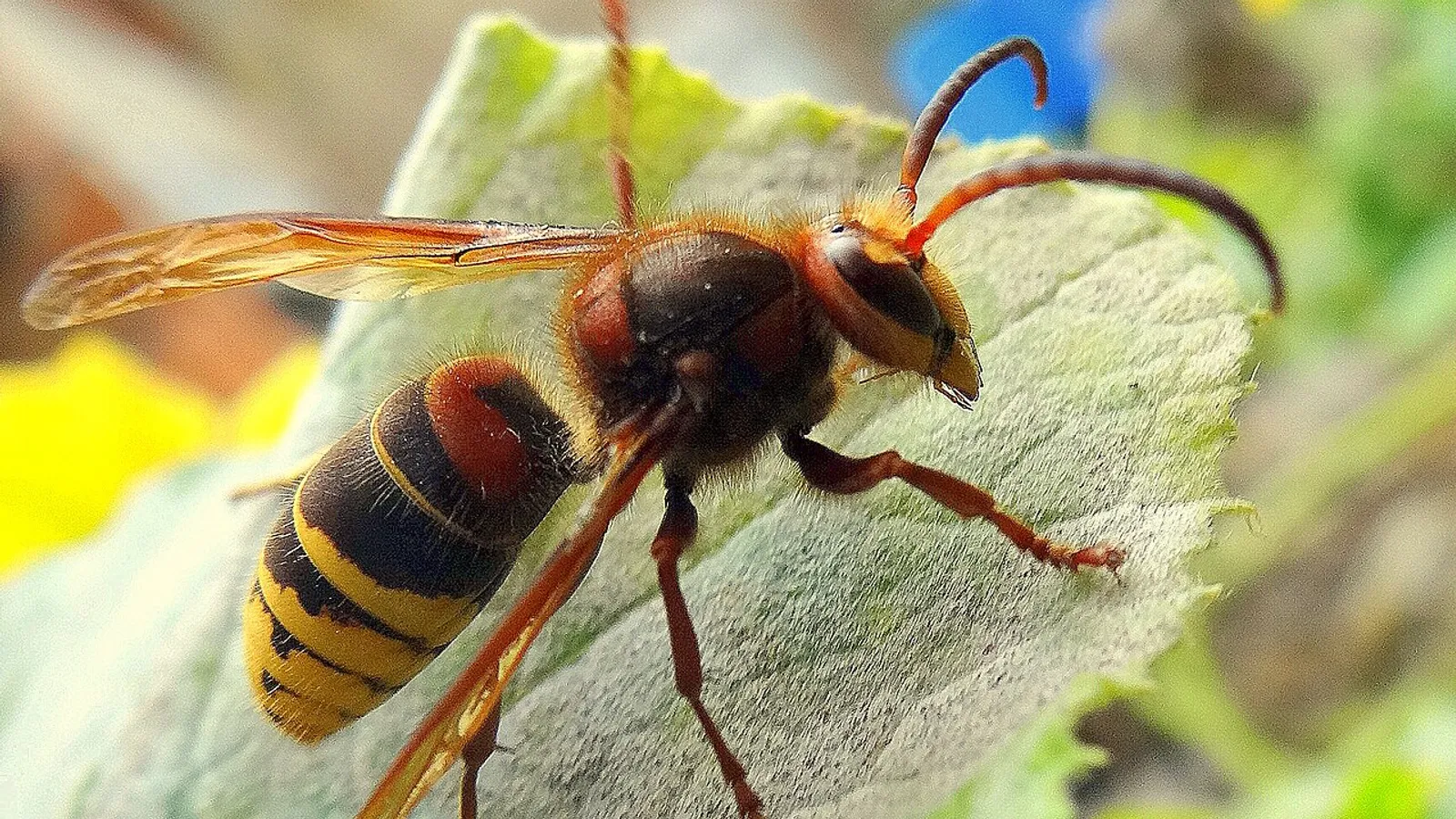
European hornet
Vespa crabro
— Where the name comes from
Vespa is the Latin itself; crabro is the old Latin name of the hornet. The Italian calabrone descends from that crabro through vulgar Latin. It is the largest social wasp in Europe, feared far beyond the danger it actually poses.
— Facts
- Group
- Insects · Insecta
- Order
- Bees, wasps and ants
- Habitat
- Woodland, countryside, gardens; it nests in tree hollows and buildings
- Range
- Europe, Asia; introduced to North America
- Size
- 2–3.5 cm for the queen
- Diet
- Insects for the larvae; sap, fruit and nectar for the adults
- Lifespan
- The colony lasts a season; the queen a year
— Characteristics
- 01
It is the largest European social wasp, but far less aggressive than the common wasp.
- 02
It hunts other insects, flies and bees, which it chews and carries to the larvae.
- 03
It is active at night too, drawn to lights, which is rare among wasps.
— What sets it apart
The hornet has a sinister reputation out of all proportion: three stings are said to kill a man and seven a horse, but it is a legend — its venom is no more dangerous than a bee’s, and the species is in fact shy and reluctant to sting away from the nest. It is also a very useful predator, clearing gardens and vegetable plots of flies and other insects. The real threat, if anything, comes from an invasive Asian cousin, the yellow-legged hornet, which slaughters honeybees.