
Serval
Leptailurus serval
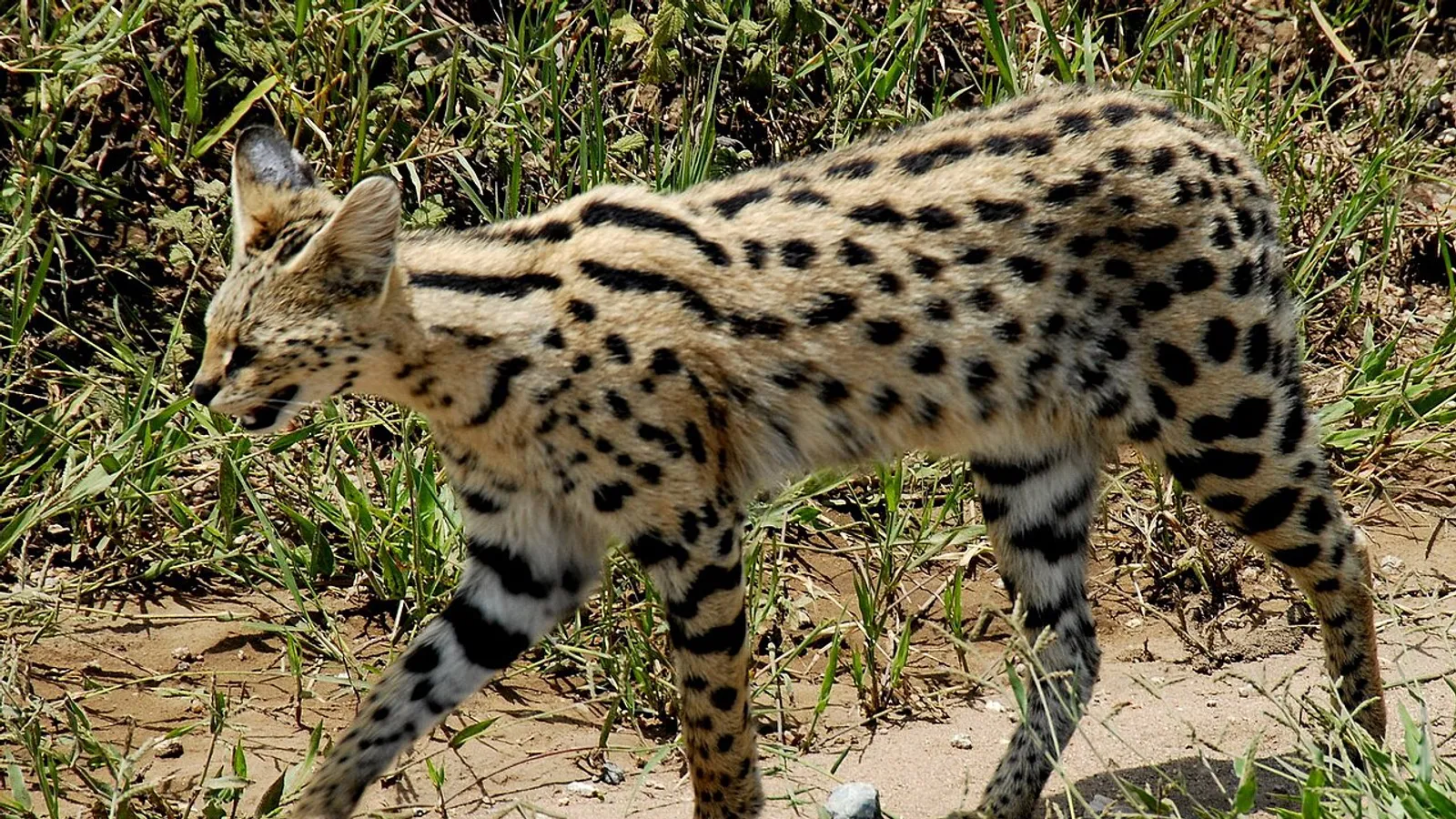
— Where the name comes from
Serval comes from the Portuguese lobo-cerval, “deer wolf”, where cerval is the Latin cervarius, “relating to deer”: the same name that in Europe meant the lynx, thought to hunt deer. Portuguese navigators reused it for an African cat that has nothing to do with deer. Leptailurus is by contrast descriptive and accurate: leptós, “slender”, and aílouros, “cat”.
— Facts
- Group
- Mammals · Mammalia
- Order
- Carnivores
- Habitat
- Wet savannah, reedbeds, tall grassland near water
- Range
- Sub-Saharan Africa, with a relict population in Morocco
- Size
- 60–100 cm long, 9–18 kg
- Diet
- Carnivore — rodents, birds, frogs, insects
- Lifespan
- 10–12 years in the wild
— Characteristics
- 01
It has the longest legs of any cat relative to its body, and the largest ears.
- 02
It leaps three metres straight up, landing on its prey with the forepaws together.
- 03
It catches roughly one prey in every two attempts: among the highest success rates of any cat.
— What sets it apart
It hunts with its ears, not its eyes. In tall grass sight is no use, so it stands still for as much as fifteen minutes swivelling its ear flaps like two aerials, until it locates the rustle of a mouse hidden under the vegetation or inside a tunnel. Then it jumps high and drops like a dead weight on the point it has heard, without ever having seen it. It is a predator that strikes an invisible target trusting nothing but an acoustic map built inside its own skull.
