
European wildcat
Felis silvestris
— Where the name comes from
Felis is the Latin for cat, but originally it meant any small domestic carnivore — probably the marten or the weasel, which in Rome kept the mice down before the cat arrived from Egypt. Silvestris means “of the woods”, from silva. The word cat is later, from the late Latin cattus, perhaps of African origin, which supplanted feles throughout the Romance world.
— Facts
- Group
- Mammals · Mammalia
- Order
- Carnivores
- Habitat
- Deciduous and mixed forest, Mediterranean scrub, rocky ground
- Range
- Europe, Anatolia and the Caucasus; in Italy in the Apennines, eastern Alps, Sicily and Sardinia
- Size
- 50–65 cm long, 3–7 kg
- Diet
- Carnivore — voles, wood mice, rabbits, birds
- Lifespan
- 7–10 years in the wild
— Characteristics
- 01
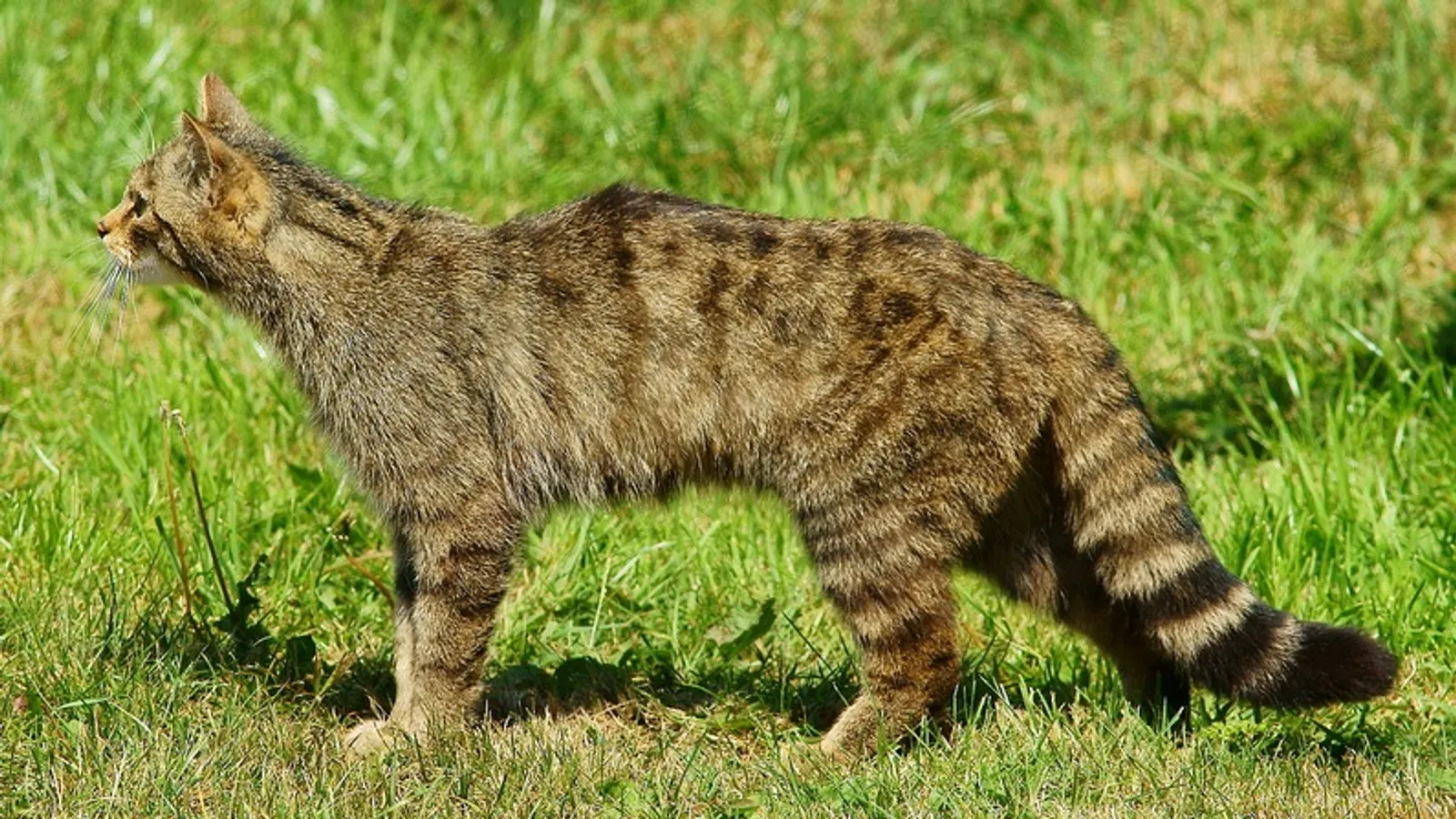
It has a thick tail with clean rings and a rounded black tip: the most reliable feature for telling it from a tabby house cat.
- 02
The skull is larger and the brain volume greater than a domestic cat’s.
- 03
It is solitary and strictly nocturnal, with territories exceeding ten square kilometres.
— What sets it apart
The gravest threat to this species is neither the gun nor deforestation: it is the house cat. The crosses are fertile, and each hybrid generation dilutes the wild genome until the population stops being what it was while still looking the part. In Scotland the process has nearly run its course, and pure wildcats counted there number a few dozen. It is an extinction that leaves no bodies: the species is not killed, it is absorbed.
