
Inland taipan
Oxyuranus microlepidotus
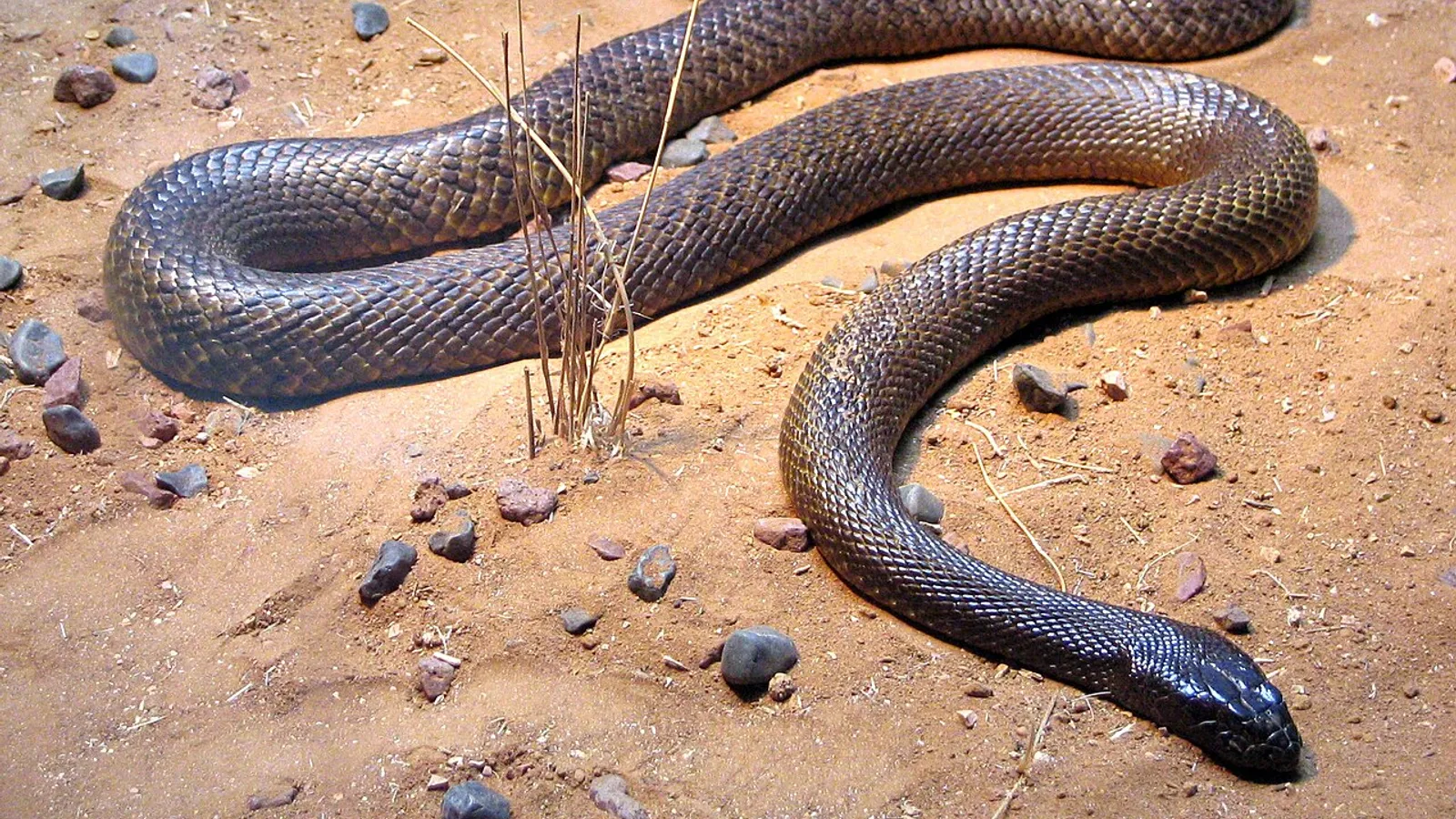
— Where the name comes from
Oxyuranus is “sharp tail”, from oxýs and ourá; microlepidotus means “small-scaled”. Taipan comes from the Wik-Mungkan language of northern Queensland and is one of the few Aboriginal names to have entered common nomenclature. Australians also call it the fierce snake, which it does not deserve in the least.
— Facts
- Group
- Reptiles · Reptilia
- Order
- Squamates
- Habitat
- Cracked clay plains of the arid interior
- Range
- Central Australia, between Queensland and South Australia
- Size
- 180–250 cm, 1.5–3 kg
- Diet
- Almost exclusively the Australian long-haired rat
- Lifespan
- 15 years
— Characteristics
- 01
It lives in cracks in the clay and in rodent burrows.
- 02
It changes colour with the season: darker in winter to absorb heat.
- 03
It bites several times in succession and withdraws at once.
— What sets it apart
It has the most toxic venom of any land snake: a single dose contains, in theory, enough toxin to kill a hundred people. In practice it has killed almost nobody, because it lives in one of the least inhabited places on Earth and is so retiring that after its description in 1879 it disappeared for ninety years, until it was found again in 1972. The paradox fits its diet: it hunts in narrow burrows a rodent that bites back, and it needs to kill before that can happen.
