
Eastern brown snake
Pseudonaja textilis
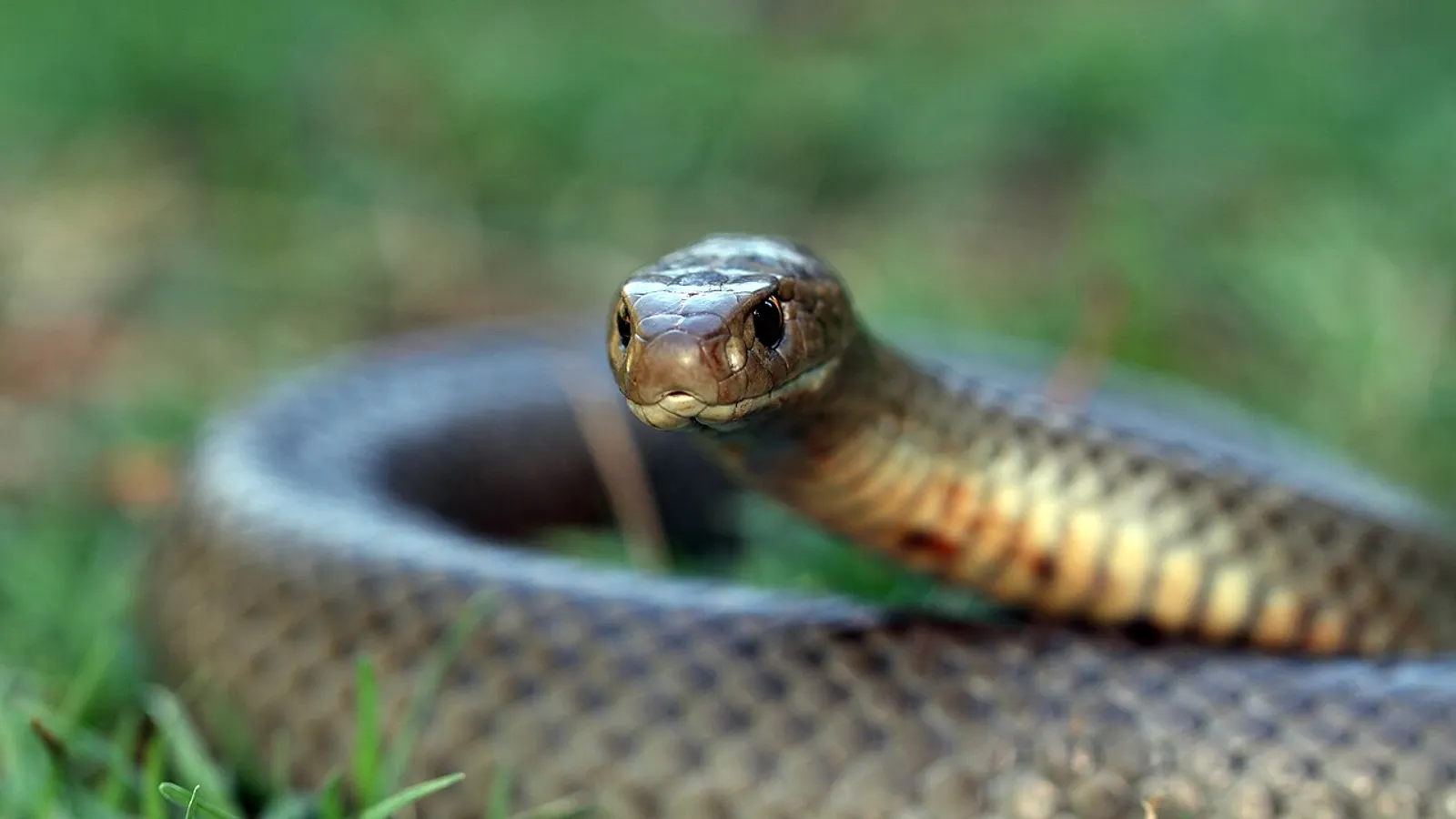
— Where the name comes from
Pseudonaja is “false cobra”, because when annoyed it raises the front of its body into an S and flattens its neck, recalling a cobra without a hood. Textilis, “woven”, refers to the mesh-like pattern of the young, which looks like cloth. It is a very common, unremarkable-looking snake and the cause of most snakebite deaths in Australia.
— Facts
- Group
- Reptiles · Reptilia
- Order
- Squamates
- Habitat
- Farmland, pasture, scrub, suburbs and farmsteads
- Range
- Eastern Australia and southern New Guinea
- Size
- 150–180 cm, up to 240 cm; 1–2 kg
- Diet
- Mice, rats, lizards, birds, other snakes
- Lifespan
- 15 years
— Characteristics
- 01
It is very fast and hunts by day, even in the heat.
- 02
Its venom is the second most toxic among land snakes.
- 03
It lays up to thirty-five eggs under logs and sheets of iron.
— What sets it apart
It does well where we do, and that is the problem. Australian agriculture brought European mice with it, and this snake eats them: in the cereal country it has become more abundant than it was before the settlers, and it lives in barns, under corrugated iron and in suburban gardens. Nearly all serious bites happen while somebody is trying to kill it or move it, and the official Australian advice is to leave it alone and wait for it to go.
