
Common krait
Bungarus caeruleus
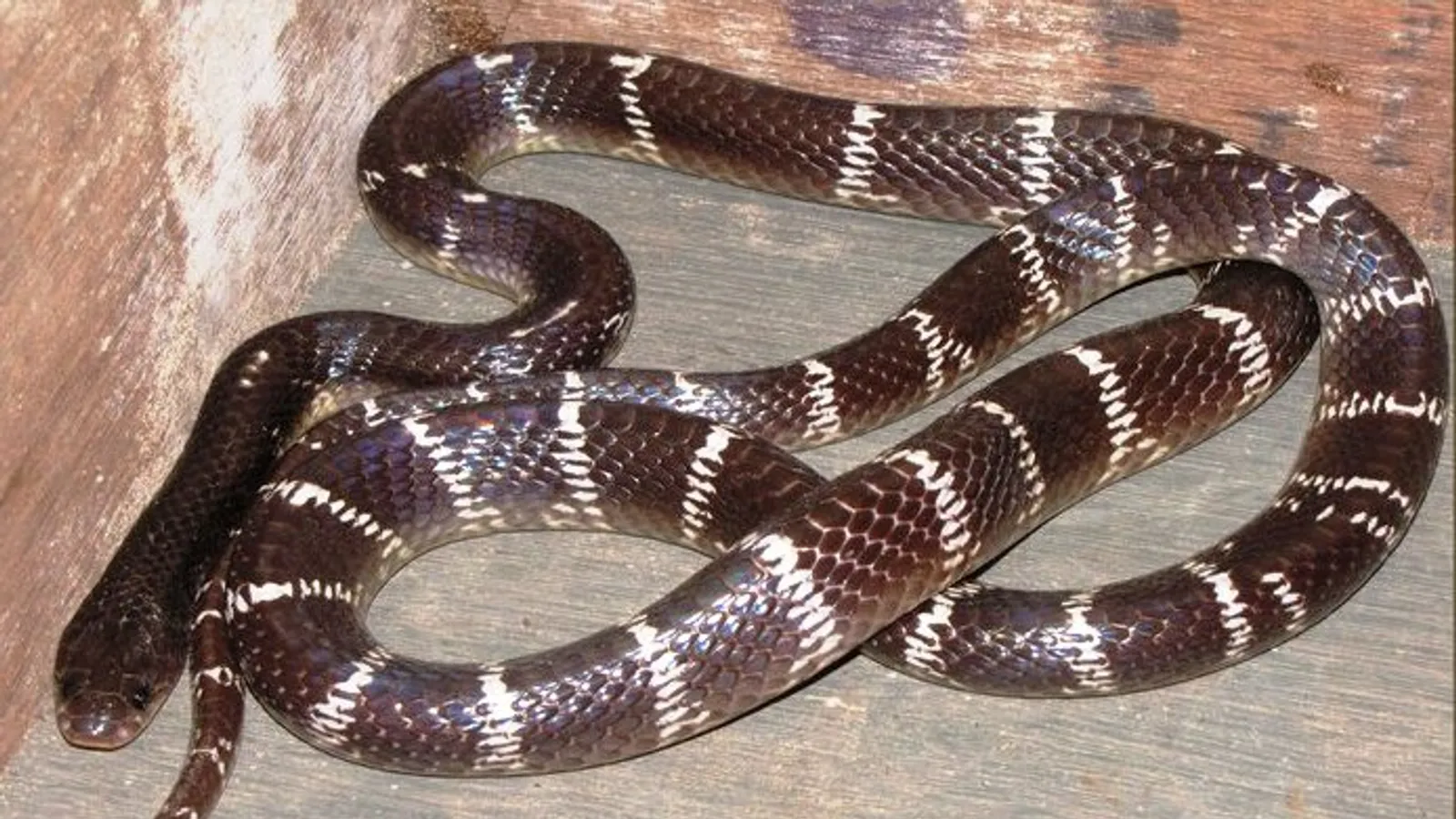
— Where the name comes from
Bungarus comes from Telugu, one of the languages of southern India, where bangaru denotes these snakes; caeruleus means “dark blue”, for the metallic sheen of the black back. Krait is a Hindi word, and across the subcontinent it names an animal one almost never sees and fears a great deal.
— Facts
- Group
- Reptiles · Reptilia
- Order
- Squamates
- Habitat
- Fields, villages, brick piles, canals, houses
- Range
- India, Pakistan, Bangladesh, Sri Lanka, Nepal
- Size
- 90–120 cm, up to 175 cm; 200–400 g
- Diet
- Other snakes, lizards, rodents, frogs
- Lifespan
- 12 years
— Characteristics
- 01
It is active only at night and stays hidden in rubble by day.
- 02
The bite is nearly painless: often the victim does not notice.
- 03
It is one of the “big four”, the snakes that cause most deaths in India.
— What sets it apart
It kills people in their sleep. In rural India people often sleep on the floor, and this snake comes into houses at night looking for cool and for prey; if somebody shifts in their sleep and presses on it, it bites. The bite leaves two minute punctures and does not hurt, the venom acts on the nerves without pain or swelling, and the victim wakes hours later unable to speak or breathe — if they wake. That is why many regions teach people to sleep on a raised cot under a tucked-in net.
