
Serotine bat
Eptesicus serotinus
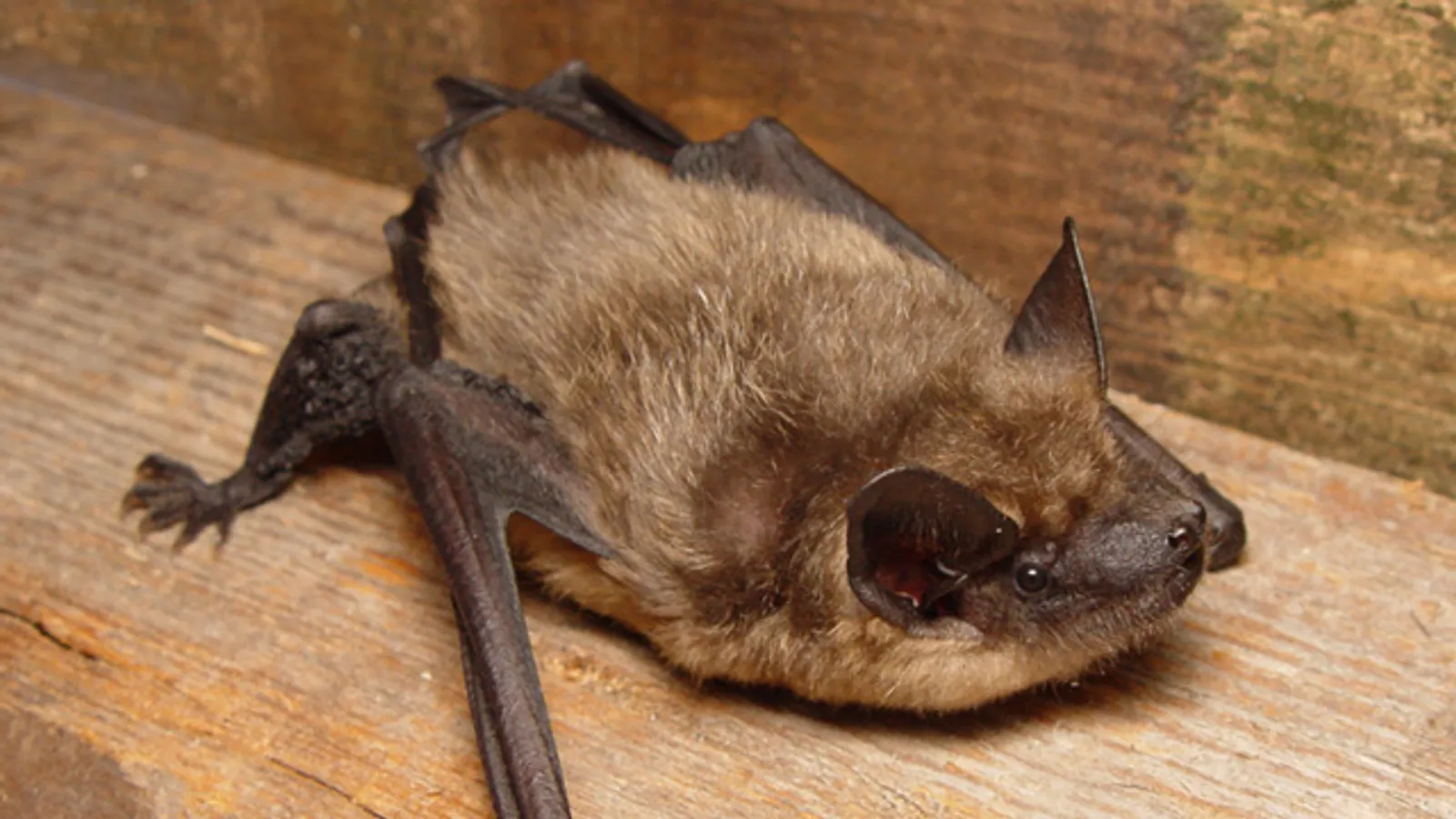
— Where the name comes from
Serotinus is the Latin “late”, from serus, “late” — the same root as the Italian sera, evening, and serotino, said of fruit that ripens out of season. The name records the habit of emerging later than the others, when dusk is already over. Eptesicus is instead one of the names Rafinesque coined without explanation, and over which the lexicographers have given up.
— Facts
- Group
- Mammals · Mammalia
- Order
- Bats
- Habitat
- Attics and cavities in buildings; hunting in parks, gardens and around streetlights
- Range
- Europe, North Africa, Asia as far as China
- Size
- 6.2–8.2 cm of body, 36 cm wingspan, 18–35 g
- Diet
- Insectivore — large beetles, moths, flies
- Lifespan
- Up to 24 years
— Characteristics
- 01
It is among the largest and most robust bats in Europe.
- 02
It lives almost exclusively in buildings: it is hardly ever found in caves.
- 03
It readily hunts around streetlights, where insects gather.
— What sets it apart
It is the bat almost everyone in Europe has seen without knowing it. Large, slow, with a heavy flapping flight, it comes out of the loft of a village house when it is already dark and spends the evening circling a streetlamp, eating the beetles the light has drawn in. It lives in buildings and not in caves, which makes it at once the most familiar and the most exposed: a roof repair done in the wrong month wipes out a colony that may have been there for a century.
