
Big brown bat
Eptesicus fuscus
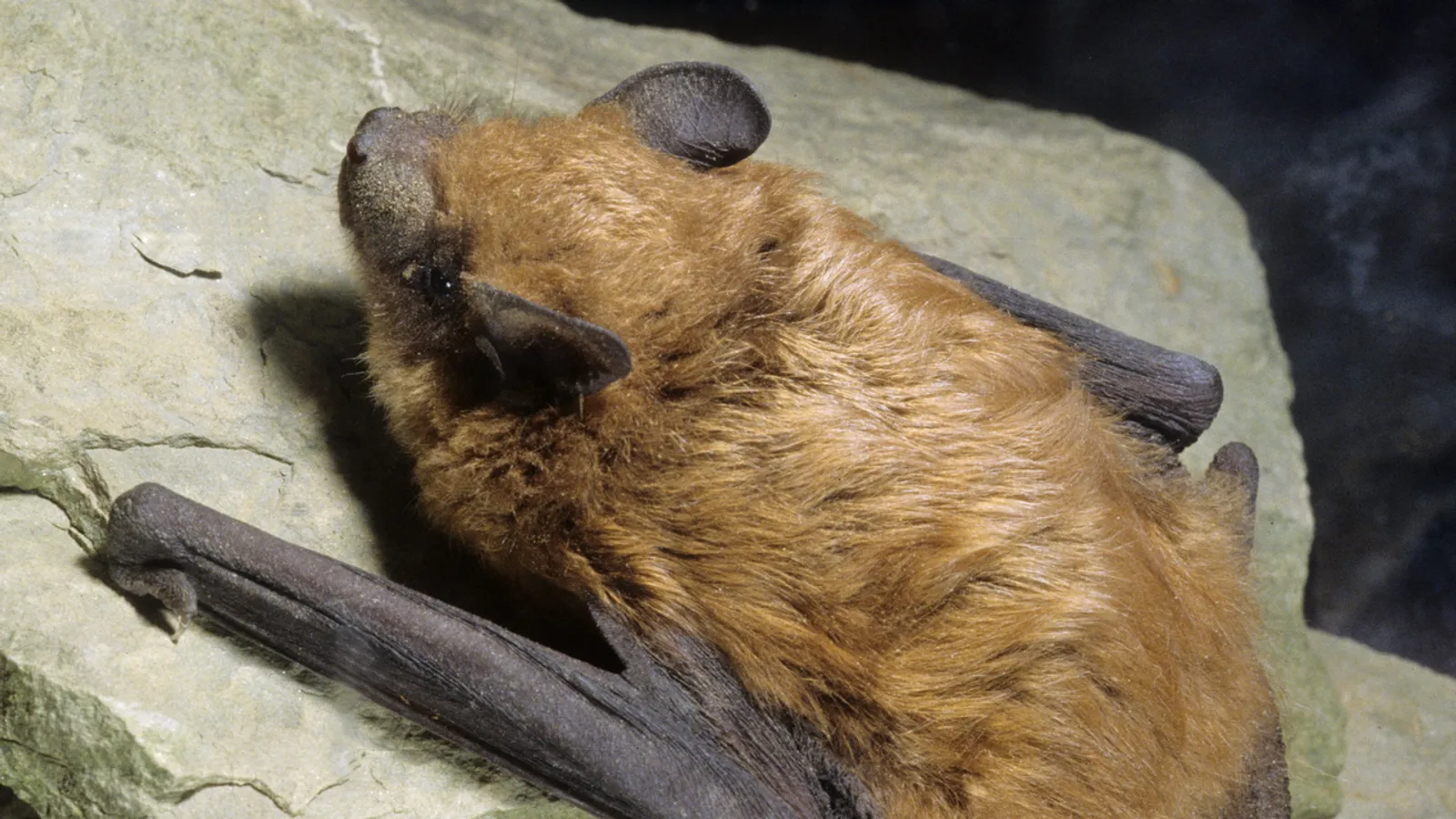
— Where the name comes from
Fuscus is the Latin “dark, brown”, and that is all the name says. In English it is the big brown bat as against the little brown bat: two very common species distinguished in ordinary speech by an adjective of size, which is how North American colonists named nearly all the wildlife they found.
— Facts
- Group
- Mammals · Mammalia
- Order
- Bats
- Habitat
- Attics, belfries, tree hollows; hunting over fields, parks and roads
- Range
- From southern Canada to Venezuela, and the Antilles
- Size
- 6–8 cm of body, 33 cm wingspan, 15–26 g
- Diet
- Insectivore — chiefly beetles, with powerful jaws
- Lifespan
- Up to 19 years
— Characteristics
- 01
It has powerful jaws that let it crack the wing cases of beetles.
- 02
It resists white-nose syndrome better than almost any other American species.
- 03
It also winters in buildings, not only in caves, which reduces contagion.
— What sets it apart
It has become one of the main economic arguments in favour of bats. It eats large quantities of corn rootworm and other crop beetles, and several studies have tried to put a price on that service: estimates of the value of bats to United States agriculture run to billions of dollars a year in pesticides not bought. The numbers are debated and fragile, but they have changed the way these animals are spoken about in the rooms where funding is decided.
