
Superb fairywren
Malurus cyaneus
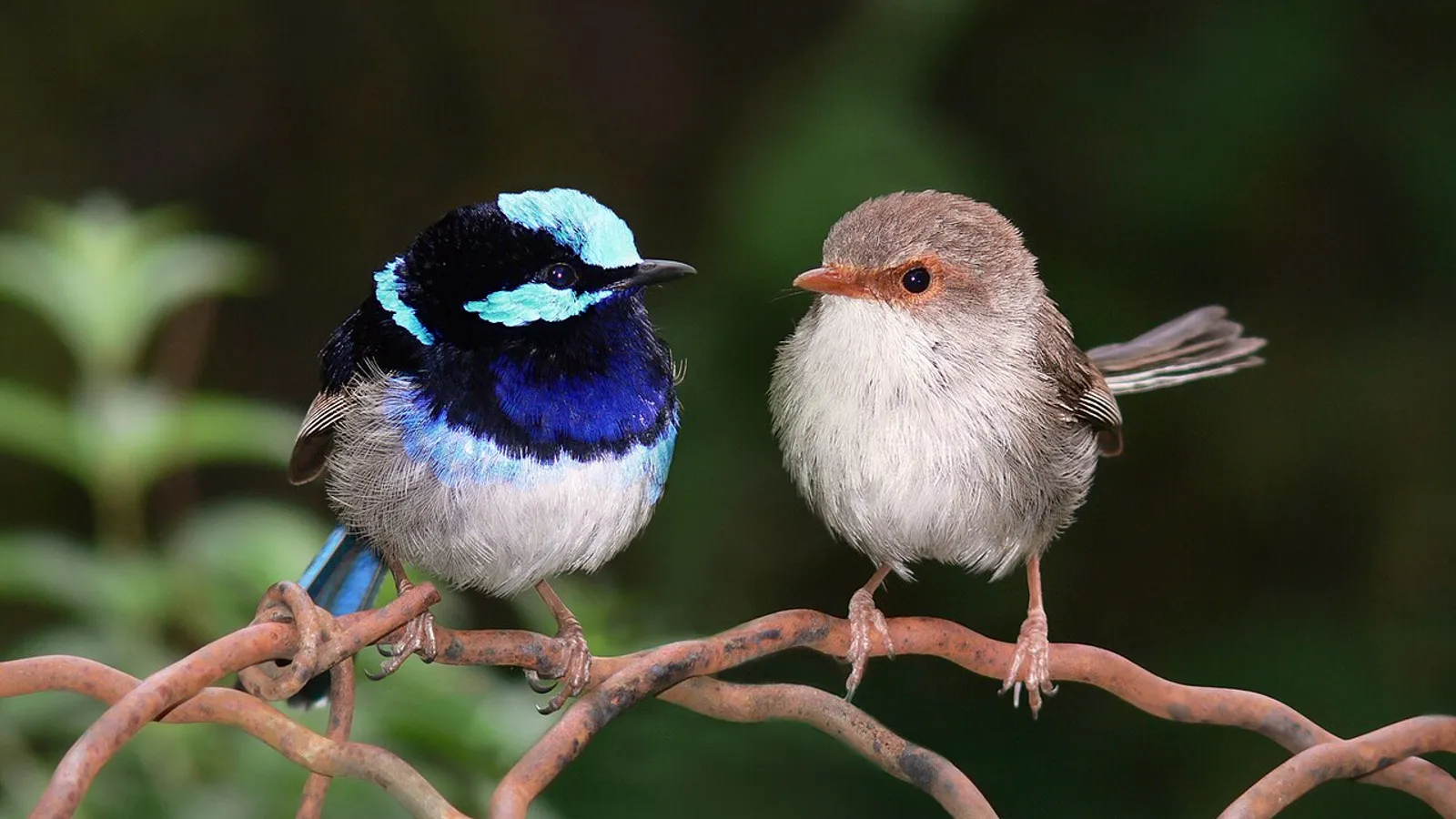
— Where the name comes from
Malurus is “soft tail”, from the Greek malakós and ourá, for the frayed tail feathers it holds cocked upright; cyaneus is blue. It is not related to the European wren: it merely carries its tail the same way, and it is one of the many cases in which British settlers in Australia named new things after home.
— Facts
- Group
- Birds · Aves
- Order
- Passerines
- Habitat
- Dense understorey, gardens, parks, patches of shrubs
- Range
- South-eastern Australia and Tasmania
- Size
- 13–14 cm, 8–13 g
- Diet
- Insects, spiders, the occasional seed
- Lifespan
- 6 years in the wild
— Characteristics
- 01
In the breeding season the male turns electric blue and black.
- 02
It lives in family groups in which the young stay on to help their parents.
- 03
The male carries a yellow or pink petal in his bill to the female he courts.
— What sets it apart
The female teaches her young a password while they are still inside the egg. In the last days of incubation she sings a single note over the nest, different from every other female’s, and the newly hatched chicks work it into their begging call: whoever says it gets fed, whoever does not, does not. It is a defence against cuckoos, which lay in other birds’ nests and hatch having heard nothing. It is a biological password, changed for every clutch, transmitted through a shell.
