
European yellow-tailed scorpion
Euscorpius flavicaudis
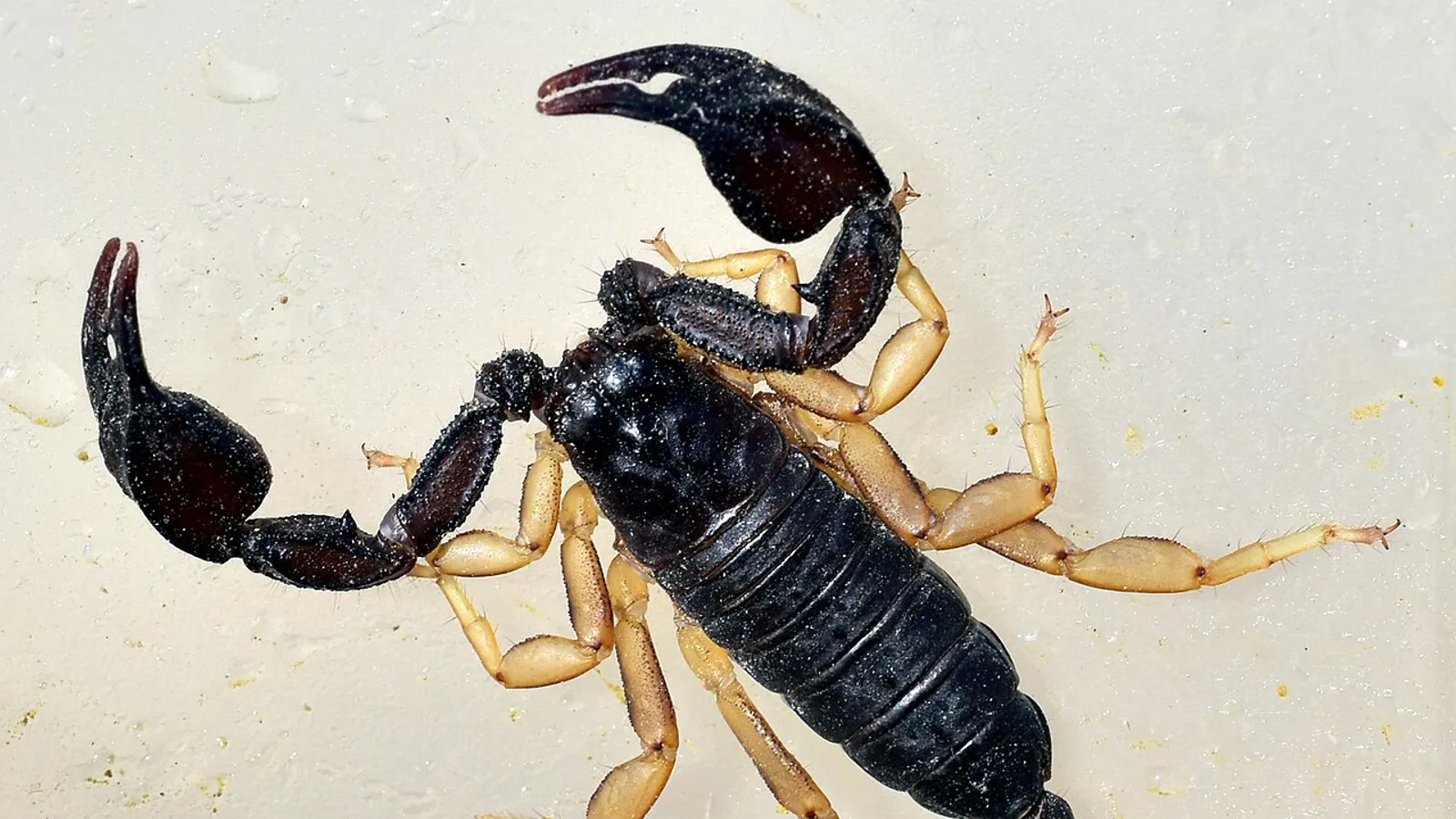
— Where the name comes from
Skorpíos is the Greek word, and it has left traces everywhere: the constellation, the zodiac sign, and the old sense of “to sting”. Eu- before it means “true, good”. Flavicaudis is “yellow-tailed”, and distinguishes this species from its relatives. It is the scorpion of Italian houses, the one found in dry stone walls and now and then in the bathroom, and which almost everyone takes for dangerous.
— Facts
- Group
- Arachnids · Arachnida
- Order
- Scorpions
- Habitat
- Dry stone walls, cellars, under stones; also indoors
- Range
- Southern Europe, from Spain to the Balkans; introduced to England
- Size
- 35–45 mm
- Diet
- Spiders, insects, small nocturnal invertebrates
- Lifespan
- 4–8 years
— Characteristics
- 01
The pincers are large and strong: it kills by crushing, not by stinging.
- 02
The sting hurts less than a bee’s.
- 03
The female gives birth to live young and carries them on her back.
— What sets it apart
It is the example of the rule opposite to its Saharan cousin’s: it has massive pincers and very weak venom, because it crushes prey rather than paralysing it. For humans the sting amounts to a mild bee sting, and Italy has no dangerous scorpions. Like all scorpions it lays no eggs: the young are born alive, climb onto their mother’s back and stay there until their first moult, coming down only once their shell has hardened. A colony introduced accidentally at Sheerness, in England, has survived in the harbour walls since the eighteenth century: it is the northernmost scorpion population in Europe.
