
Mediterranean banded centipede
Scolopendra cingulata
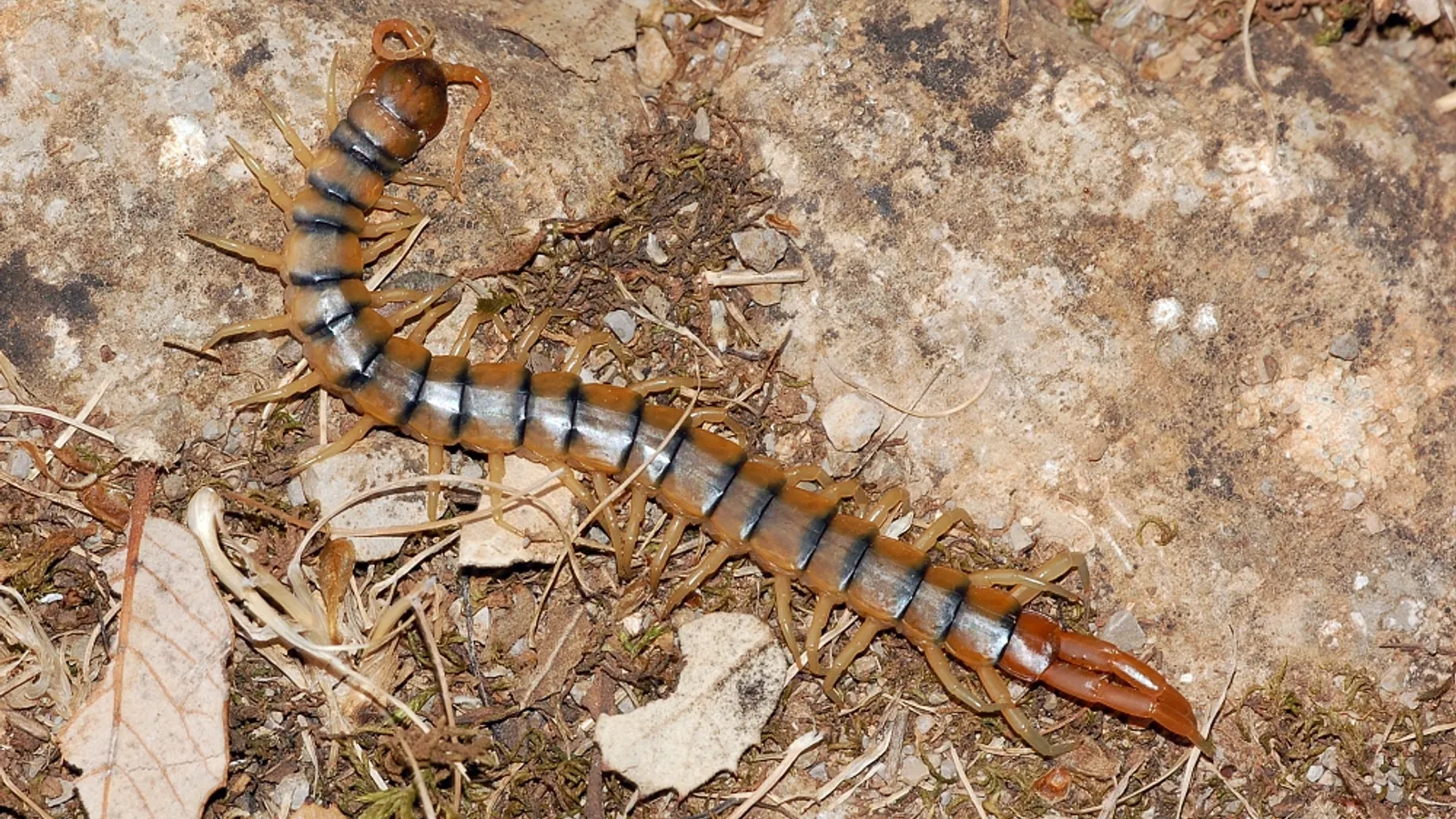
— Where the name comes from
Cingulata is Latin for “girdled”, after the dark bands marking the rear edge of every segment, like belts repeated the length of the body. It is the centipede found under stones all over Italy, and the popular names in many dialects place it beside the “hundred legs”, with the usual number overstated.
— Facts
- Group
- Myriapods · Myriapoda
- Order
- Tropical centipedes
- Habitat
- Under stones, bark and debris, in dry warm places
- Range
- The Mediterranean basin
- Size
- 10–17 cm
- Diet
- Insects, spiders, earthworms, small lizards
- Lifespan
- 4–6 years
— Characteristics
- 01
The bite is painful to humans but not dangerous.
- 02
The mother coils around her eggs and cleans them until they hatch.
- 03
It is nocturnal and flees light with startling speed.
— What sets it apart
The mother stays with the eggs. She wraps her body around them in a chamber dug under a stone and licks them one by one for weeks, removing the moulds that would otherwise kill them within days; if disturbed she abandons the clutch and sometimes eats it. It is behaviour rare among non-social arthropods, and it has a cost: for all that time she does not hunt. The two hind legs, much longer than the rest, are not for walking but for feigning a second head and seizing an attacker coming from behind.
