
Amazonian giant centipede
Scolopendra gigantea
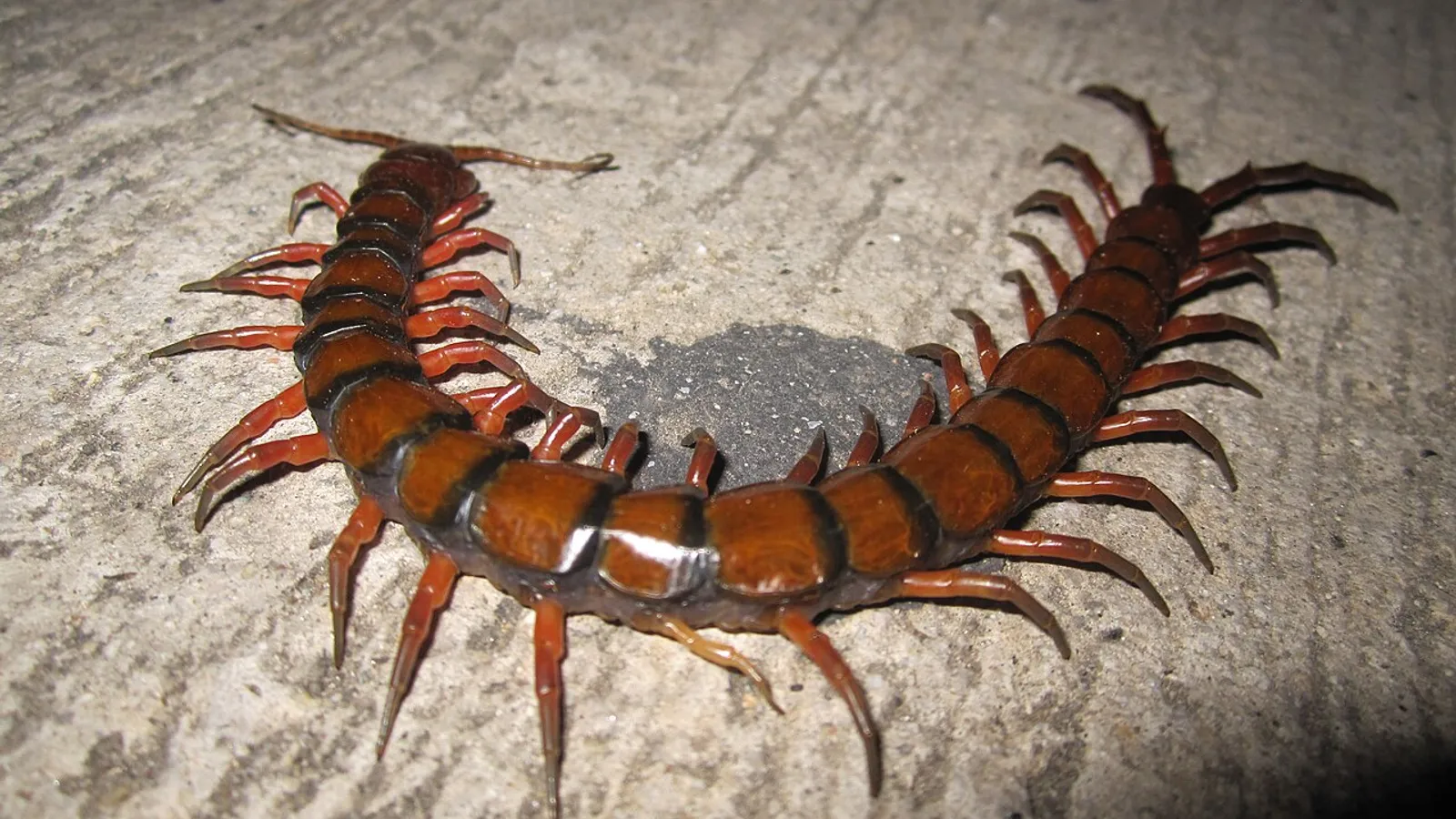
— Where the name comes from
Skolópendra is a very old Greek word, used in Aristotle for both the land centipede and a bristling sea worm: nobody knows where it comes from, and it crosses two and a half thousand years unchanged. The name of the centipede order, Chilopoda, says “thousand feet” — and gets it wrong, because none has a thousand: this species has forty-six.
— Facts
- Group
- Myriapods · Myriapoda
- Order
- Tropical centipedes
- Habitat
- Leaf litter and cavities of tropical forest, including caves
- Range
- Northern South America and the Caribbean islands
- Size
- Up to 30 cm
- Diet
- Insects, spiders, lizards, frogs, mice, bats
- Lifespan
- 10 years
— Characteristics
- 01
The first pair of legs is turned into two fangs that inject venom.
- 02
It has one pair of legs per segment, always an odd number of pairs.
- 03
It runs at over half a metre a second.
— What sets it apart
In the caves of Venezuela it hunts bats in flight: it grips the ceiling with its hind legs, hangs into the void and seizes a passing animal weighing as much as itself, envenomates it and eats it dangling. It has been filmed, and it is one of the few known cases of an invertebrate routinely preying on a flying mammal. The limbs it bites with are not jaws: they are the first pair of legs, transformed into hollow forcipules connected to venom glands — it eats with what, in another animal, would be feet.
