
Fox squirrel
Sciurus niger
— Where the name comes from
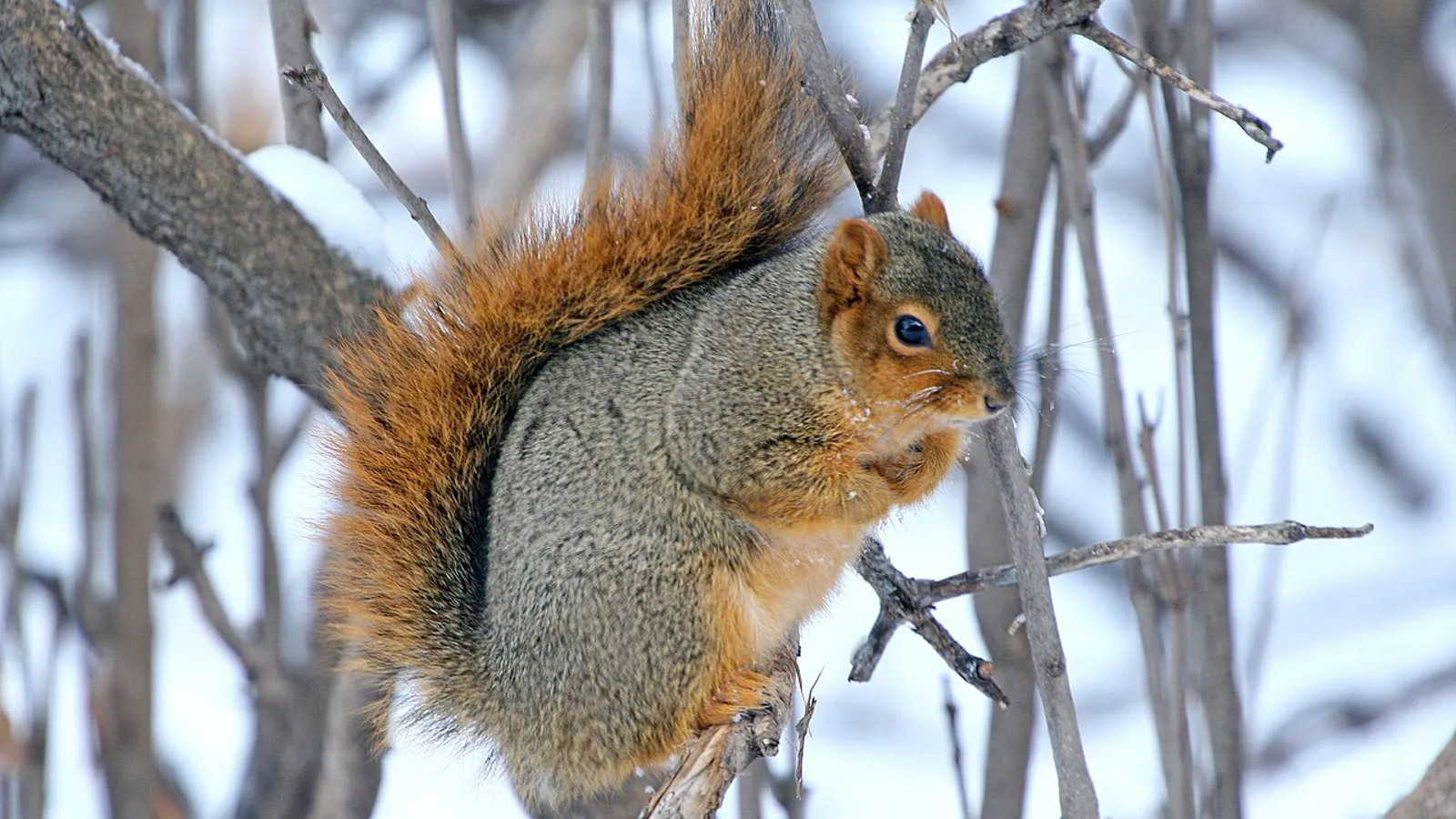
Sciurus is the Greek skíouros, “shade-tail”, from skiá and ourá: the animal that shades itself with its own tail. Niger, “black”, is a small accident of natural history — Linnaeus described the species from a melanistic specimen, and ever since the reddest squirrel in North America has officially borne the name of black. The Italian calls it the fox squirrel, for the rust colour and the bushy tail.
— Facts
- Group
- Mammals · Mammalia
- Order
- Rodents
- Habitat
- Open oak and hickory woodland, city parks, tree lines along fields
- Range
- The eastern and central United States, southern Canada, northern Mexico
- Size
- 45–70 cm including tail, 500–1,000 g
- Diet
- Acorns, nuts, seeds, buds, fungi, the occasional egg
- Lifespan
- 8 years in the wild, 18 in captivity
— Characteristics
- 01
It is the largest tree squirrel in North America.
- 02
It buries acorns one by one in hundreds of separate caches.
- 03
In south-eastern populations melanism is common, elsewhere very rare.
— What sets it apart
It forgets where it put the food, and for the oaks that is a piece of luck. A fox squirrel hides thousands of acorns in a season and recovers perhaps three quarters: the rest stay buried at the right depth, in spots deliberately chosen away from the parent tree. It is one of the few relationships in which an animal’s absent-mindedness has become the dispersal mechanism of an entire family of plants.
