
Northern flying squirrel
Glaucomys sabrinus
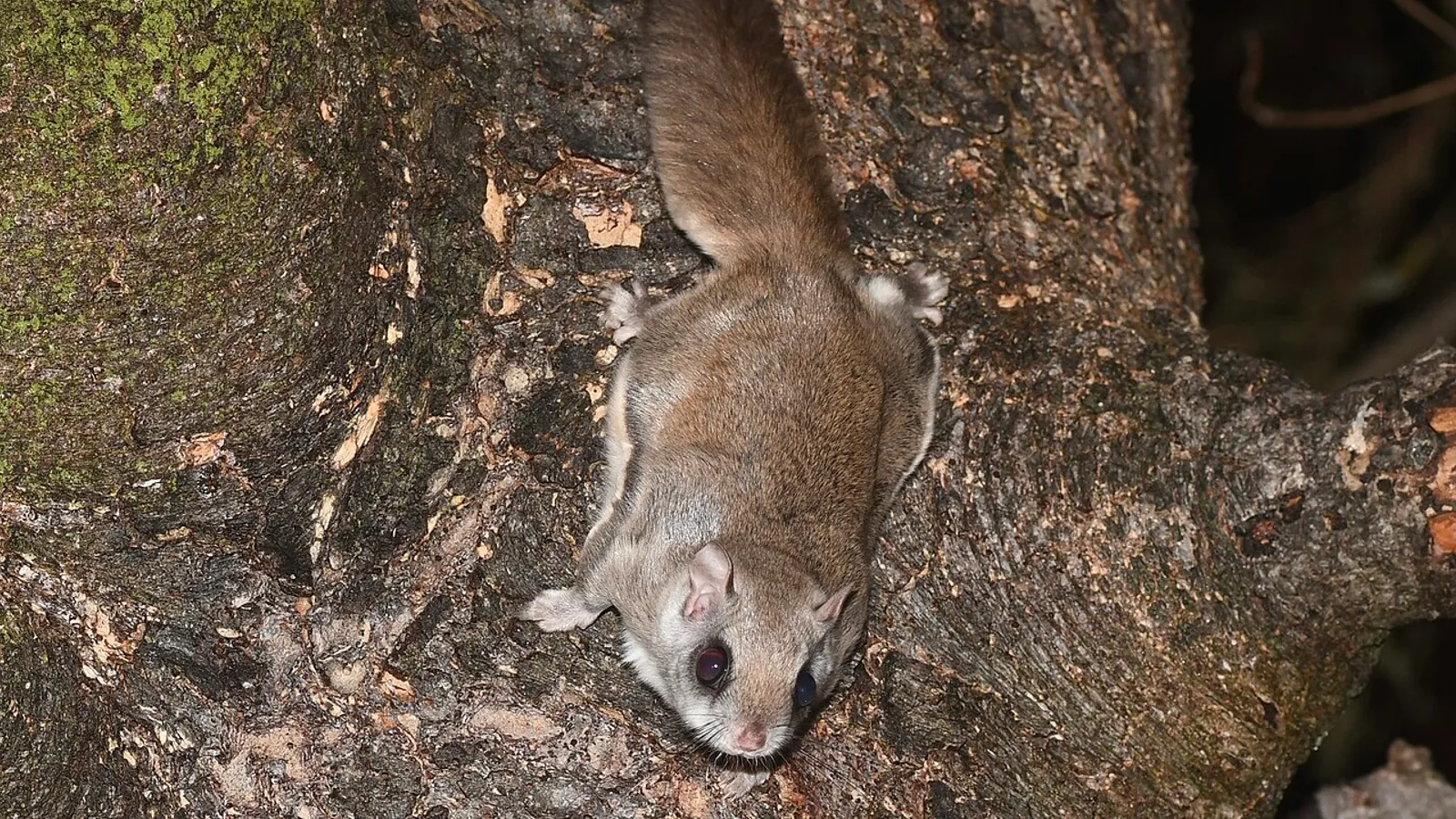
— Where the name comes from
Sabrinus comes from Sabrina, the Latin name of the river Severn and of the nymph who lived in it in Welsh legend: the epithet therefore means “of the river”. It seems the naturalist who coined it was rendering into Latin an indigenous name for the animal of the watercourses, and ended by christening a North American squirrel with a British river deity.
— Facts
- Group
- Mammals · Mammalia
- Order
- Rodents
- Habitat
- Boreal coniferous forest and mature mixed woodland
- Range
- Canada, Alaska, the northern United States and mountain ranges down to California
- Size
- 25–37 cm including tail, 110–230 g
- Diet
- Underground fungi, lichens, seeds, buds, insects
- Lifespan
- 4 years in the wild
— Characteristics
- 01
It is nocturnal: the huge eyes gather the little light of the understorey.
- 02
It lives largely on truffles and other fungi that grow underground.
- 03
It does not hibernate, but reduces activity and huddles with others for warmth.
— What sets it apart
By eating underground fungi it acts as the forest’s postman. Truffle spores cannot travel on the wind because they ripen below ground: they come out intact from the squirrel’s gut, which sows them about as it glides from tree to tree. Those fungi form the mycorrhizae without which conifers cannot take up nutrients. To remove the flying squirrel from a wood means, years later, having trees that grow worse.
