
Japanese dwarf flying squirrel
Pteromys momonga
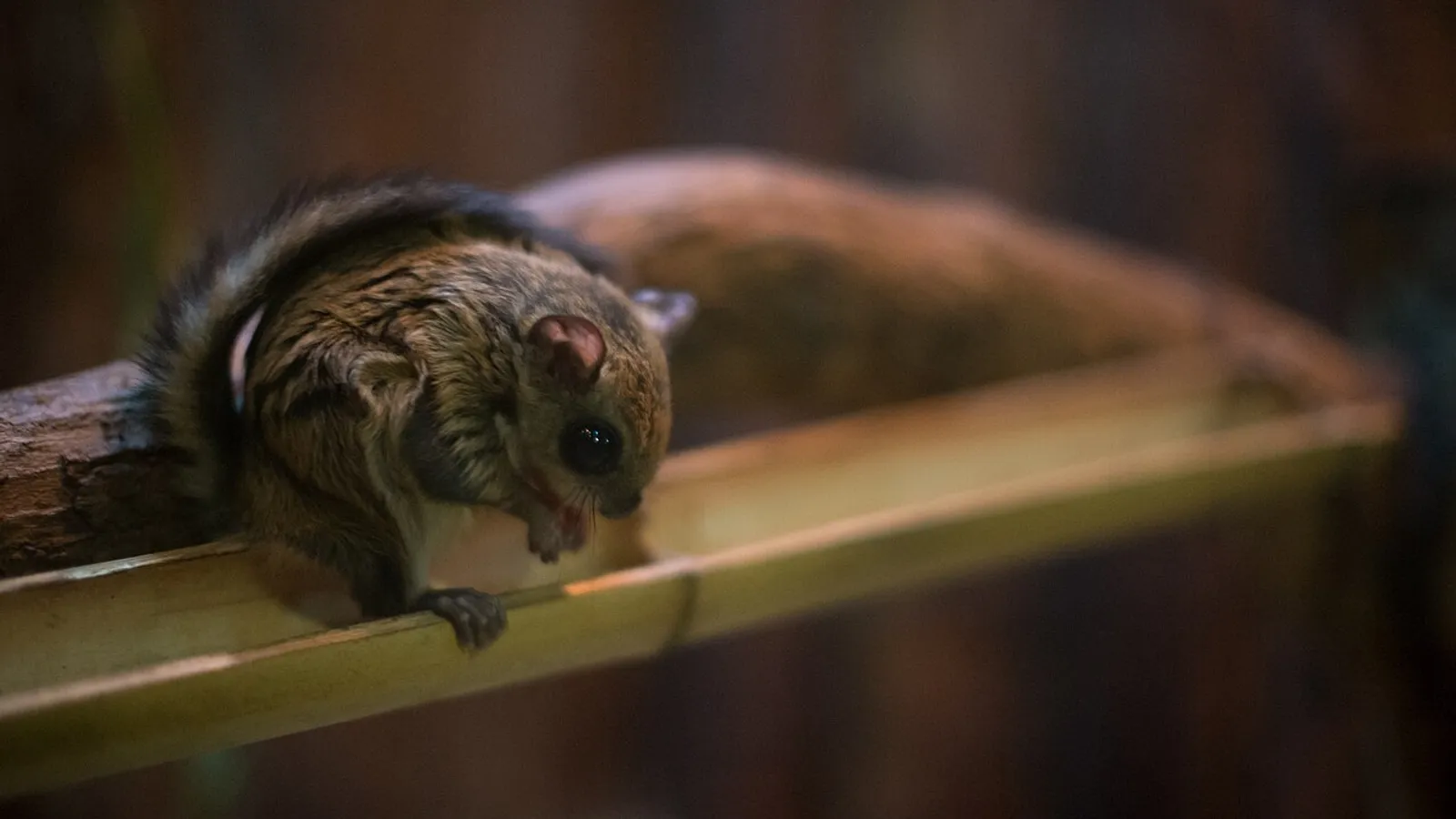
— Where the name comes from
Pteromys is “winged mouse”, from the Greek pterón and mŷs. Momonga is the Japanese word, and it has a curious history: in the Edo period it named gliding night animals in general, and was used as well for imaginary creatures of folk tales, hairy monsters that dropped from trees onto travellers. The scientific name ended up ratifying a term from a ghost story.
— Facts
- Group
- Mammals · Mammalia
- Order
- Rodents
- Habitat
- Subalpine coniferous and mixed forest
- Range
- Japan: Honshū and Kyūshū
- Size
- 14–20 cm of body, tail 10–14 cm, 150–220 g
- Diet
- Buds, leaves, conifer seeds, bark, fruit
- Lifespan
- 5 years in the wild
— Characteristics
- 01
It weighs a tenth of its giant relative, the musasabi, with which it shares the woods.
- 02
It glides up to about fifty metres between trunks.
- 03
In winter several individuals sleep together in the same cavity to conserve heat.
— What sets it apart
Its recent fame is entirely photographic. The outsized eyes and round face have made it a kind of national mascot, with rows of photographers staked out in winter before holes in tree trunks in Hokkaidō and Honshū to catch the moment it looks out. The tourism that has grown up is nearly all at a distance and does not disturb it, but it has had a useful side effect: the old woods where it nests have acquired a measurable economic value.
