
European ground squirrel
Spermophilus citellus
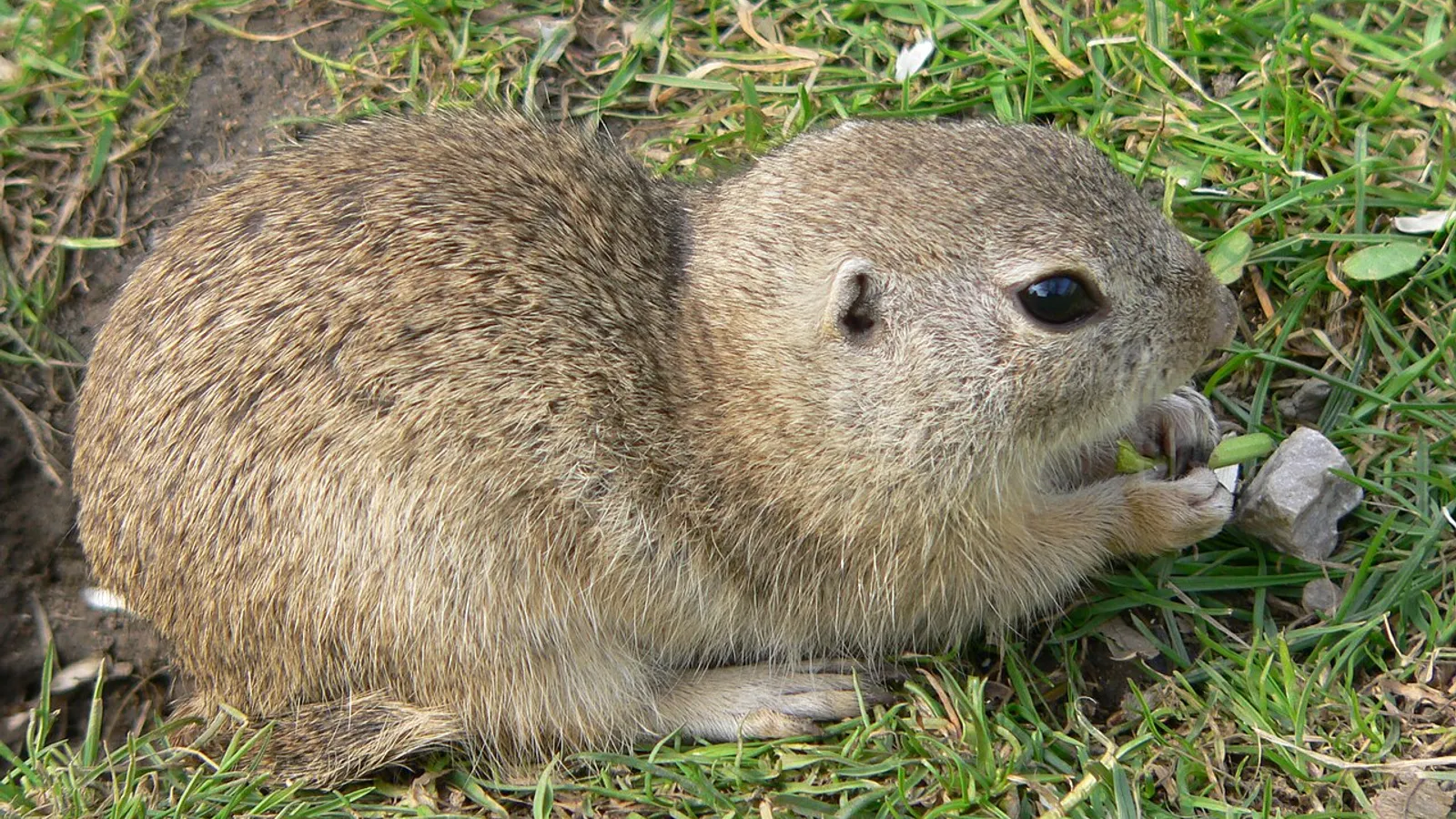
— Where the name comes from
Spermophilus is “lover of seeds”, from the Greek spérma and philos. Citellus is instead the latinisation of the German Ziesel, the popular name of the animal in central Europe, itself taken from a Slavic language — the Italian citello comes by that route. It is a name that crossed three language families before becoming scientific.
— Facts
- Group
- Mammals · Mammalia
- Order
- Rodents
- Habitat
- Grassy steppe, short pasture, airfields and embankments with short grass
- Range
- Central and eastern Europe, from the Czech Republic to European Turkey
- Size
- 18–23 cm of body, tail 5–7 cm, 200–430 g
- Diet
- Seeds, roots, shoots, insects
- Lifespan
- 6 years in the wild
— Characteristics
- 01
It lives in colonies and stands upright on its hind legs to watch, like a sentry.
- 02
Hibernation runs from September to March, in an underground chamber plugged from inside.
- 03
It needs short grass: if the pasture is abandoned and grows tall, it disappears.
— What sets it apart
It is going extinct because Europe no longer grazes. It is not hunting or pesticides: the souslik can see predators only on a close-cropped sward, and the common pastures that guaranteed that for centuries have been either ploughed or abandoned. Today its healthiest colonies survive on ground mown for other reasons — airfields, golf courses, river embankments, ski runs — and conservation projects consist, quite literally, of paying somebody to cut the grass.
