
Richardson's ground squirrel
Urocitellus richardsonii
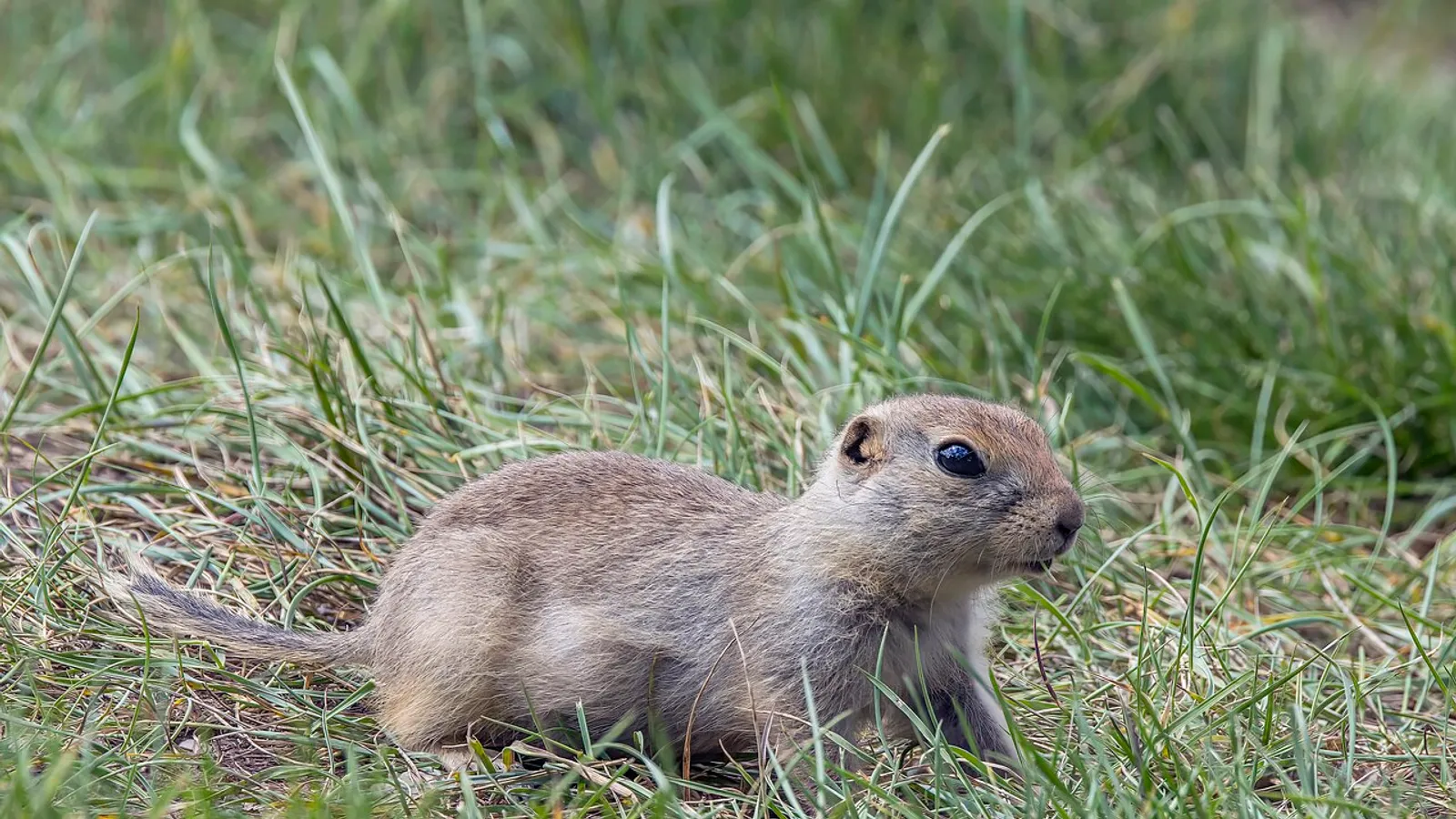
— Where the name comes from
Urocitellus joins the Greek ourá, tail, to the German-derived citellus: “souslik with a tail”. The epithet recalls John Richardson, the Scottish physician who accompanied Franklin on the Arctic expeditions and who, having come back alive from a journey in which others starved, wrote the natural history of the Canadian north.
— Facts
- Group
- Mammals · Mammalia
- Order
- Rodents
- Habitat
- Short prairie, pasture, cultivated fields
- Range
- The prairies of southern Canada and the northern United States
- Size
- 28–33 cm including tail, 200–500 g
- Diet
- Grasses, seeds, shoots, insects
- Lifespan
- 4 years in the wild
— Characteristics
- 01
It spends up to eight months a year underground, between hibernation and aestivation.
- 02
The males emerge from hibernation weeks before the females and wait for them.
- 03
On the prairies they call it a gopher, though it is no true gopher.
— What sets it apart
It shouts at a frequency we cannot hear. Besides the audible alarm whistle, it gives calls entirely in the ultrasound around fifty kilohertz, discovered only by pointing special microphones at colonies that seemed silent. The advantage is obvious: hawk and coyote do not perceive them, and the colony can warn itself without telling the predator where it is.
