
Golden-mantled ground squirrel
Callospermophilus lateralis
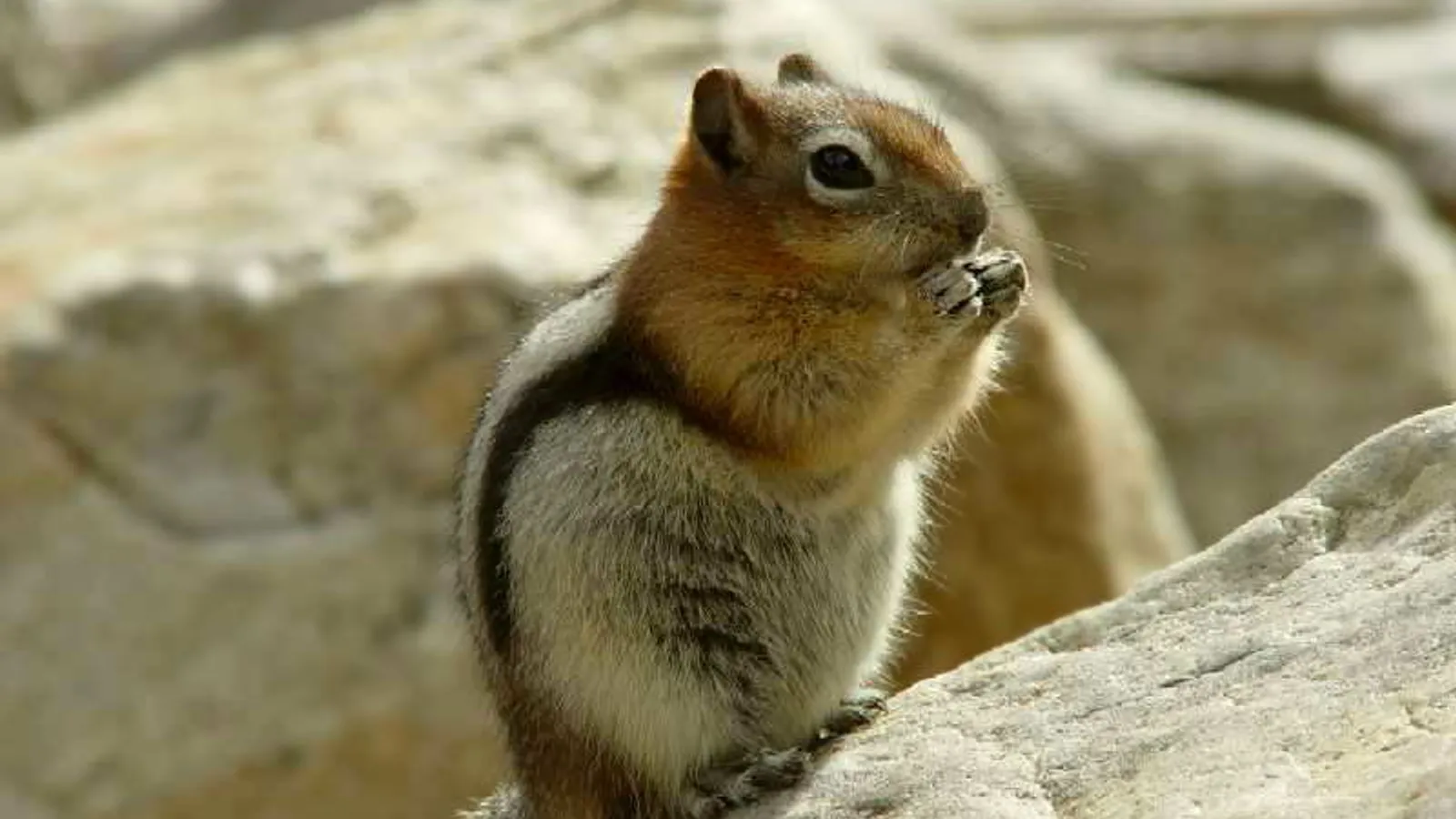
— Where the name comes from
Callospermophilus is “beautiful lover of seeds”, with the Greek kalós in front of spérma and philos. Lateralis, “of the sides”, points to the two white lines edged in black that run along the flanks — and only along the flanks: there are none on the head, and that is the quickest way not to confuse it with a chipmunk, which has stripes on the face as well.
— Facts
- Group
- Mammals · Mammalia
- Order
- Rodents
- Habitat
- Montane coniferous woodland, scree, trail edges
- Range
- Western North America, from British Columbia to New Mexico
- Size
- 23–30 cm including tail, 120–390 g
- Diet
- Seeds, acorns, fungi, fruit, insects, eggs
- Lifespan
- 7 years in the wild
— Characteristics
- 01
It has cheek pouches able to hold dozens of seeds at a time.
- 02
It hibernates deeply for six months, waking only for brief periodic arousals.
- 03
It is the animal that begs food from tourists at viewpoints in American parks.
— What sets it apart
It is the classic model for the study of the seasonal biological clock. Kept for years in darkness at constant temperature, with no information at all about the seasons, it goes on fattening and entering hibernation in the same months it would in the mountains: the yearly cadence is not a response to the environment, it is written inside. It was from experiments on this squirrel that the idea of a circannual clock arose, the slow brother of the circadian rhythm.
