
Eastern blue-tongued lizard
Tiliqua scincoides
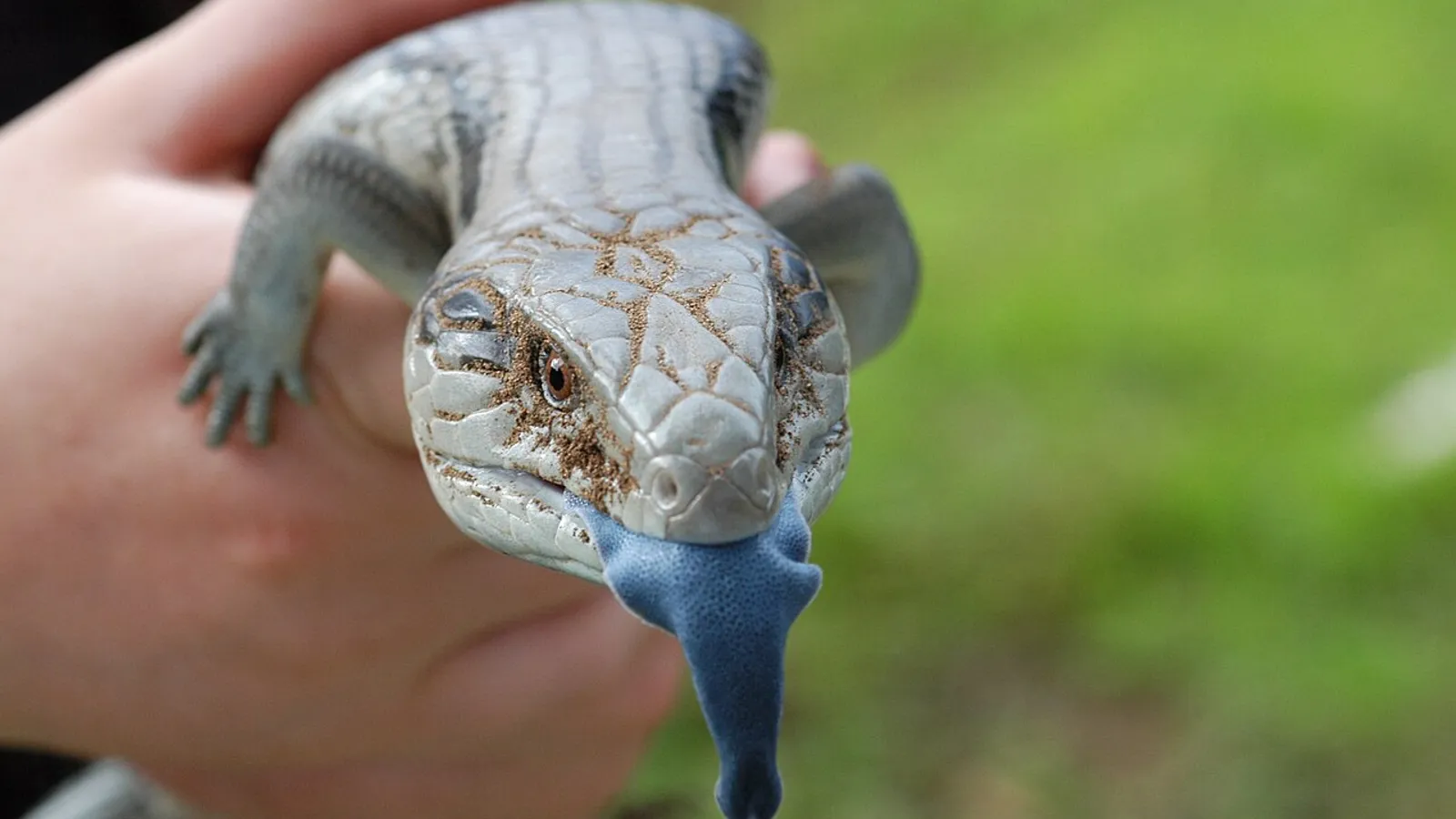
— Where the name comes from
Scincoides means “skink-like”, which is odd given that it is a skink: the name arose because the genus Tiliqua was separated from the ordinary skinks and christened by resemblance. Skink comes from the Greek skínkos, which denoted a North African lizard that ancient physicians used as a medicine. The blue tongue is exactly what it looks like.
— Facts
- Group
- Reptiles · Reptilia
- Order
- Squamates
- Habitat
- Scrub, grassland, suburban gardens, vegetable plots
- Range
- Eastern and northern Australia, Indonesia
- Size
- 45–60 cm including the tail, 400–1,000 g
- Diet
- Snails, insects, fruit, flowers, carrion
- Lifespan
- 20 years, over 30 in captivity
— Characteristics
- 01
It has tiny legs and a stout body: it walks with its belly brushing the ground.
- 02
It gives birth to as many as twenty-five fully formed young.
- 03
It is one of the commonest reptiles in Australian city gardens.
— What sets it apart
Alarmed, it gapes and pushes out a broad, flat blue-violet tongue, holding it out for a few seconds: the blue reflects ultraviolet too, and the back of the tongue reflects twice as much as the tip. In the laboratory it turns out the animal shows the tip first and then, if the predator persists, gapes fully to expose the brightest part — that is, it doses the bluff according to how close the danger is, keeping the surprise for the last useful instant.
