
Shingleback skink
Tiliqua rugosa
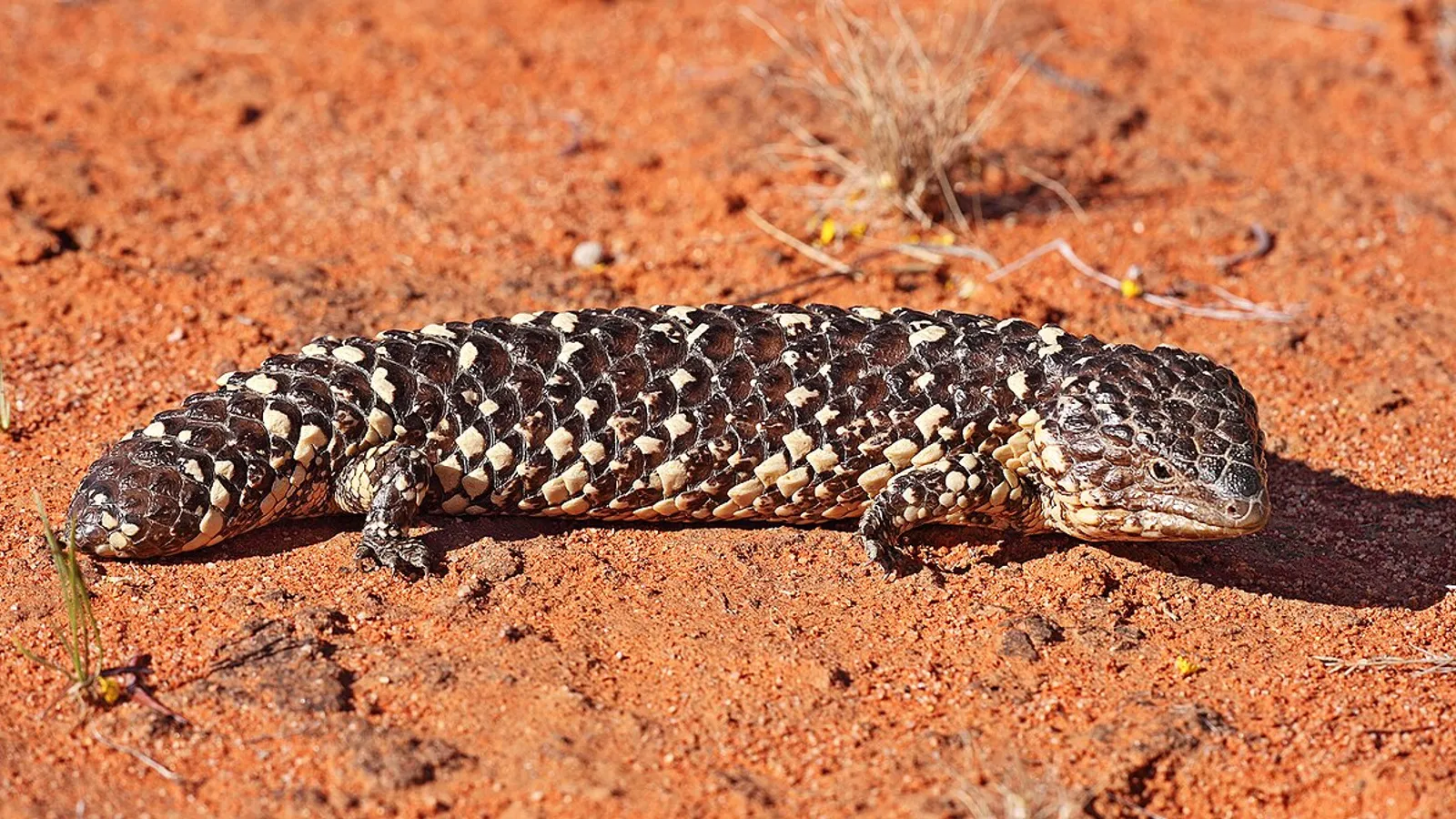
— Where the name comes from
Rugosa means “wrinkled”, for the large scales that cover the body like pine cones. The common name, in Italian as in English, looks at the tail: short, blunt and the same shape as the head, so that at first glance it is not clear which way the animal is facing. Australians also call it the sleepy lizard, for its slowness.
— Facts
- Group
- Reptiles · Reptilia
- Order
- Squamates
- Habitat
- Arid grassland, scrub, roadsides of the interior
- Range
- Southern and western Australia
- Size
- 30–40 cm including the tail, 600–900 g
- Diet
- Flowers, leaves, fruit, snails, insects
- Lifespan
- over 30 years
— Characteristics
- 01
The tail is a fat store and a decoy second head.
- 02
It bears one or two enormous young, up to a third of the mother’s weight.
- 03
It moves so slowly that cars kill thousands of them.
— What sets it apart
It marries, and for good. Since 1982 a South Australian population has been followed individual by individual, and it turns out that pairs find each other again every spring for twenty years running, walking side by side for weeks before mating; if one dies, the survivor may stay alone for years. It is not common among reptiles, and in this species it works: females that stay with the same partner have larger, more viable young.
