
European rhinoceros beetle
Oryctes nasicornis
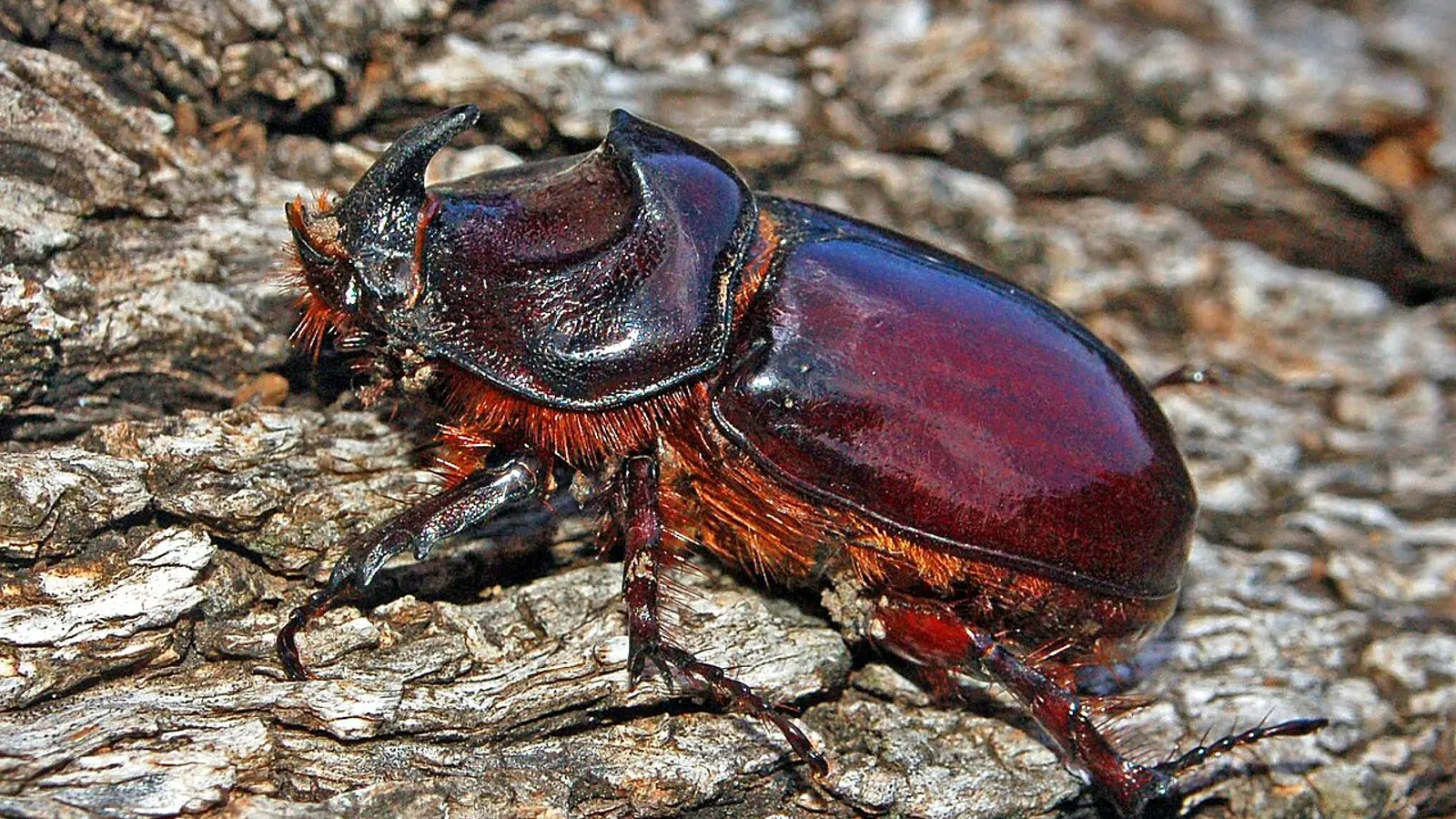
— Where the name comes from
Oryctes is Greek for “the digger”, from orýssō, to dig: the larva spends its life boring galleries through decaying wood. Nasicornis is Latin, “horn on the nose”, and describes the male — the female has only the hint of a tubercle. The name puts together the two things this animal is noticed for: what it does and what it wears on its head.
— Facts
- Group
- Insects · Insecta
- Order
- Beetles
- Habitat
- Rotting wood, stumps, heaps of compost and sawdust
- Range
- Europe, western Asia, North Africa
- Size
- 25–40 mm
- Diet
- Decomposed wood as a larva; almost nothing as an adult
- Lifespan
- 3–4 years as a larva, a few weeks as an adult
— Characteristics
- 01
Only the male carries the curved horn on his head.
- 02
The larva reaches ten centimetres and lives three or four years.
- 03
It flies at dusk on warm evenings in June and July.
— What sets it apart
It lives on waste and gives it back transformed: the larva chews dead wood, bark, sawdust and shavings for years — material almost nothing else can digest — and turns it into soil. In old tanneries and sawmills it was extremely common for exactly that reason, and its modern scarcity follows the disappearance of dead wood from tidy forests. The male’s horn is used in duels over egg-laying sites: the two slide their horns beneath each other and try to flip the opponent over, in a fight that ends without blood.
