
Great capricorn beetle
Cerambyx cerdo
— Where the name comes from
Kerámbyx was the Greek name of a horned beetle, and behind it lies a myth: Cerambus, a Thessalian shepherd who for mocking the nymphs was turned into a beetle with an armoured body and long horns. Cerdo, in Latin, was the craftsman who works with his hands, the day labourer. The name therefore sets a shepherd punished by the gods beside a manual worker, for an insect that spends its life boring galleries in wood.
— Facts
- Group
- Insects · Insecta
- Order
- Beetles
- Habitat
- Old isolated oaks, exposed to the sun
- Range
- Europe and western Asia
- Size
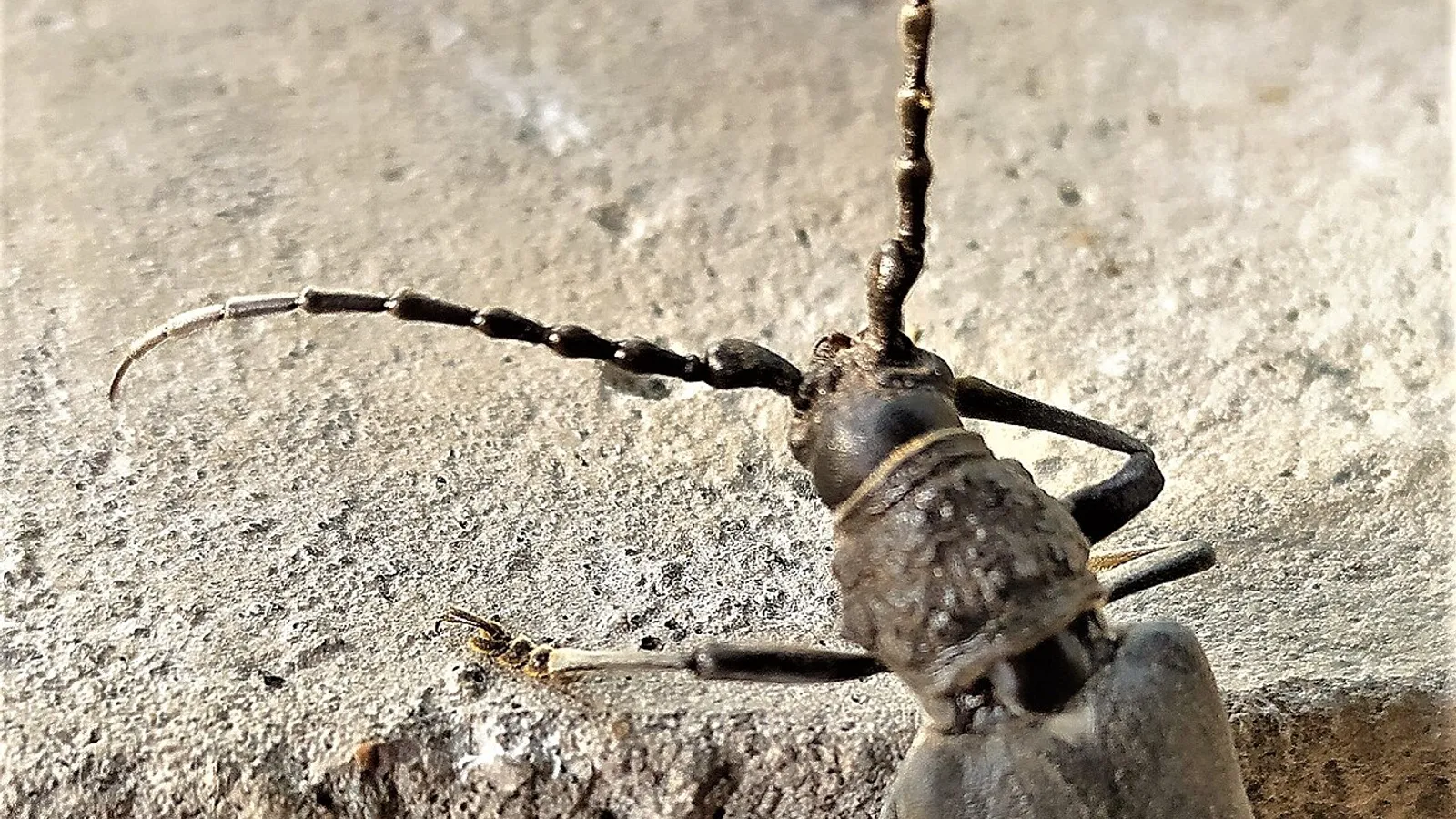
- 24–55 mm; the male’s antennae exceed his body length
- Diet
- Sap and ripe fruit as an adult; oak wood as a larva
- Lifespan
- 3–5 years as a larva, a few weeks as an adult
— Characteristics
- 01
The male’s antennae are one and a half times the length of his body.
- 02
It chooses only living oaks that are old and already weakened.
- 03
The larva bores galleries two centimetres wide for three or four years.
— What sets it apart
It needs old trees, and that has got it into trouble. The larvae develop only in mature and partly declining oaks, the kind of tree modern forestry removes first as “diseased”: the result is that a once-common species is now protected across Europe. Its galleries, however, are not only damage: they create cavities that later house other rare insects, bats and owls, and over the years an oak colonised by this beetle becomes a tenement for dozens of species. It is the textbook case of the insect worth keeping.
