
European pilchard
Sardina pilchardus
— Where the name comes from
Sardina comes from Sardinia: the Greeks called the little fish caught around the island sardḗ, and from there the word passed into Latin and into every European language. Pilchardus is a Latinisation of the English pilchard, which in British fishing denotes the adults while “sardine” denotes the young — the same species under two names according to age.
— Facts
- Group
- Fish · Actinopterygii · Chondrichthyes
- Order
- Herrings and sardines
- Habitat
- Coastal and shelf waters, between the surface and 100 metres
- Range
- The eastern Atlantic from the North Sea to Senegal; the Mediterranean
- Size
- 15–20 cm, up to 27 cm; 50–100 g
- Diet
- Plankton filtered with the gill rakers
- Lifespan
- 8 years
— Characteristics
- 01
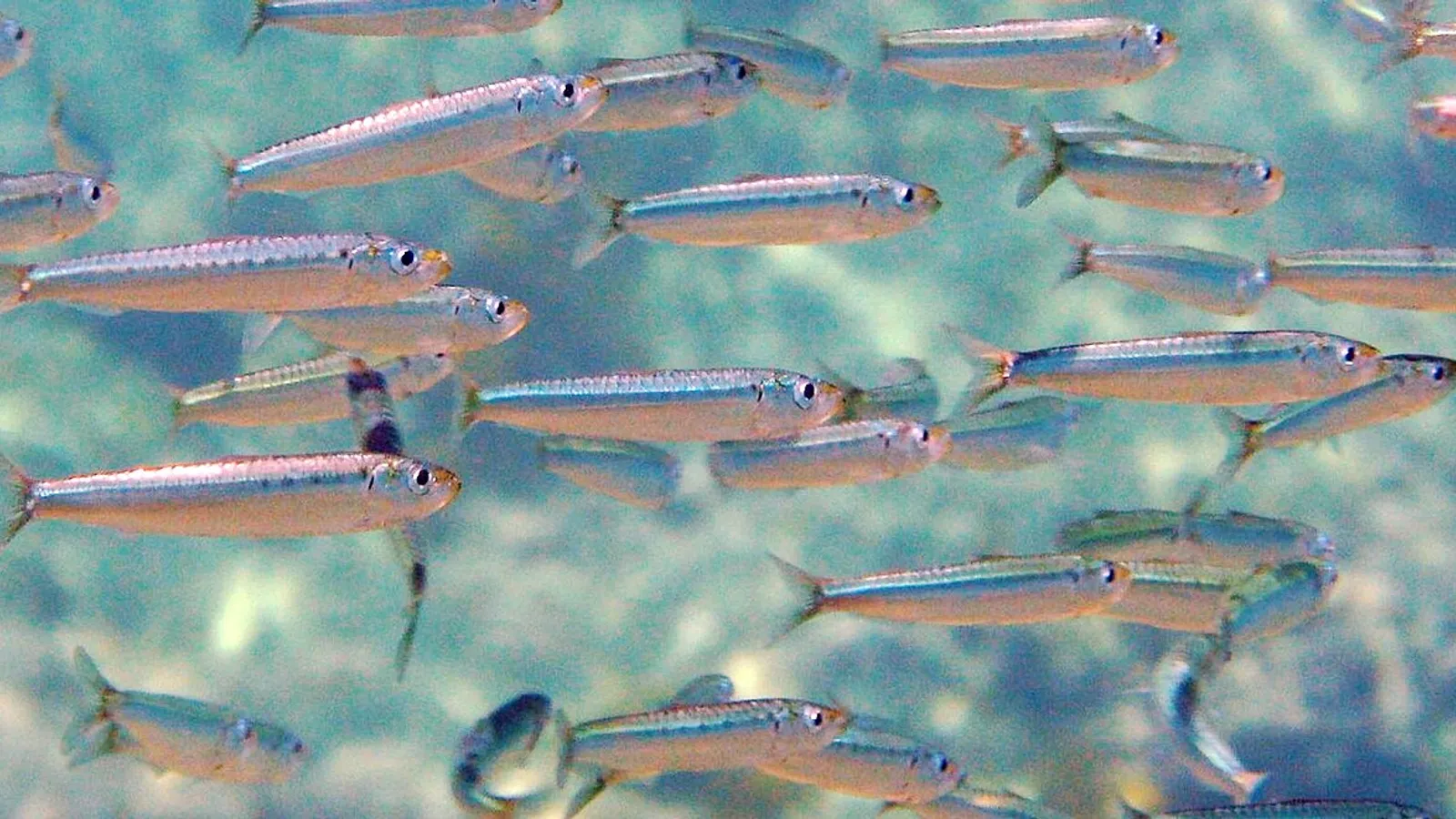
It swims in very dense shoals that change shape all together.
- 02
It rises towards the surface at night, following the plankton.
- 03
It is the base of the food chain across half the Mediterranean.
— What sets it apart
Mediterranean sardines are shrinking. In the Gulf of Lion the average length has fallen in twenty years from fifteen to eleven centimetres and the weight has nearly halved, while the number of fish has not dropped: this is not overfishing, it is food. The plankton they live on has become smaller and less nourishing, and the fish grow less and die younger. It is one of the best documented cases in which a change at the base of the food chain can be read in the size of what ends up in the tin.
