
European anchovy
Engraulis encrasicolus
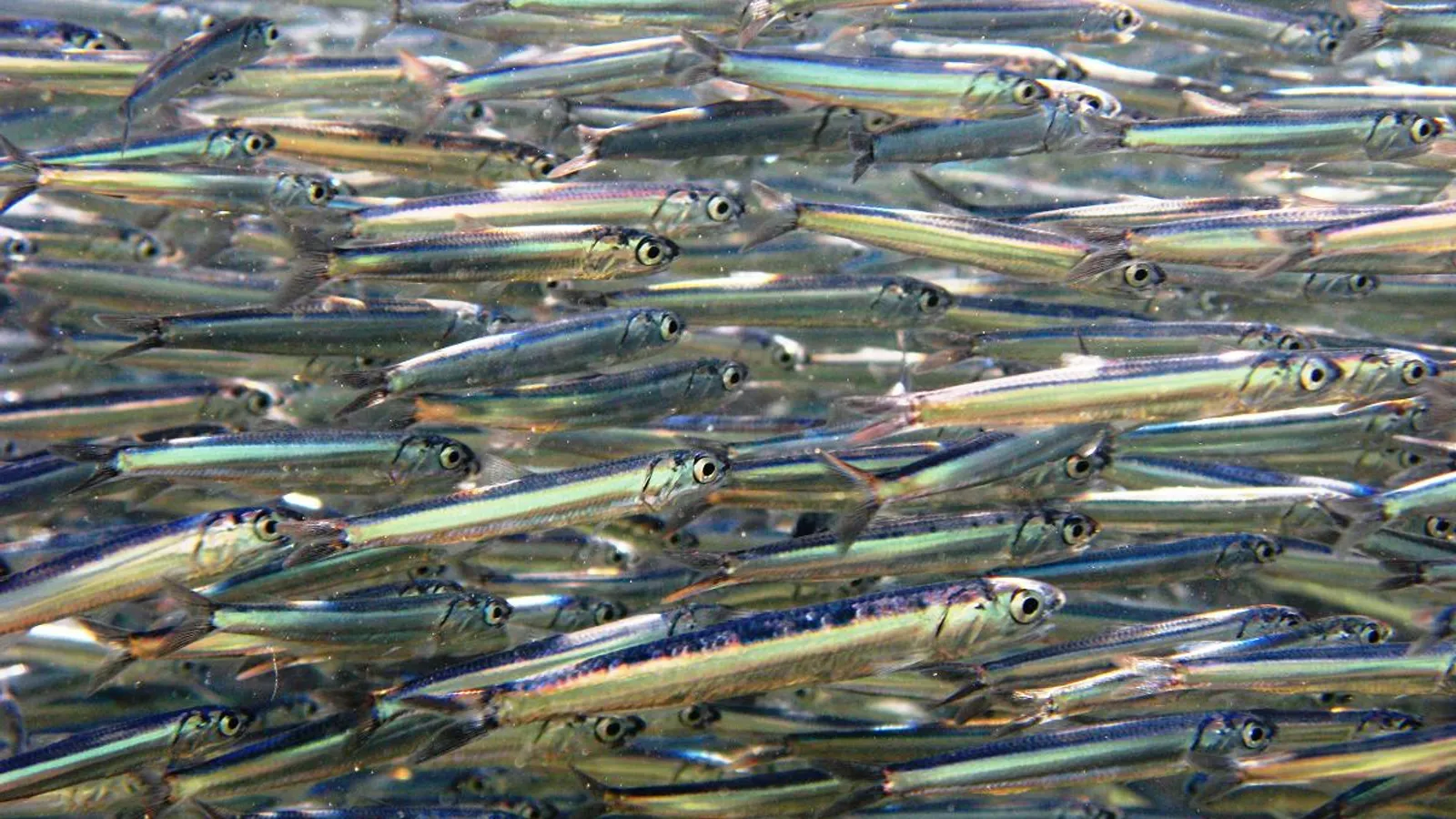
— Where the name comes from
Engraulis was the Greek name of the anchovy; encrasicolus comes from enkrasícholos, “having bile inside”, a culinary reference more than an anatomical one — these fish were salted whole, without gutting, and the fermentation of the viscera was exactly the point. The Italian name comes instead from the late Latin apiuha, of uncertain origin.
— Facts
- Group
- Fish · Actinopterygii · Chondrichthyes
- Order
- Herrings and sardines
- Habitat
- Coastal and shelf waters, between 0 and 200 metres
- Range
- The eastern Atlantic, the Mediterranean, the Black Sea
- Size
- 12–18 cm, up to 20 cm; 20–40 g
- Diet
- Plankton filtered while swimming with the mouth open
- Lifespan
- 4 years
— Characteristics
- 01
The upper jaw projects far forward and the eye is very large.
- 02
It lives in shoals that lie deep by day and rise at night.
- 03
It lays oval eggs, unique among European fish, that float separately.
— What sets it apart
The Roman empire ran on garum, a fermented fish sauce put on practically everything, and its main raw material was this fish. It was produced on an industrial scale in factories still being excavated along the coasts of Spain, Portugal and Italy — dozens of stone vats in rows facing the sea — and amphorae of garum travelled from Cádiz to Rome as containers do today. The salted anchovies on a delicatessen counter are the last direct residue of that industry.
