
Common carp
Cyprinus carpio
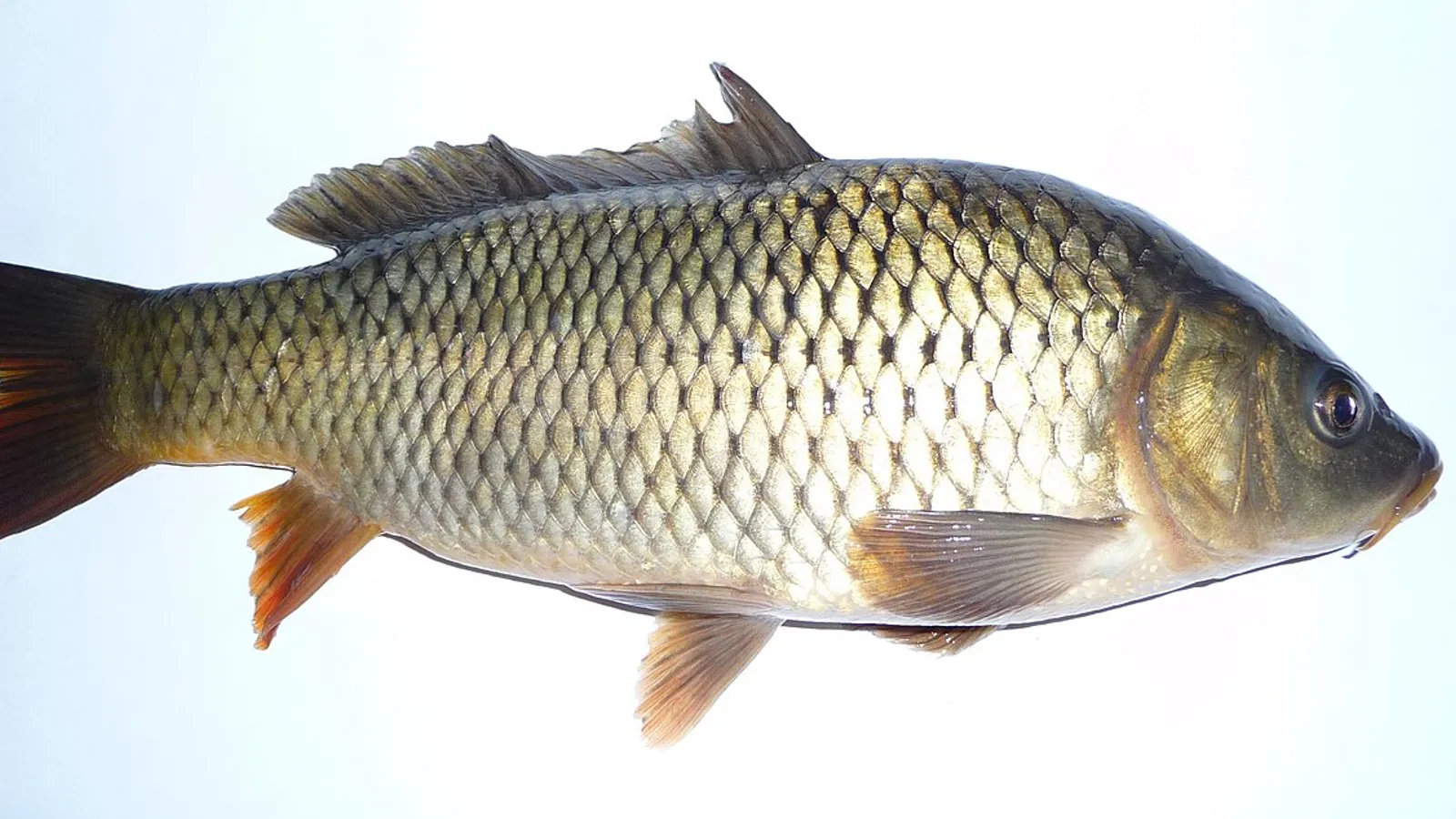
— Where the name comes from
Cyprinus comes from Kýpris, one of the names of Aphrodite, born on Cyprus: the Greeks associated these fish with the goddess for their fecundity. Carpio is a late Latin word of Germanic origin, the same as the English carp and the German Karpfen. The most farmed freshwater fish in the world therefore bears the name of the goddess of love.
— Facts
- Group
- Fish · Actinopterygii · Chondrichthyes
- Order
- Carps and minnows
- Habitat
- Slow rivers, lakes, ponds, canals with muddy bottoms
- Range
- Native to Eurasia; introduced to every continent except Antarctica
- Size
- 40–80 cm, up to 120 cm; 2–15 kg, records over 40 kg
- Diet
- Bottom invertebrates, seeds, plants, detritus
- Lifespan
- 20 years, some over 50
— Characteristics
- 01
It has four barbels around the mouth with which it feels the mud.
- 02
It survives warm, oxygen-poor water that would kill a trout.
- 03
The Japanese koi are an ornamental variety of this species.
— What sets it apart
It was domesticated at least twice independently: in China, where it was farmed as early as the first millennium BC, and in Europe, in the fish ponds of medieval monasteries, which had to supply fish for the many days of abstinence the church calendar imposed. From those ponds come the European strains; from China, by way of Japan, come the koi. Today the same species is at once the most widely farmed fish and one of the worst freshwater invaders of Australia and North America.
