
Goldfish
Carassius auratus
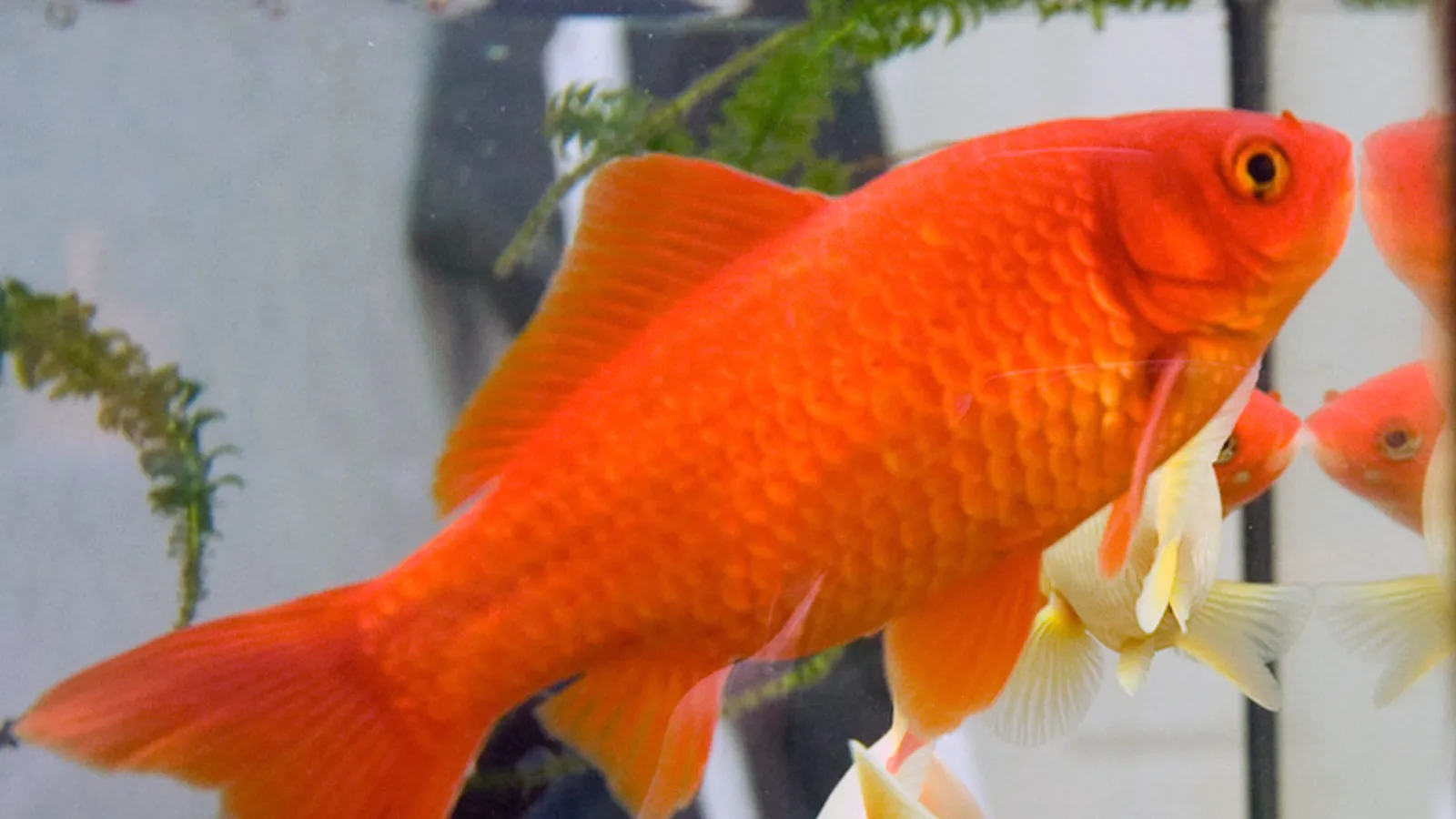
— Where the name comes from
Carassius is a Latinisation of karas, the Slavic name of the crucian carp; auratus means “gilded”. The colour is not natural, though: the wild species is a dull olive green, and the gold is a mutation that arose in China which any heron would have erased in a day, and which survived only because somebody put it in a bowl.
— Facts
- Group
- Fish · Actinopterygii · Chondrichthyes
- Order
- Carps and minnows
- Habitat
- Ponds, canals, shallow weedy lakes
- Range
- Native to East Asia; introduced everywhere
- Size
- 15–25 cm in the wild, up to 45 cm; 100 g–3 kg
- Diet
- Plants, detritus, crustaceans, insect larvae
- Lifespan
- 10–15 years, the record over 40
— Characteristics
- 01
In small tanks it stays small; in a pond it reaches the size of a carp.
- 02
It distinguishes colours, ultraviolet included, better than we do.
- 03
It learns tasks and remembers them for months: the three-second memory is a myth.
— What sets it apart
It survives whole winters under ice, in ponds where the oxygen runs out entirely, by doing something no other vertebrate can: when oxygen fails, instead of accumulating lactic acid and dying, it converts its metabolism to producing ethanol, which it releases through the gills. In effect it ferments, like yeast. A crucian that has spent five months under the ice has a blood alcohol concentration that would cost a driver their licence.
