European stonechat
Saxicola rubicola
— Where the name comes from
Saxicola is Latin, saxum, “stone”, and -cola, “dweller”: “rock-dweller”. Rubicola changes habitat, rubus, “bramble”: “bramble-dweller”. The Italian name, “jump-on-post”, says the most obvious thing: it always sits on top of a post, a bush or a stalk, and hops from one to the next.
— Facts
- Group
- Birds · Aves
- Order
- Passerines
- Habitat
- Rough fields, heath, pasture with bushes and hedges
- Range
- Western and southern Europe, North Africa
- Size
- 11–13 cm, 13–17 g
- Diet
- Insects, spiders, small invertebrates
- Lifespan
- A few years
— Characteristics
- 01
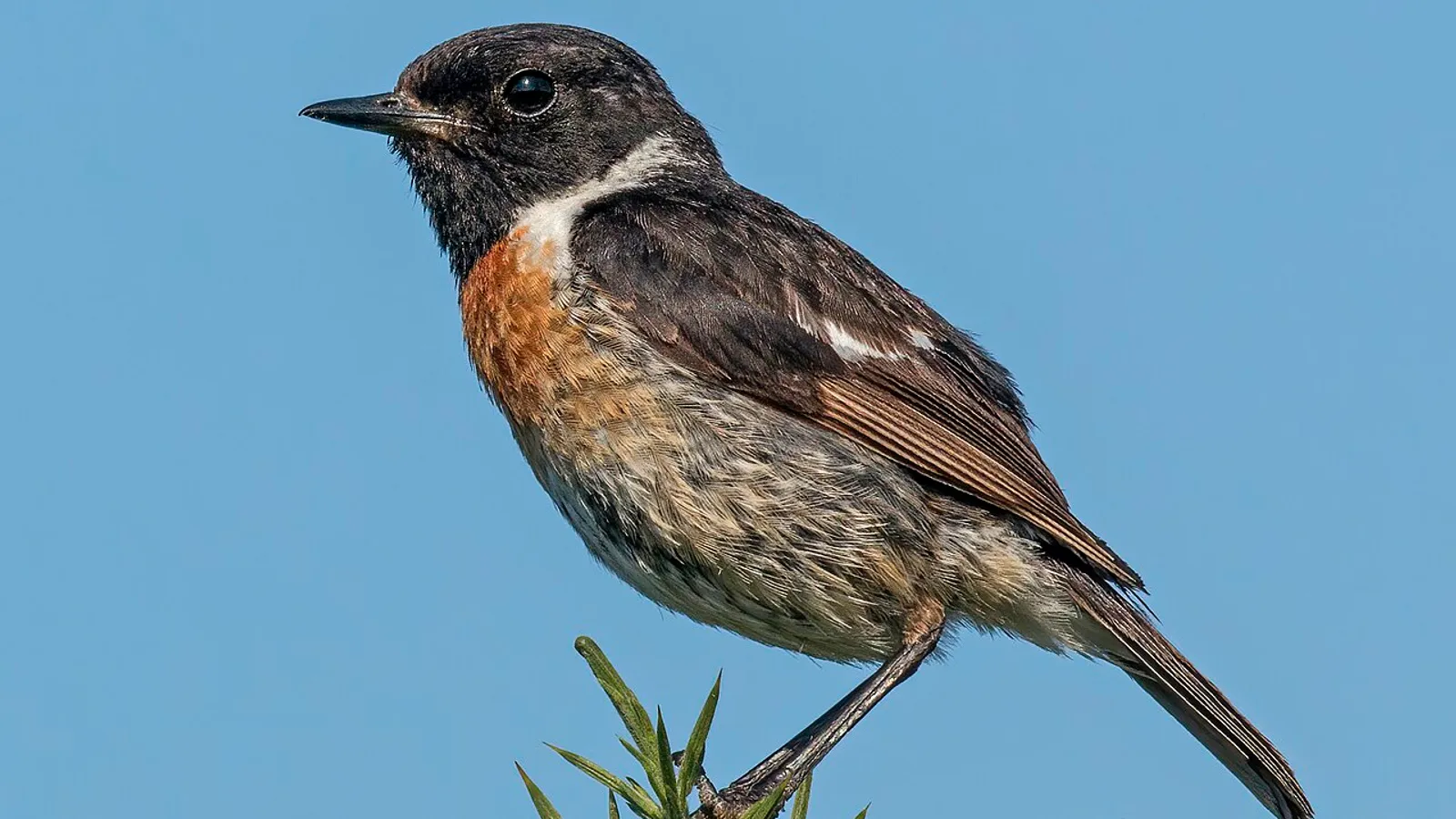
The male has a black head, a white collar and an orange breast.
- 02
Its call sounds like two pebbles knocked together.
- 03
It hunts by dropping to the ground from its perch and flying straight back up.
— What sets it apart
Until a few years ago it was considered a single species spread from Europe to Africa and Siberia. Genetic analyses have split it into several species: the European, the African and the Siberian stonechat, which look very alike but each have a long independent history. In Italy it is still common but declining, because it lives where farming leaves rough margins, hedges and ditches: tidy countryside without edges makes it disappear, and hard winters can halve populations in a single season.