
Northern wheatear
Oenanthe oenanthe
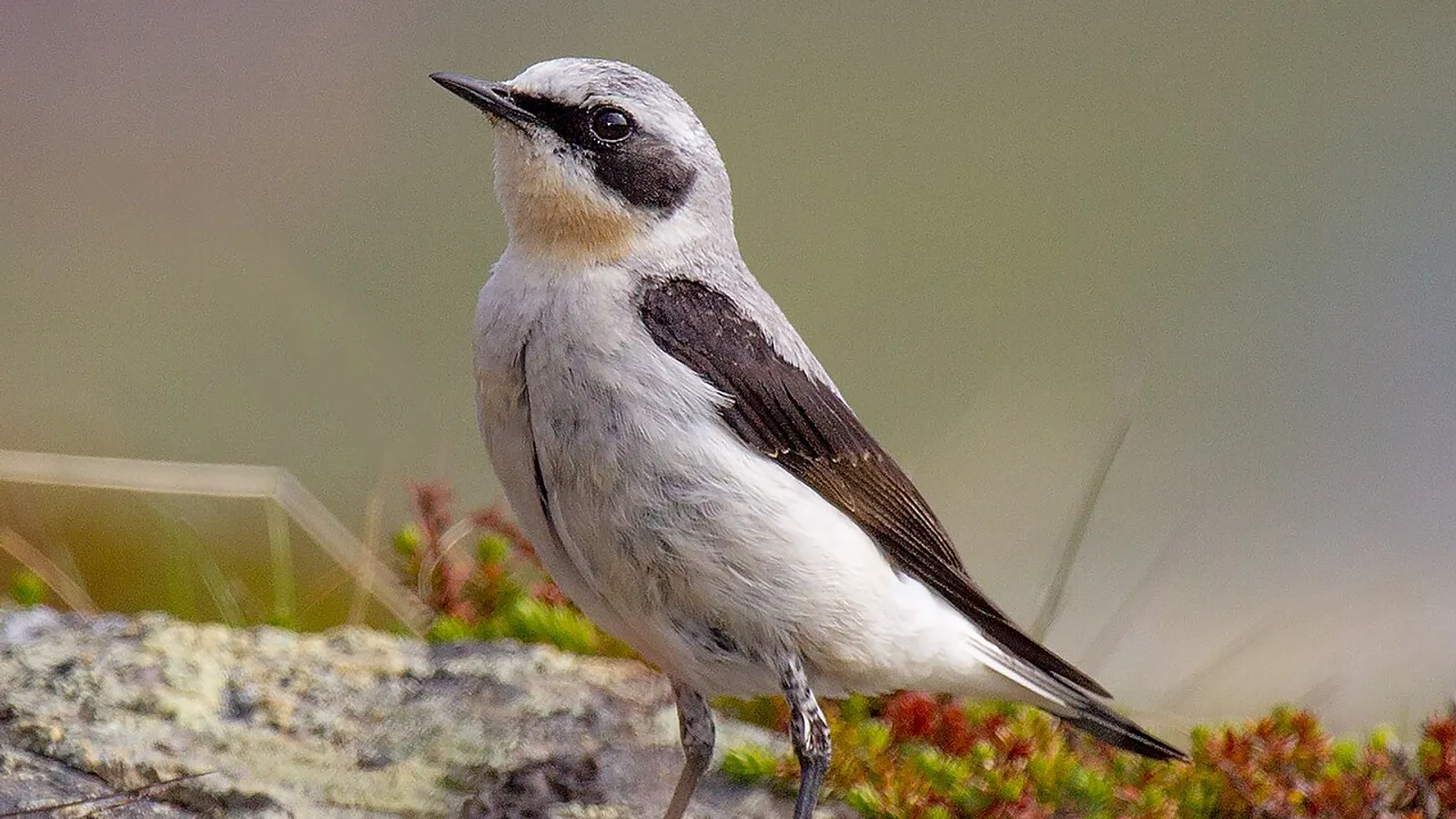
— Where the name comes from
Oenanthe is Greek, oînos, “wine”, and ánthos, “flower”: Aristotle’s “bird of the vine flower”, which reached Greece in spring just as the vines were flowering. The Italian name, “white rump”, and the English wheatear, originally “white arse”, point bluntly to the white patch it shows in flight.
— Facts
- Group
- Birds · Aves
- Order
- Passerines
- Habitat
- Open, stony ground: high pasture, tundra, dunes
- Range
- Breeds in Europe, Asia, Alaska, north-eastern Canada and Greenland; winters in sub-Saharan Africa
- Size
- 14–16 cm, 17–30 g
- Diet
- Insects, spiders, small snails
- Lifespan
- A few years
— Characteristics
- 01
In flight it shows a white rump and a black T on the tail.
- 02
It nests in holes in the ground, among stones or in rabbit burrows.
- 03
When perched it bobs and spreads its tail.
— What sets it apart
For a bird of twenty-five grams it makes one of the longest migrations in the world. Wheatears nesting in Alaska winter in East Africa: in 2012 geolocators showed that they cross the whole of Asia, almost fifteen thousand kilometres each way. Those from eastern Canada set off eastwards instead and cross the North Atlantic in a single flight of three or four days to reach Europe and then West Africa. Every wheatear in the world, wherever it starts from, ends up wintering in Africa.