
Tiger salamander
Ambystoma tigrinum
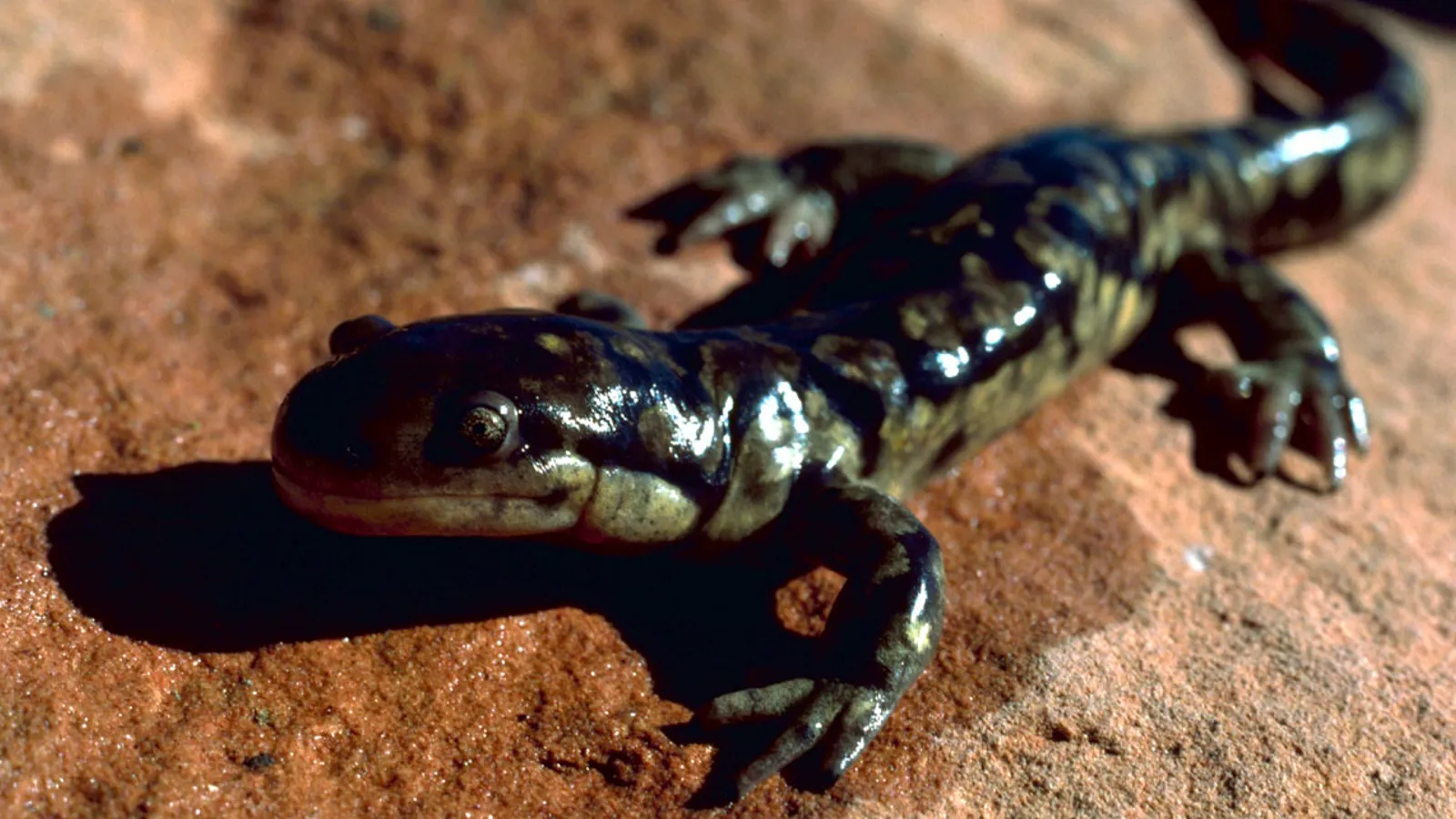
— Where the name comes from
Ambystoma is an obscure name: the most accepted reading is that it is a corruption of Amblystoma, “blunt mouth”, perhaps a printer’s error that has stayed in the nomenclature for two centuries. Tigrinum refers to the yellow blotches and bands on black which in some subspecies really do draw a tiger’s striping.
— Facts
- Group
- Amphibians · Amphibia
- Order
- Salamanders
- Habitat
- Grassland, woodland, sandy ground with temporary ponds
- Range
- North America, from southern Canada to Mexico
- Size
- 15–33 cm, 100–200 g
- Diet
- Earthworms, insects, slugs, tadpoles, other salamanders
- Lifespan
- 16 years, over 25 in captivity
— Characteristics
- 01
It is the largest terrestrial salamander in North America.
- 02
It lives nearly all year in burrows, as much as half a metre down.
- 03
It is closely related to the axolotl, which is a neotenic cousin of its own.
— What sets it apart
When the pond is crowded, some larvae turn cannibal — and change shape to do it. If density is high and food short, a proportion of them develop a broader head, a wider mouth and longer teeth and start eating their own siblings; the others stay normal. The transformation depends on how many of their kind they encounter, and experiments show the larvae recognise close relatives and prefer to eat the ones they are not related to.
