
Hellbender
Cryptobranchus alleganiensis
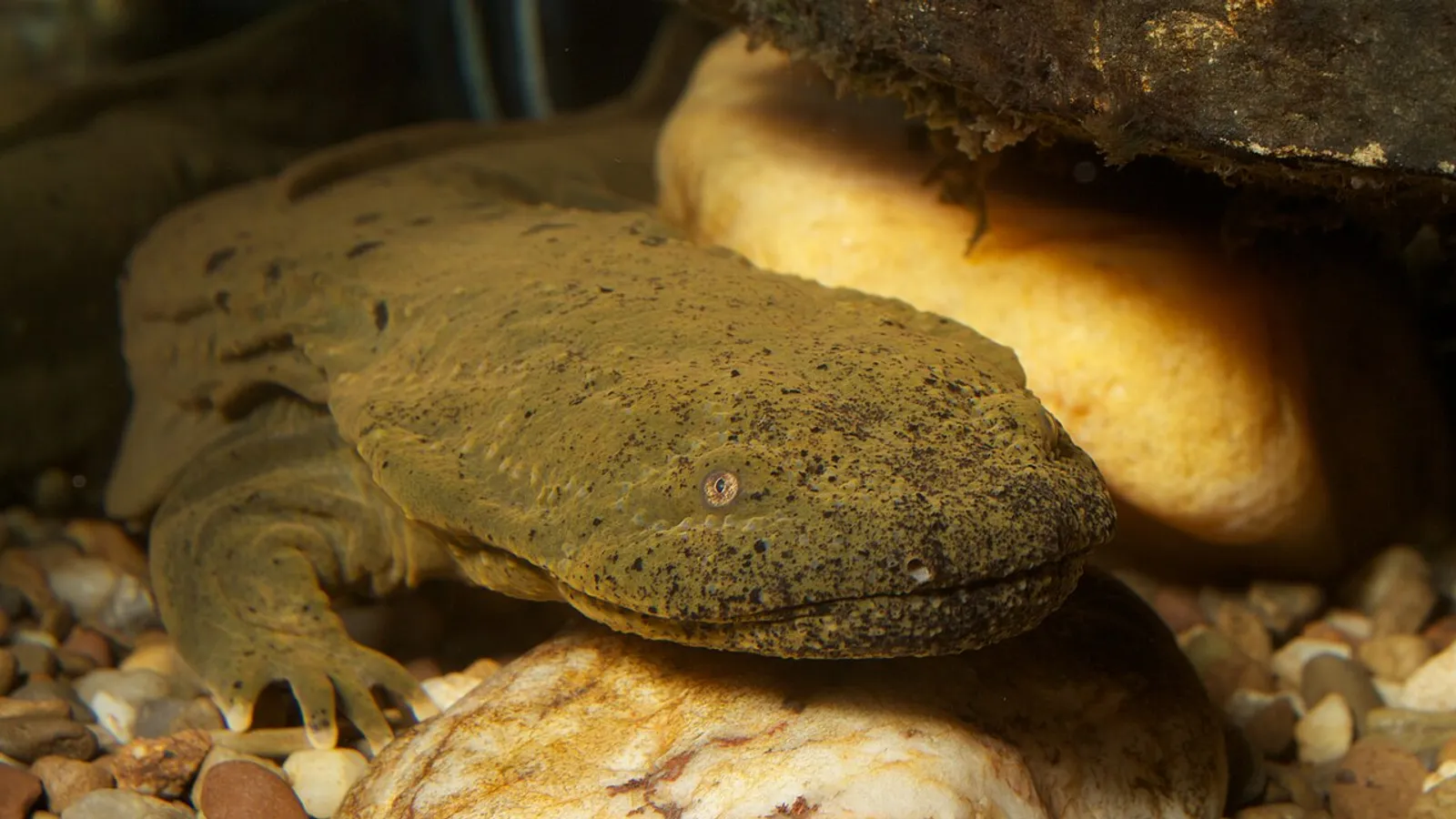
— Where the name comes from
Cryptobranchus is “hidden gill”, from kryptós and brágchia: as an adult it loses its external gills and breathes through folds of skin. Alleganiensis comes from the Allegheny mountains. Hellbender is an American folk name of uncertain origin, and to the settlers who coined it the animal must have looked like something writhing its way back to hell.
— Facts
- Group
- Amphibians · Amphibia
- Order
- Salamanders
- Habitat
- Cold, clear, fast streams with large flat stones
- Range
- The eastern United States, from New York to Georgia
- Size
- 30–60 cm, up to 74 cm; 1.5–2.5 kg
- Diet
- Crayfish, fish, tadpoles, aquatic insects
- Lifespan
- 30 years, some over 50
— Characteristics
- 01
It breathes almost entirely through the skin folds along its flanks.
- 02
It needs cold, oxygen-saturated water: it is an indicator of quality.
- 03
The male digs a nest under a stone and guards the eggs for months.
— What sets it apart
It is a living gauge of the health of American rivers. Breathing through its skin and staying under the same stone for decades, it has no way of escaping a stream that clouds over: silt washing down from logging fills the gaps between the rocks and cuts the oxygen, and the species vanishes before any other signal appears. In many eastern states it has gone from rivers where it was common as late as the 1970s, and its absence records exactly where the forest upstream was felled.
