
Greater siren
Siren lacertina
— Where the name comes from
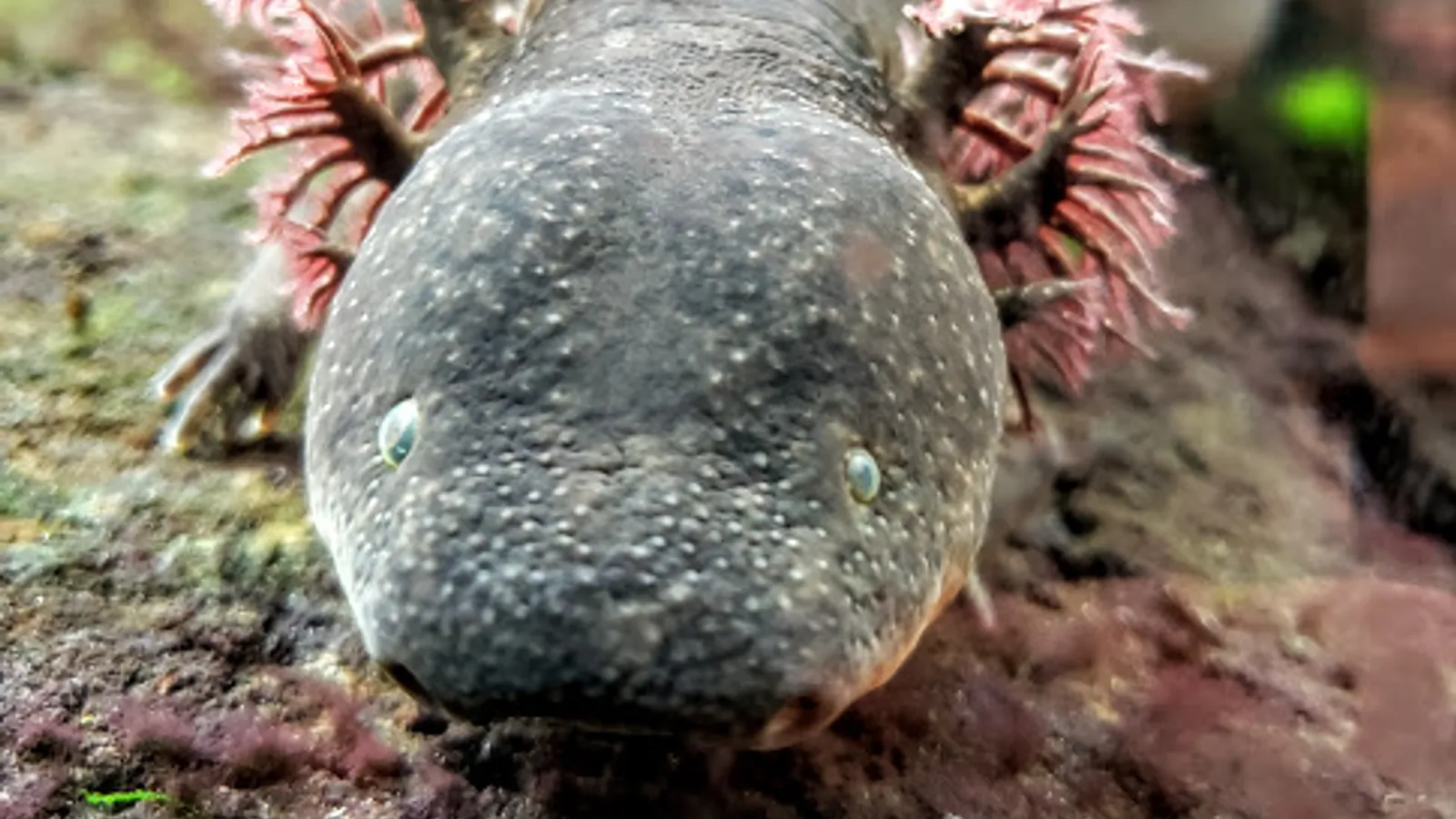
Siren recalls the Homeric sirens, creatures half one thing and half another, and that is the natural reaction of anyone who sees it: it has two little forelegs with the gills just behind, and then, of the hind body, nothing. Lacertina, “lizard-like”, is an attempt at description that does not quite convey the idea.
— Facts
- Group
- Amphibians · Amphibia
- Order
- Salamanders
- Habitat
- Swamps, ditches, canals, still water thick with vegetation
- Range
- The south-eastern United States, from Virginia to Florida
- Size
- 50–70 cm, up to 98 cm; 300–600 g
- Diet
- Molluscs, worms, insects, shrimp, algae
- Lifespan
- 25 years
— Characteristics
- 01
It has only front legs: the hind ones do not exist at all.
- 02
It keeps its external gills for life.
- 03
Instead of teeth it has a horny beak on the jaws.
— What sets it apart
When the swamp dries out it does not die: it dries out with it. It buries itself in the mud and secretes a layer of mucus that hardens into a close-fitting cocoon, leaving only the mouth open; inside that shell it slows its metabolism almost to a stop and can stay that way for over a year, waiting for the water to come back. Anyone ploughing a drained field in Florida occasionally turns up a cocoon with a live animal inside, which minutes later, wetted, sets off again.
