
Alpine salamander
Salamandra atra
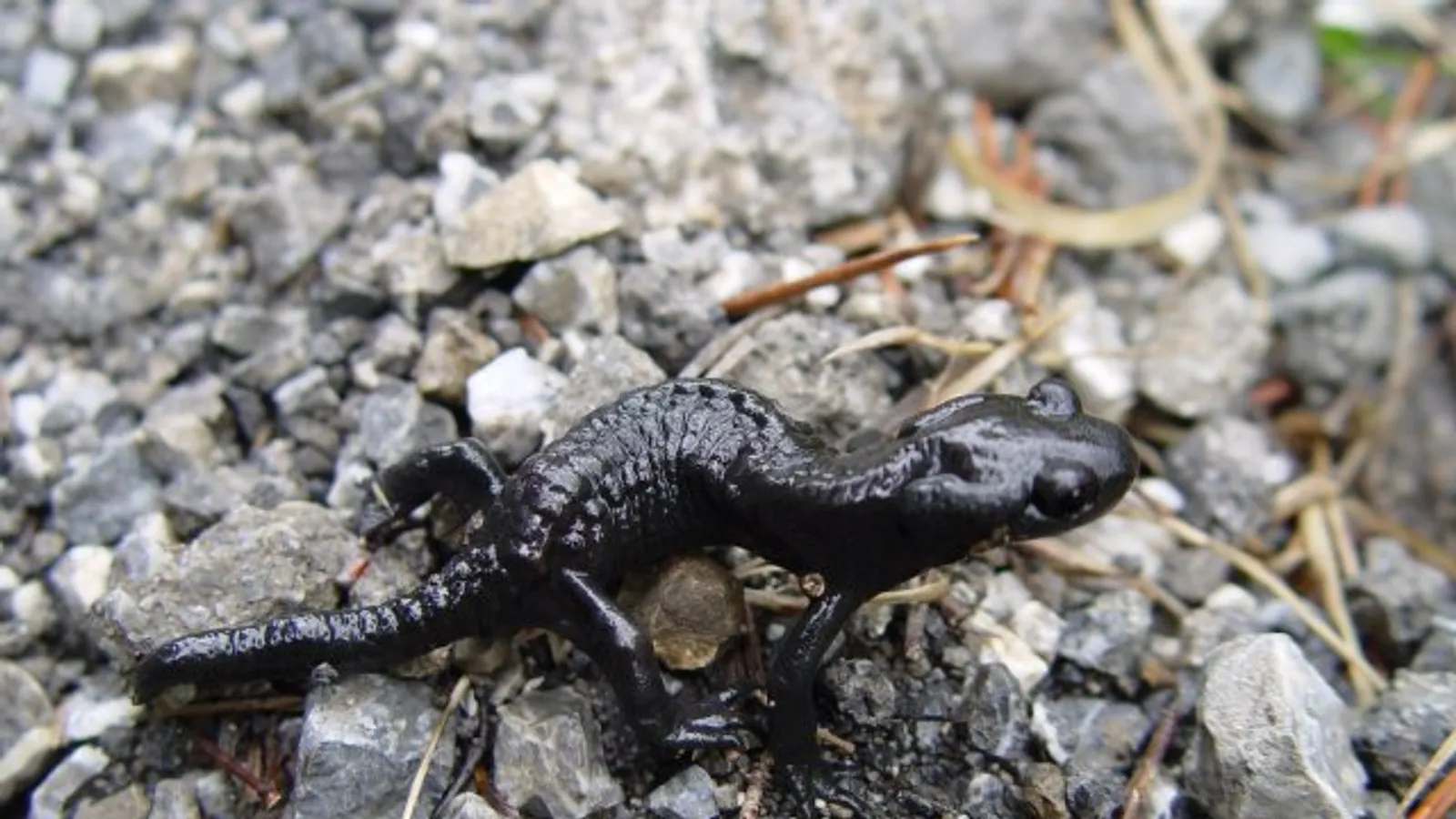
— Where the name comes from
Salamandra is a Greek word probably of Persian or Anatolian origin, which reached Europe together with the legend that these animals were born in fire and could put it out: the misunderstanding comes from their habit of wintering in logs, which when thrown on the hearth sent them out of the flames in a hurry. Atra means “black”, and that is the whole of its colour.
— Facts
- Group
- Amphibians · Amphibia
- Order
- Salamanders
- Habitat
- Alpine meadows, damp scree, conifer woods between 800 and 2,800 m
- Range
- The Alps, the Dinarides, the Albanian Alps
- Size
- 9–15 cm, 10–20 g
- Diet
- Earthworms, spiders, insects, slugs
- Lifespan
- over 20 years
— Characteristics
- 01
It is entirely black and glossy, without a single spot.
- 02
It lays no eggs and needs no water to breed.
- 03
It comes out mainly in rain and mist, almost never in sunshine.
— What sets it apart
It carries a pregnancy for two or three years, the longest of any amphibian and longer than an elephant’s. Dozens of eggs develop in the uterus, but only one or two embryos on each side actually grow: the rest break down and become food for their siblings, who scrape them up with temporary hook-shaped teeth. In the end one or two fully formed young are born, with working lungs — because at two thousand metres a pool in which to leave tadpoles simply does not exist.
