
Common mudpuppy
Necturus maculosus
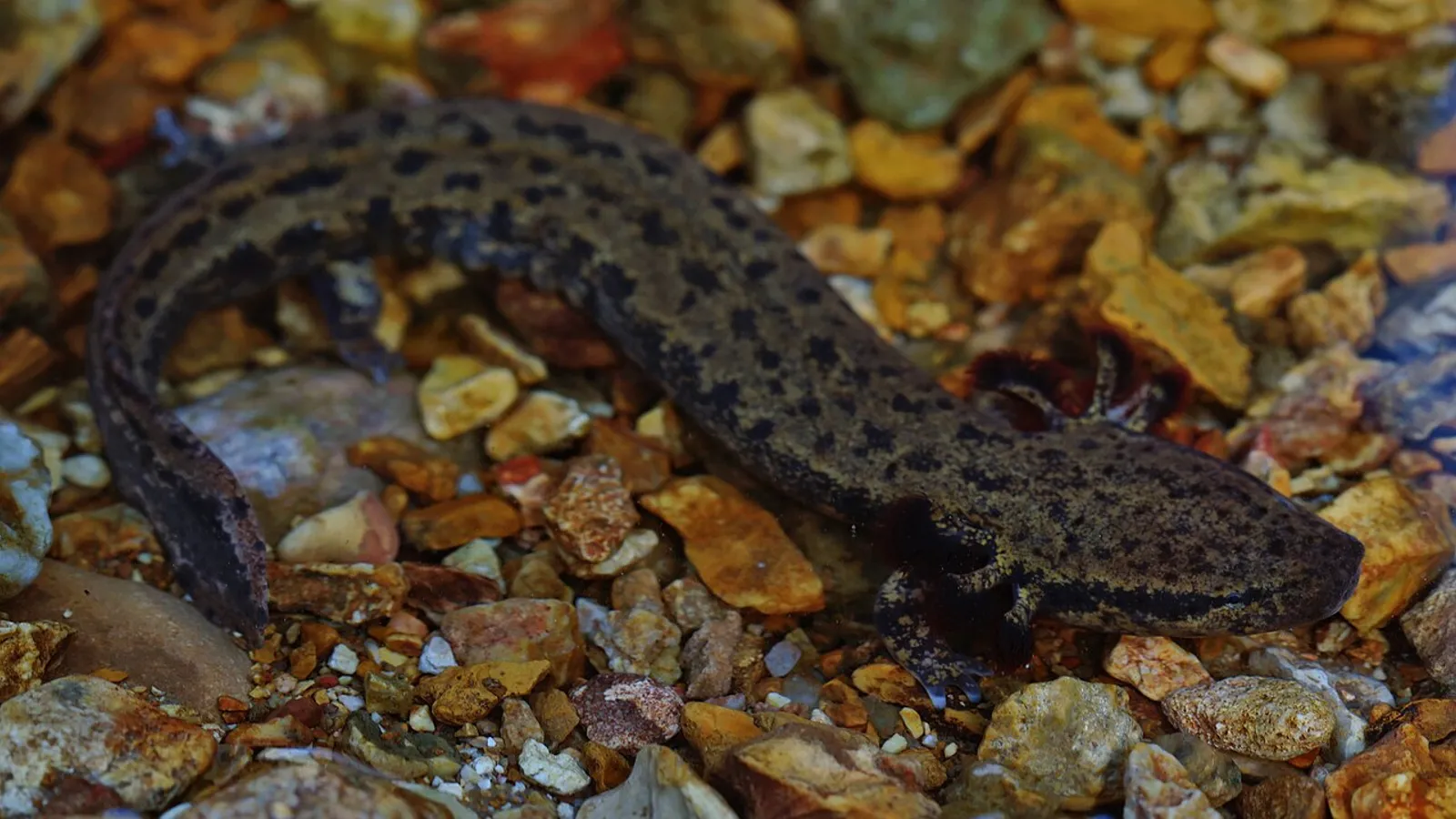
— Where the name comes from
Necturus is “swimming tail”, from nēktós and ourá; maculosus means “spotted”. The American folk name, mudpuppy, comes from the belief — false — that the animal barks: it makes almost no sound at all, but the legend dies hard among the Great Lakes anglers who find it on the end of a line.
— Facts
- Group
- Amphibians · Amphibia
- Order
- Salamanders
- Habitat
- The beds of lakes, rivers and canals, under stones and logs
- Range
- Central and eastern North America
- Size
- 20–33 cm, up to 43 cm; 100–200 g
- Diet
- Crayfish, aquatic insects, small fish, fish eggs
- Lifespan
- 20 years, over 30 in captivity
— Characteristics
- 01
It keeps its feathery external gills all its life.
- 02
It stays active in winter too, under the ice.
- 03
It has four toes on each foot instead of the usual five.
— What sets it apart
Its gills are a thermometer for the water. In cold, well-oxygenated streams they stay short and compact; in warm, still water they grow long and branched, to catch the oxygen that is scarce. The same animal, moved from one environment to the other, remodels them within weeks. It is the most visible respiratory organ in the animal kingdom and it adapts the way a filter would: looking at a mudpuppy tells you what kind of water it has been living in.
